Child and Adolescent Psychiatry Department, Robert Debré Hospital, University of Paris Cité, Paris, France.
Immunology, Immunopathology, Immunotherapy, INSERM U959, Pitié Salpétrière Hospital, Sorbonne University, Paris, France.
Sci Rep. 2023 Oct 17;13(1):17687. doi: 10.1038/s41598-023-45060-z.
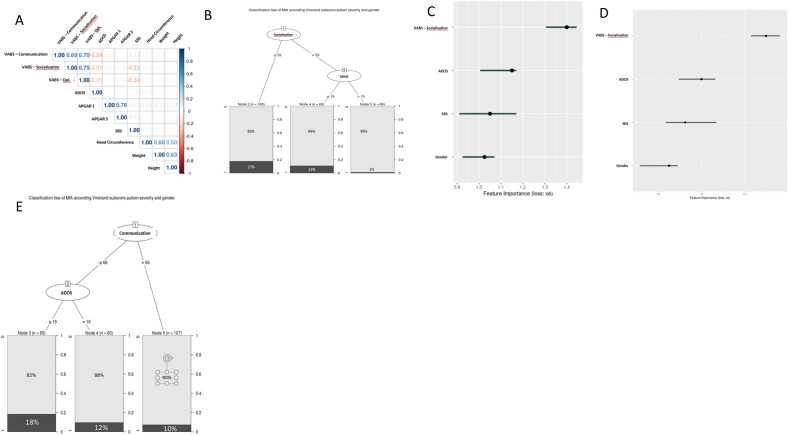
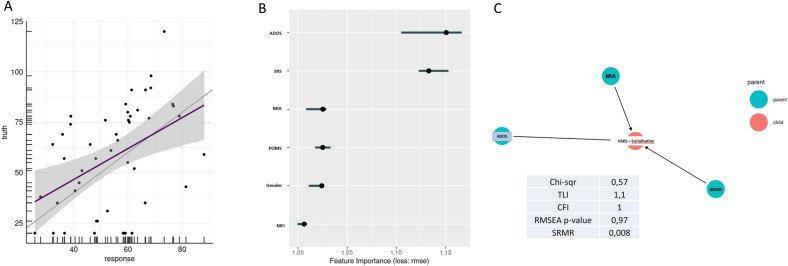
Autism spectrum disorder (ASD) are neurodevelopmental conditions characterised by deficits in social communication and interaction and repetitive behaviours. Maternal immune activation (MIA) during the mid-pregnancy is a known risk factor for ASD. Although reported in 15% of affected individuals, little is known about the specificity of their clinical profiles. Adaptive skills represent a holistic approach to a person's competencies and reflect specifically in ASD, their strengths and difficulties. In this study, we hypothesised that ASD individual with a history of MIA (MIA) could be more severely socio-adaptively impaired than those without MIA during pregnancy (MIA). To answer this question, we considered two independent cohorts of individuals with ASD (PARIS study and FACE ASD) screened for pregnancy history, and used supervised and unsupervised machine learning algorithms. We included 295 mother-child dyads with 14% of them with MIA. We found that ASD-MIA individuals displayed more severe maladaptive behaviors, specifically in their socialization abilities. MIA directly influenced individual's socio-adaptive skills, independent of other covariates, including ASD severity. Interestingly, MIA affect persistently the socio-adaptive behavioral trajectories of individuals with ASD. The current study has a retrospective design with possible recall bias regarding the MIA event and, even if pooled from two cohorts, has a relatively small population. In addition, we were limited by the number of covariables available potentially impacted socio-adaptive behaviors. Larger prospective study with additional dimensions related to ASD is needed to confirm our results. Specific pathophysiological pathways may explain these clinical peculiarities of ASD- MIA individuals, and may open the way to new perspectives in deciphering the phenotypic complexity of ASD and for the development of specific immunomodulatory strategies.
自闭症谱系障碍(ASD)是一种神经发育障碍,其特征是社交沟通和互动以及重复行为方面的缺陷。妊娠中期母体免疫激活(MIA)是 ASD 的已知风险因素。尽管在 15%的受影响个体中有所报道,但对其临床特征的特异性知之甚少。适应技能代表了对一个人能力的整体方法,特别是在 ASD 中,反映了他们的优势和困难。在这项研究中,我们假设有 MIA 病史的 ASD 个体(MIA)可能比那些在怀孕期间没有 MIA 的个体(MIA)在社会适应方面受到更严重的损害。为了回答这个问题,我们考虑了两个独立的 ASD 个体队列(PARIS 研究和 FACE ASD),这些队列筛查了妊娠史,并使用了监督和无监督机器学习算法。我们纳入了 295 对母婴对子,其中 14%的母婴对子有 MIA。我们发现,ASD-MIA 个体表现出更严重的适应不良行为,特别是在他们的社交能力方面。MIA 直接影响个体的社会适应技能,独立于其他协变量,包括 ASD 严重程度。有趣的是,MIA 持续影响 ASD 个体的社会适应行为轨迹。本研究具有回顾性设计,可能对 MIA 事件存在回忆偏倚,即使从两个队列中汇总,其人口也相对较小。此外,我们受到可能影响社会适应行为的可用协变量数量的限制。需要更大的前瞻性研究,并增加与 ASD 相关的其他维度,以证实我们的结果。特定的病理生理途径可能解释了 ASD-MIA 个体的这些临床特征,并可能为解析 ASD 的表型复杂性以及开发特定的免疫调节策略开辟新的视角。