School for the Environment, University of Massachusetts Boston, 100 Morrissey Blvd., Boston, MA, 02125, USA.
Department of Earth Sciences, Dartmouth College, 19 Fayerweather Hill Road, Hanover, NH, 03755, USA.
Sci Rep. 2023 Oct 17;13(1):17644. doi: 10.1038/s41598-023-44685-4.
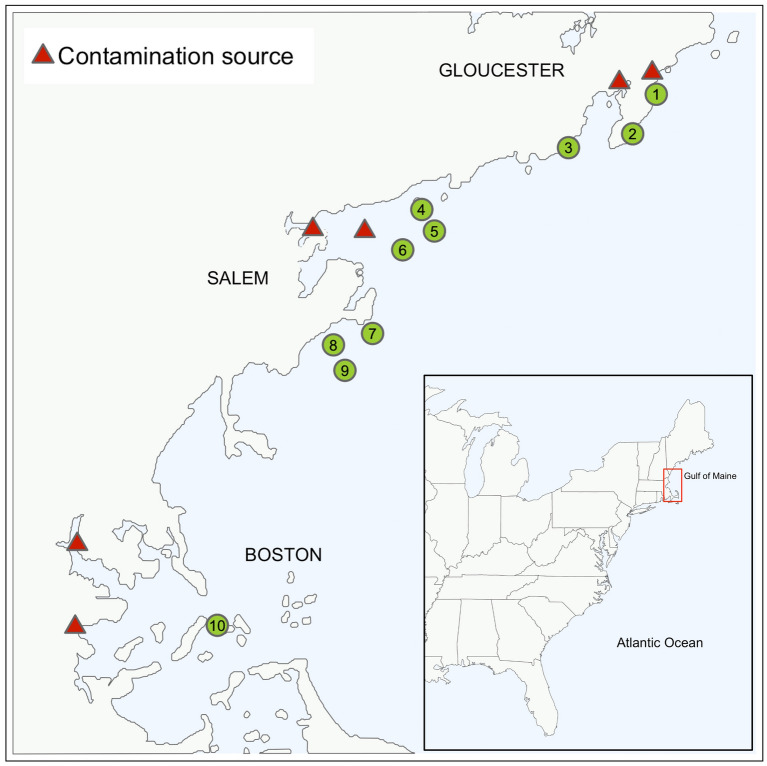
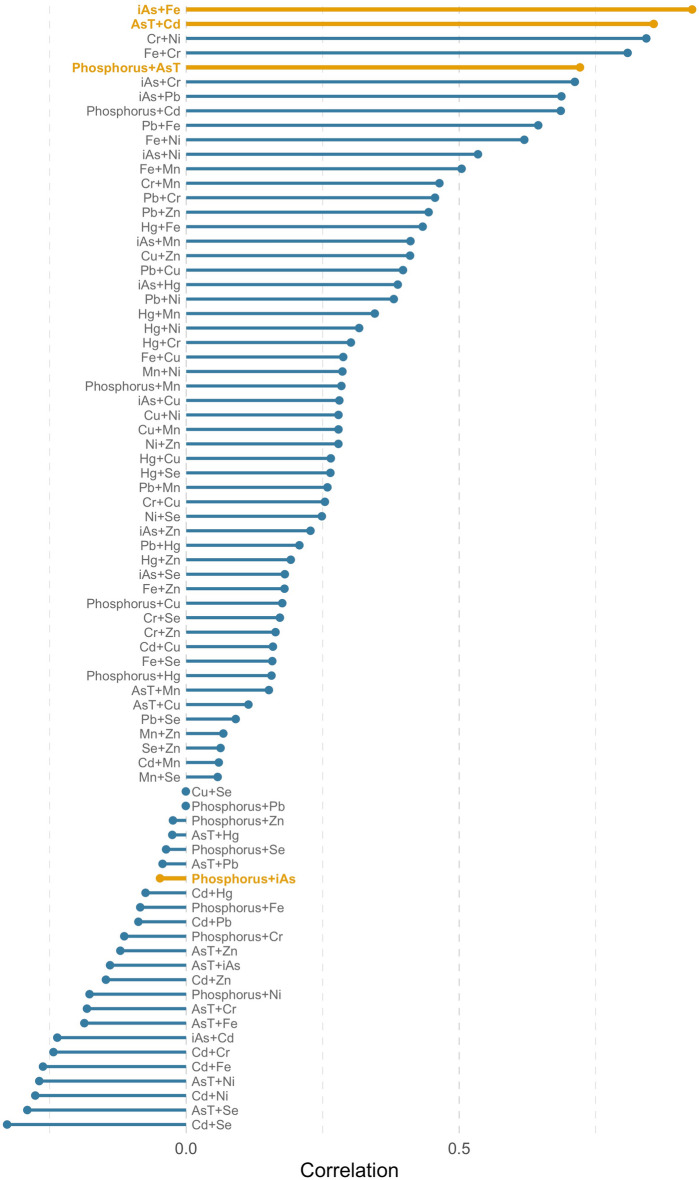
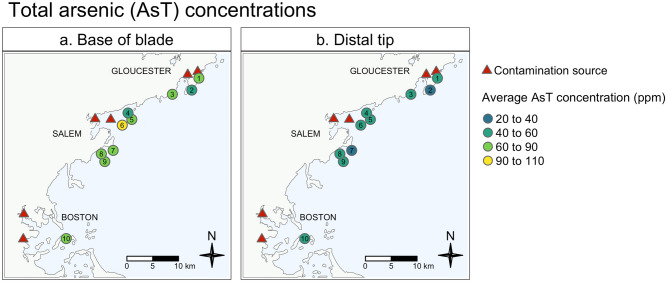
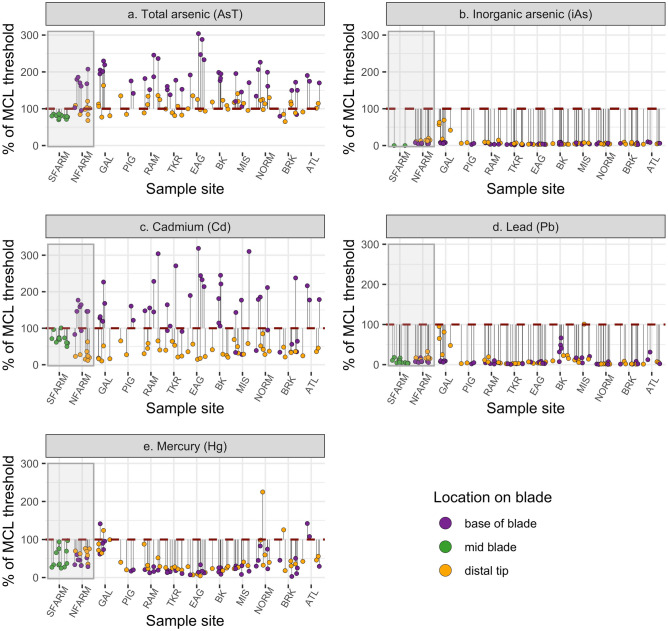
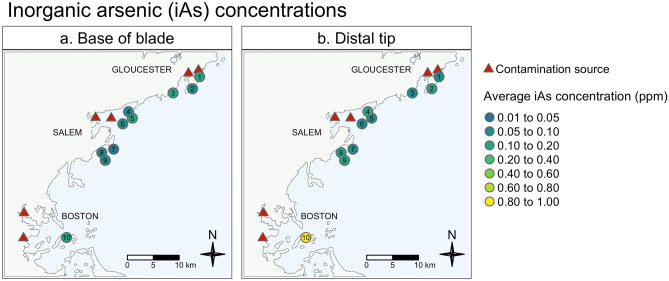
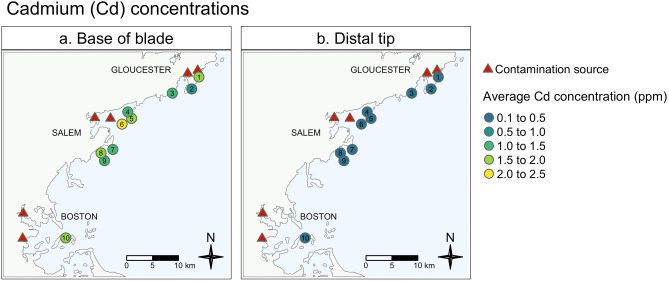
Seaweed farming in the United States is gaining significant financial and political support due to prospects to sustainably expand domestic economies with environmentally friendly products. Several networks are seeking appropriate synthesis of available science to both inform policy and substantiate the sector's sustainability claims. Significant knowledge gaps remain regarding seaweed-specific food hazards and their mitigation; a resource-intensive challenge that can inhibit sustainable policies. This is particularly concerning for rapidly expanding Saccharina latissima (sugar kelp) crops, a brown seaweed that is known to accumulate heavy metals linked to food hazards. Here, we present baseline information about concentrations of arsenic, cadmium, lead, and mercury, in both wild and farmed sugar kelp from the New England region. We interpret our findings based on proximity to potential sources of contamination, location on blade, and available heavy metals standards. Contrary to our expectations, high concentrations were widespread in both wild and farmed populations, regardless of proximity to contamination. We find, like others, that cadmium and arsenic consistently reach levels of regulatory concern, and that dried seaweeds could harbor higher concentrations compared to raw products. We also share unique findings that suggest some toxins concentrate at the base of kelp blades. Our results are one step towards aggregating vital data for the region to expand its seaweed farming footprint.
由于有前景可以用环保产品可持续地扩大国内经济,美国的海藻养殖正在获得显著的财政和政治支持。一些网络正在寻求对现有科学进行适当的综合,以便为政策提供信息并证实该行业的可持续性主张。关于海藻特有的食物危害及其缓解措施,仍存在重大的知识差距;这是一个资源密集型的挑战,可能会抑制可持续政策的实施。对于迅速扩大的巨藻(糖海带)作物来说,这尤其令人担忧,因为这种褐藻已知会积累与食物危害有关的重金属。在这里,我们提供了新英格兰地区野生和养殖糖海带中砷、镉、铅和汞浓度的基线信息。我们根据接近潜在污染源的位置、叶片位置和现有的重金属标准来解释我们的发现。与我们的预期相反,无论接近污染的程度如何,高浓度在野生和养殖种群中都很普遍。我们发现,与其他人一样,镉和砷的浓度始终达到了监管关注的水平,而且与新鲜产品相比,干海藻可能含有更高的浓度。我们还分享了一些独特的发现,表明某些毒素集中在海带叶片的底部。我们的研究结果是为该地区汇总重要数据以扩大其海藻养殖足迹迈出的一步。