Department of Environmental Studies, Western Washington University, Bellingham, Washington, United States of America.
Shannon Point Marine Center, Western Washington University, Anacortes, Washington, United States of America.
PLoS One. 2022 Sep 23;17(9):e0269269. doi: 10.1371/journal.pone.0269269. eCollection 2022.
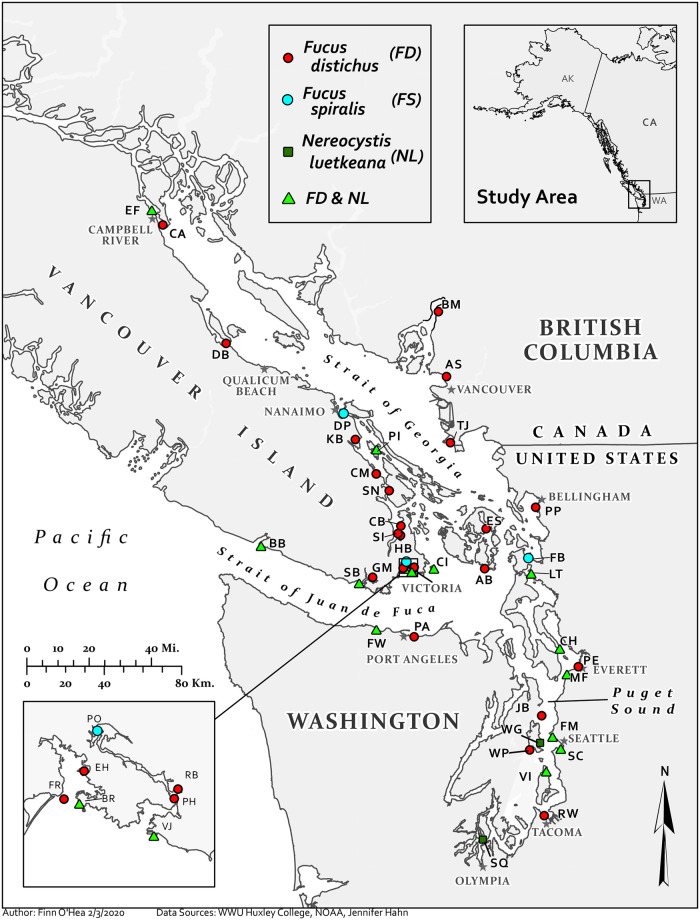
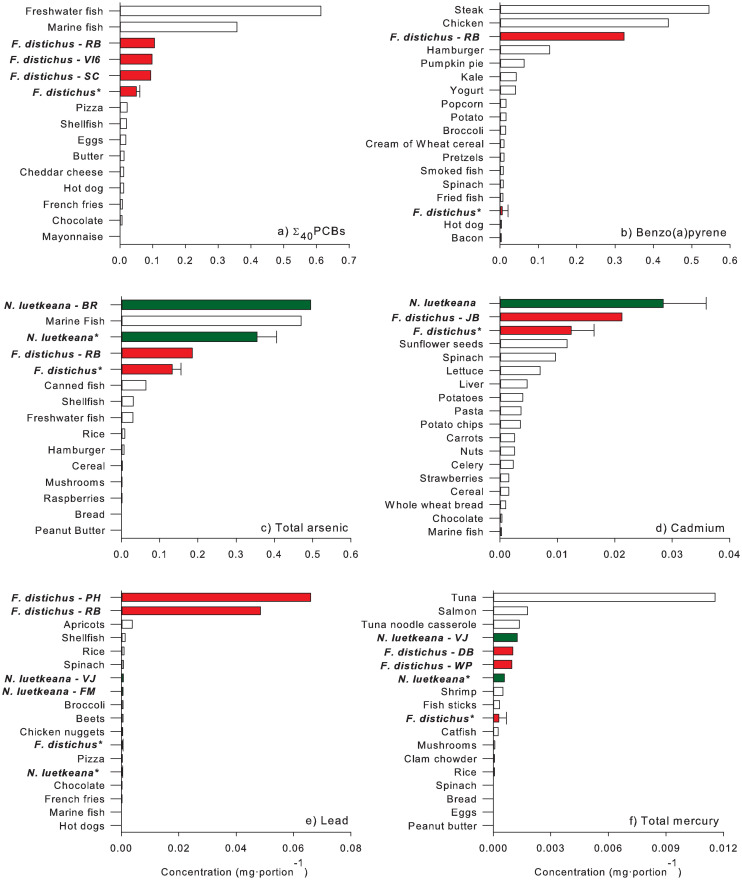
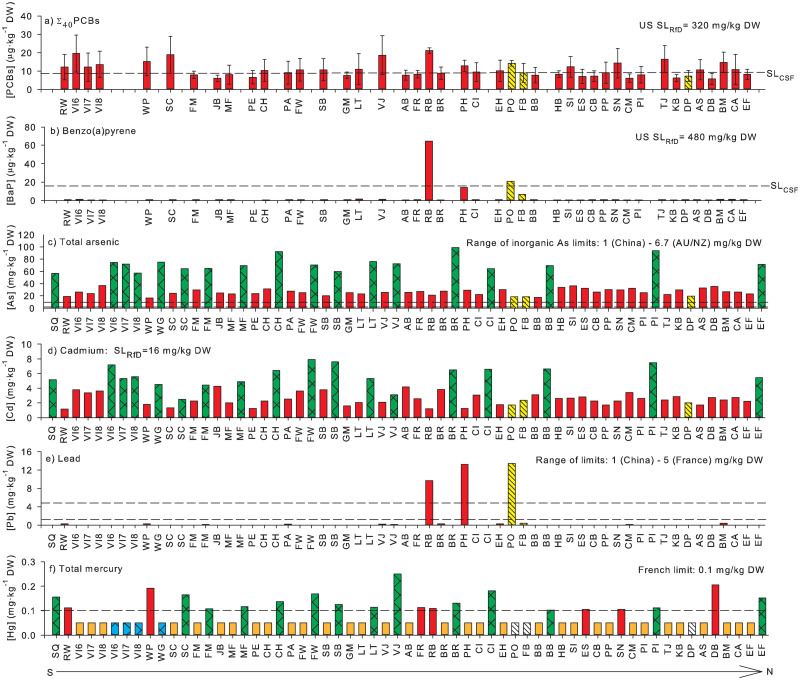
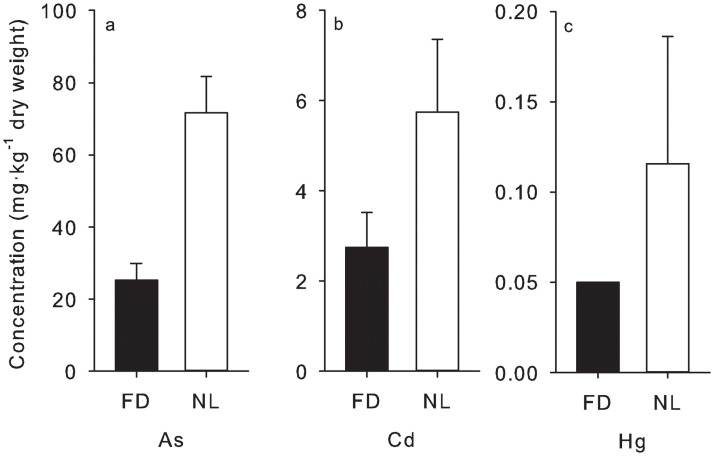
Despite growing interest in edible seaweeds, there is limited information on seaweed chemical contaminant levels in the Salish Sea. Without this knowledge, health-based consumption advisories can not be determined for consumers that include Tribes and First Nations, Asian and Pacific Islander community members, and recreational harvesters. We measured contaminant concentrations in edible seaweeds (Fucus distichus, F. spiralis, and Nereocystis luetkeana) from 43 locations in the Salish Sea. Metals were analyzed in all samples, and 94 persistent organic pollutants (POPs) (i.e. 40 PCBs, 15 PBDEs, 17 PCDD/Fs, and 22 organochlorine pesticides) and 51 PAHs were analyzed in Fucus spp. We compared concentrations of contaminants to human health-based screening levels calculated from the USEPA and to international limits. We then worked with six focal contaminants that either exceeded screening levels or international limits (Cd, total Hg, Pb, benzo[a]pyrene [BaP], and PCBs) or are of regional interest (total As). USEPA cancer-based screening levels were exceeded in 30 samples for the PCBs and two samples for BaP. Cadmium concentrations did not exceed the USEPA noncancer-based screening level but did exceed international limits at all sites. Lead exceeded international limits at three sites. Because there are no screening levels for total Hg and total As, and to be conservative, we made comparisons to methyl Hg and inorganic As screening levels. All samples were below the methyl Hg and above the inorganic As screening levels. Without knowledge of the As speciation, we cannot assess the health risk associated with the As. While seaweed was the focus, we did not consider contaminant exposure from consuming other foods. Other chemicals, such as contaminants of emerging concern (e.g., PFAS, pharmaceuticals and personal care products), should also be considered. Additionally, although we focused on toxicological aspects, there are cultural and health benefits of seaweed use that may affect consumer choice.
尽管人们对可食用海藻越来越感兴趣,但有关萨利希海(Salish Sea)中海藻化学污染物水平的信息有限。如果没有这些知识,就无法为包括部落和原住民、亚洲及太平洋岛民社区成员以及休闲采集者在内的消费者确定基于健康的消费建议。我们测量了萨利希海中 43 个地点的可食用海藻(厚叶马尾藻、螺旋马尾藻和北大西洋巨藻)中的污染物浓度。所有样本均分析了金属,并且在 Fucus spp. 中分析了 94 种持久性有机污染物(POPs)(即 40 种 PCB、15 种 PBDE、17 种 PCDD/F 和 22 种有机氯农药)和 51 种多环芳烃。我们将污染物浓度与美国环保署(USEPA)计算的基于人类健康的筛选水平以及国际限值进行了比较。然后,我们选择了六个焦点污染物进行研究,这些污染物要么超过了筛选水平或国际限值(Cd、总汞、Pb、苯并[a]芘[BaP]和 PCBs),要么具有区域相关性(总 As)。USEPA 基于癌症的筛选水平在 30 个 PCB 样本和 2 个 BaP 样本中被超过。Cd 浓度没有超过美国环保署基于非癌症的筛选水平,但在所有地点都超过了国际限值。在三个地点,Pb 超过了国际限值。由于没有总汞和总砷的筛选水平,为了保守起见,我们将其与甲基汞和无机砷的筛选水平进行了比较。所有样本的甲基汞和无机砷筛选水平均低于筛查水平。由于不知道砷的形态,我们无法评估与砷相关的健康风险。虽然海藻是重点,但我们没有考虑食用其他食物时的污染物暴露。还应考虑其他化学物质,如新兴关注的污染物(例如 PFAS、药品和个人护理产品)。此外,尽管我们专注于毒理学方面,但海藻的使用具有文化和健康益处,这可能会影响消费者的选择。