Department of Physics, Massachusetts Institute of Technology, Cambridge, Massachusetts 02139, USA.
Department of Physics, Graduate Program in Bioinformatics and Biological Design Center, Boston University, Boston, Massachusetts 02215, USA.
Phys Rev E. 2023 Sep;108(3):L032301. doi: 10.1103/PhysRevE.108.L032301.
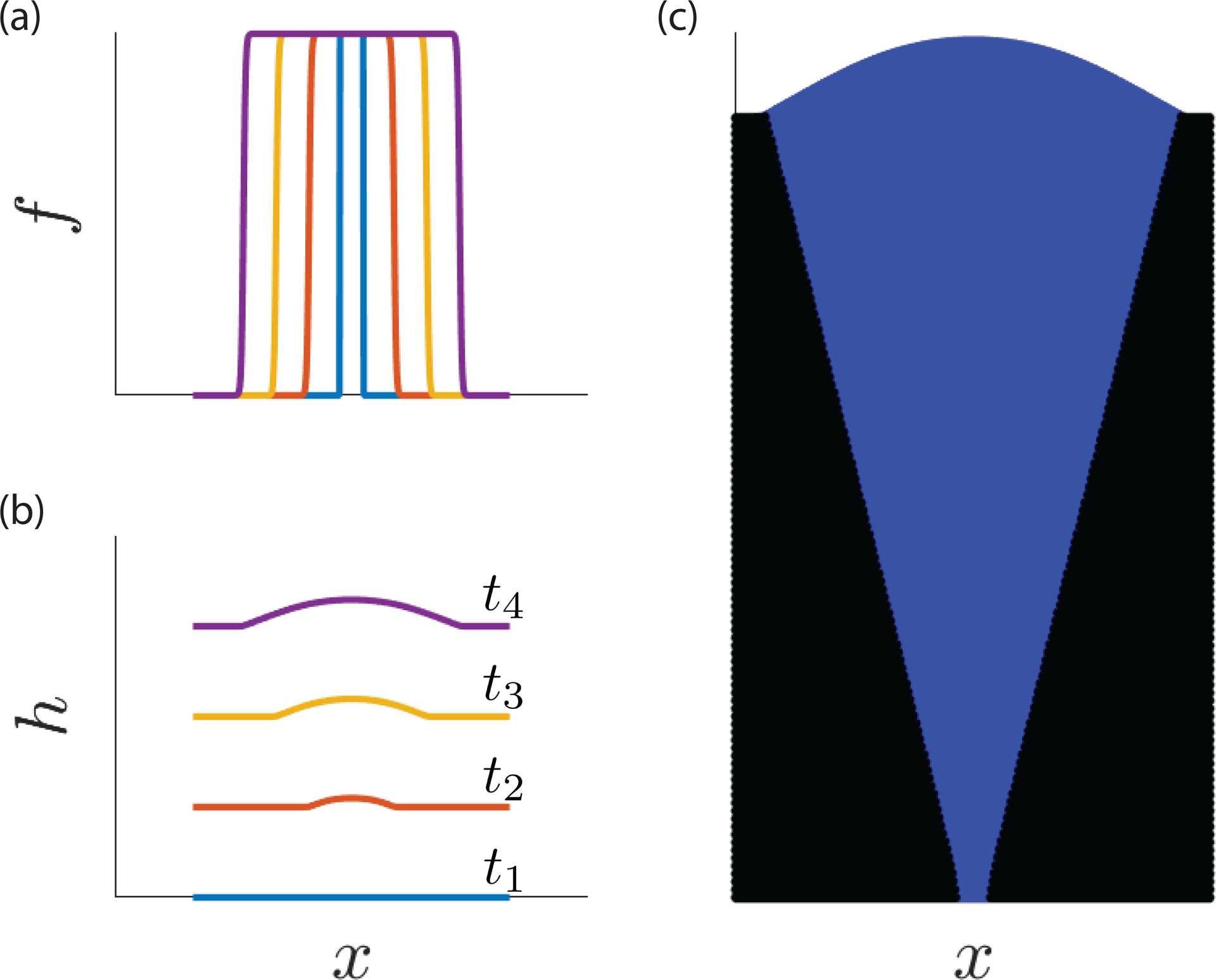
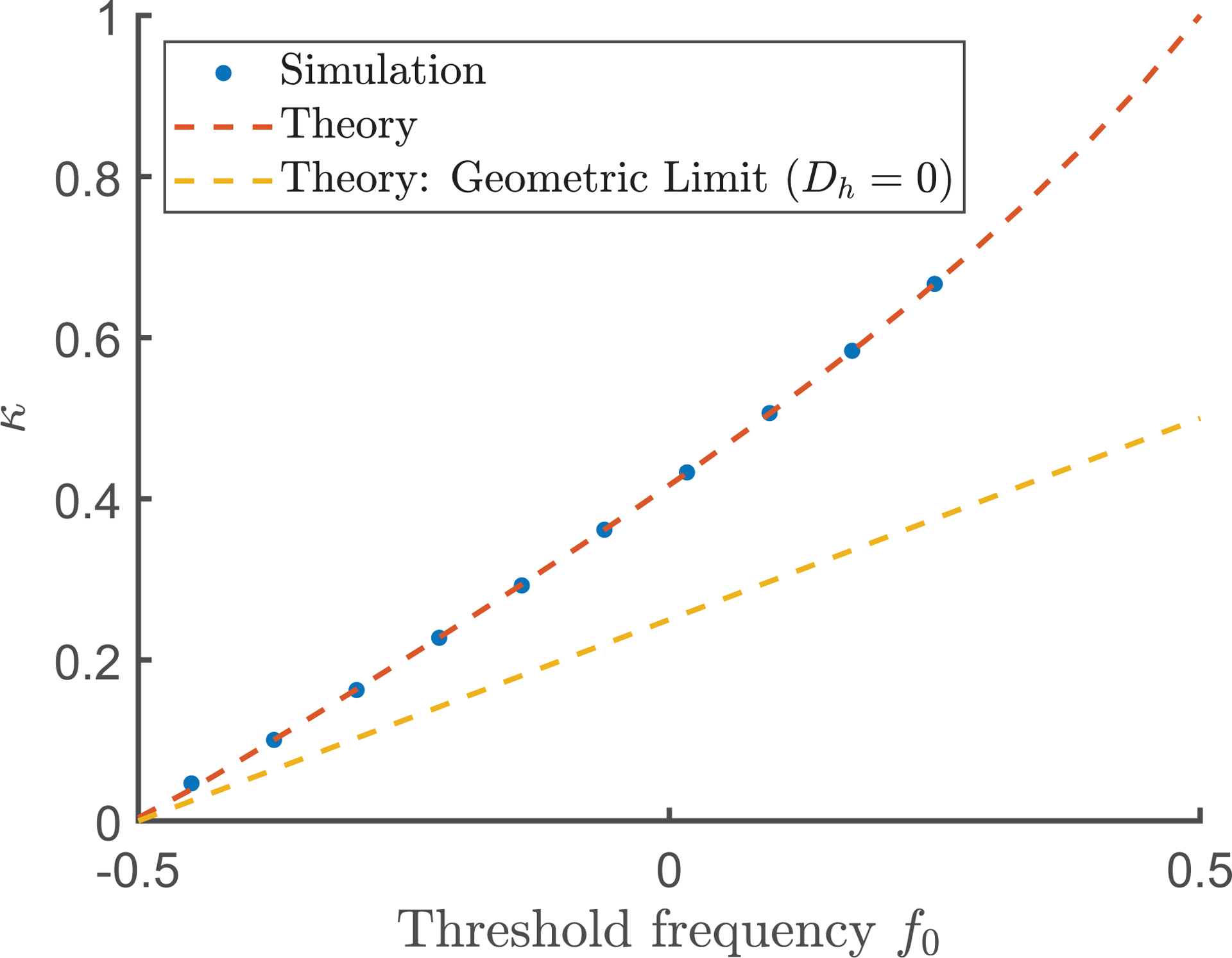
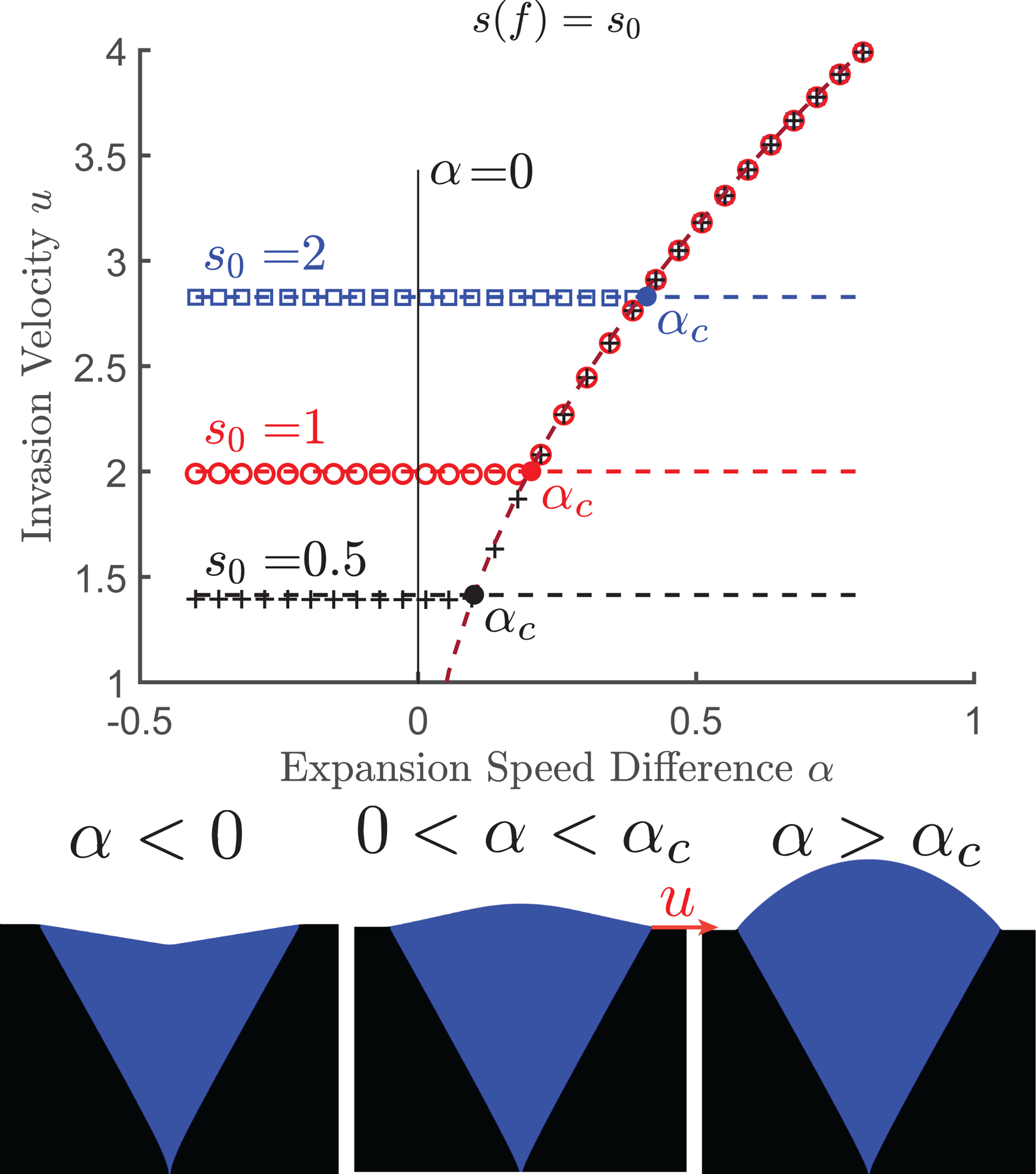
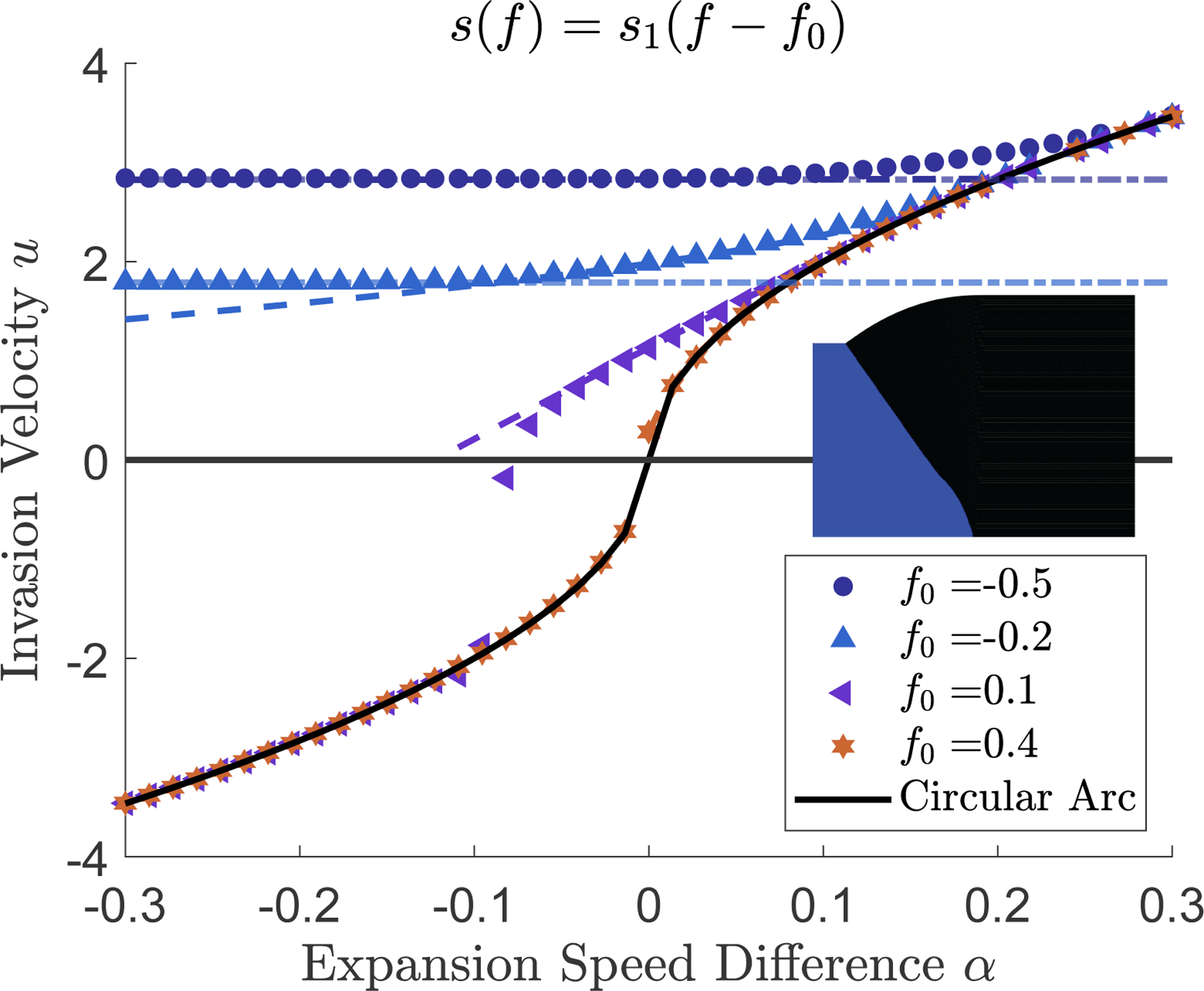
In growing populations, the fate of mutations depends on their competitive ability against the ancestor and their ability to colonize new territory. Here we present a theory that integrates both aspects of mutant fitness by coupling the classic description of one-dimensional competition (Fisher equation) to the minimal model of front shape (Kardar-Parisi-Zhang equation). We solve these equations and find three regimes, which are controlled solely by the expansion rates, solely by the competitive abilities, or by both. Collectively, our results provide a simple framework to study spatial competition.
在不断增长的种群中,突变的命运取决于它们相对于祖先的竞争能力和在新领地中定居的能力。在这里,我们通过将经典的一维竞争描述(Fisher 方程)与前沿形状的最小模型(Kardar-Parisi-Zhang 方程)相结合,提出了一个综合考虑突变适应性这两个方面的理论。我们求解了这些方程,发现了三个区域,它们分别仅由扩展率、竞争能力或两者共同控制。总的来说,我们的结果为研究空间竞争提供了一个简单的框架。