O'Reilly Catherine, Mills Susan, Rea Mary C, Lavelle Aonghus, Ghosh Subrata, Hill Colin, Ross R Paul
Food Biosciences Department, Teagasc Food Research Centre, Moorepark, Fermoy, Co. Cork P61C996, Ireland.
Microbiology Department, University College Cork, Co. Cork T12TP07, Ireland.
Microbiome Res Rep. 2023 Sep 26;2(4):35. doi: 10.20517/mrr.2023.41.
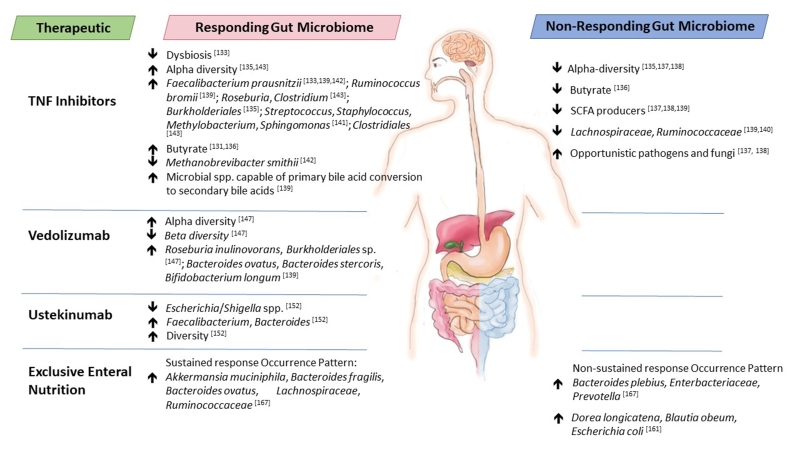
Inflammatory bowel disease (IBD) is a complex heterogeneous disorder defined by recurring chronic inflammation of the gastrointestinal tract, attributed to a combination of factors including genetic susceptibility, altered immune response, a shift in microbial composition/microbial insults (infection/exposure), and environmental influences. Therapeutics generally used to treat IBD mainly focus on the immune response and include non-specific anti-inflammatory and immunosuppressive therapeutics and targeted therapeutics aimed at specific components of the immune system. Other therapies include exclusive enteral nutrition and emerging stem cell therapies. However, in recent years, scientists have begun to examine the interplay between these therapeutics and the gut microbiome, and we present this information here. Many of these therapeutics are associated with alterations to gut microbiome composition and functionality, often driving it toward a "healthier profile" and preclinical studies have revealed that such alterations can play an important role in therapeutic efficacy. The gut microbiome can also improve or hinder IBD therapeutic efficacy or generate undesirable metabolites. For certain IBD therapeutics, the microbiome composition, particularly before treatment, may serve as a biomarker of therapeutic efficacy. Utilising this information and manipulating the interactions between the gut microbiome and IBD therapeutics may enhance treatment outcomes in the future and bring about new opportunities for personalised, precision medicine.
炎症性肠病(IBD)是一种复杂的异质性疾病,其定义为胃肠道反复出现的慢性炎症,病因是多种因素共同作用的结果,包括遗传易感性、免疫反应改变、微生物组成变化/微生物侵害(感染/暴露)以及环境影响。通常用于治疗IBD的疗法主要聚焦于免疫反应,包括非特异性抗炎和免疫抑制疗法以及针对免疫系统特定成分的靶向疗法。其他疗法包括全肠内营养和新兴的干细胞疗法。然而,近年来,科学家们已开始研究这些疗法与肠道微生物群之间的相互作用,我们在此呈现相关信息。这些疗法中的许多都与肠道微生物群组成和功能的改变有关,常常使其朝着“更健康的状态”发展,临床前研究表明,这种改变在治疗效果中可发挥重要作用。肠道微生物群也可改善或阻碍IBD的治疗效果,或产生不良代谢产物。对于某些IBD疗法,微生物群组成,尤其是治疗前的组成,可能作为治疗效果的生物标志物。利用这些信息并操控肠道微生物群与IBD疗法之间的相互作用,未来可能会提高治疗效果,并为个性化精准医疗带来新机遇。