Department of Cardiology, Shanghai Tenth People's Hospital, Tongji University School of Medicine, 301 Yanchang Road, Shanghai, 200072, China.
Key Laboratory of Spine and Spinal Cord Injury Repair and Regeneration of Ministry of Education, Tongji Hospital, Clinical Center for Brain and Spinal Cord Research, School of Medicine, Tongji University, 1239 Siping Road, Shanghai, 200092, China.
Lipids Health Dis. 2023 Oct 18;22(1):175. doi: 10.1186/s12944-023-01935-8.
Familial hypercholesterolemia (FH) is an autosomal dominant genetic disorder. The primary objective of this study was to identify the major pathogenic mutations in a Chinese family with FH.
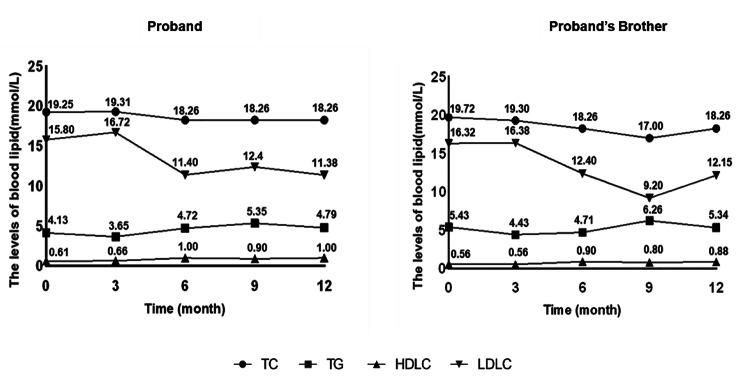
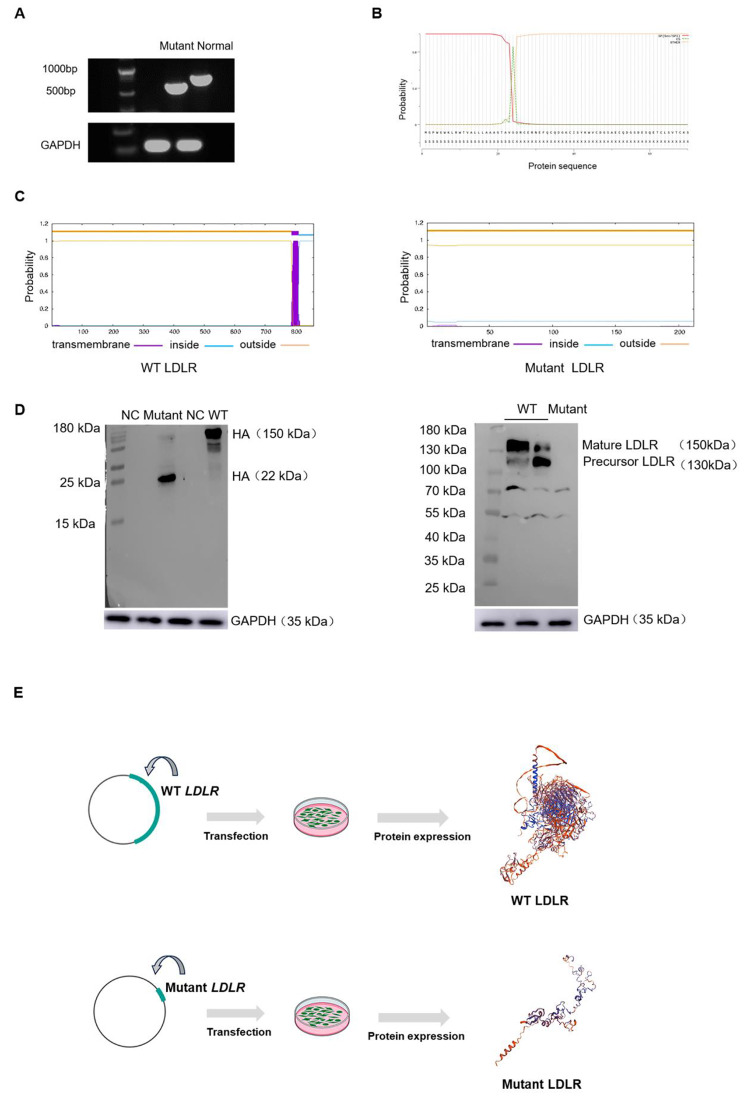
Whole-genome sequencing (WGS) was used to identify variants of FH-related genes, including low-density lipoprotein receptor (LDLR), apolipoprotein B (APOB), and proprotein convertase subtilisin/kexin 9 (PCSK9). Bioinformatics software was used to predict signal peptides, transmembrane structures, and spatial construction information of the mutated sequences. Western blotting was performed on the mutant protein to determine the presence of the major structural domains of the LDLR. The PCSK9 and APOB genes were screened and analyzed. Moreover, the proband and his brother were treated with a PCSK9 inhibitor for 1 year, and the effect of the treatment on lipid levels was assessed.
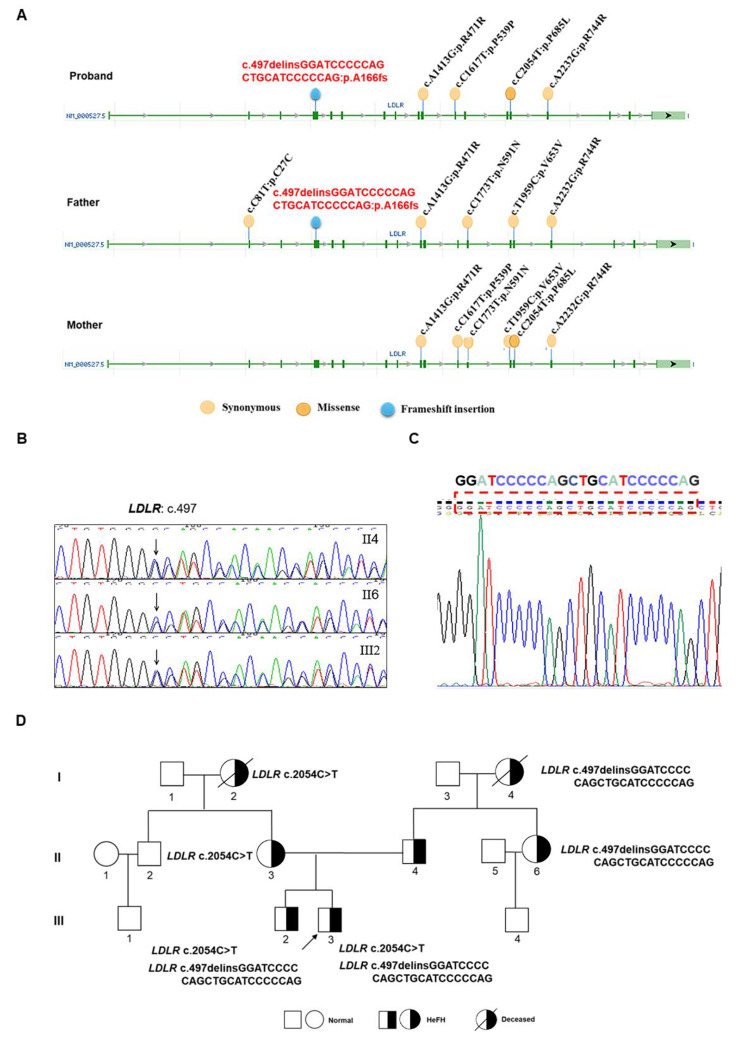
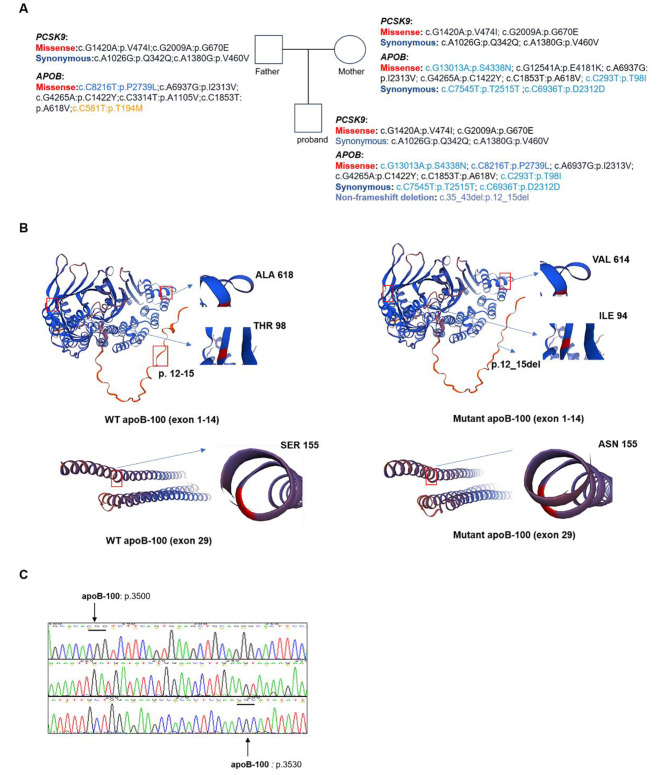
WGS revealed two potentially pathogenic mutations in the LDLR gene. One was a novel mutation, c.497delinsGGATCCCCCAGCTGCATCCCCCAG (p. Ala166fs), and the other was a known pathogenic mutation, c.2054C>T (p. Pro685Leu). Bioinformatics prediction and in vitro experiments revealed that the novel mutation could not be expressed on the cell membrane. Numerous gene variants were identified in the APOB gene that may have a significant impact on the family members with FH. Thus, it is suggested that the severe manifestation of FH in the proband primarily resulted from the cumulative genetic effects of variants in both LDLR and APOB. However, a subsequent study indicated that treatment with a PCSK9 inhibitor (Evolocumab) did not significantly reduce the blood lipid levels in the proband or his brother.
The cumulative effect of LDLR and APOB variants was the primary cause of elevated blood lipid levels in this family. However, PCSK9 inhibitor therapy did not appear to be beneficial for the proband. This study emphasizes the importance of genetic testing in determining the most suitable treatment options for patients with FH.
家族性高胆固醇血症(FH)是一种常染色体显性遗传疾病。本研究的主要目的是鉴定一个中国 FH 家系中的主要致病突变。
采用全基因组测序(WGS)鉴定 FH 相关基因(包括低密度脂蛋白受体(LDLR)、载脂蛋白 B(APOB)和前蛋白转化酶枯草溶菌素/柯萨奇蛋白酶 9(PCSK9))的变异。生物信息学软件用于预测突变序列的信号肽、跨膜结构和空间结构信息。用 Western blot 检测 LDLR 突变蛋白是否存在主要结构域。筛选和分析 PCSK9 和 APOB 基因。此外,对先证者及其哥哥进行了 PCSK9 抑制剂治疗 1 年,并评估了治疗对血脂水平的影响。
WGS 发现 LDLR 基因中有两个潜在的致病突变。一个是新的突变,c.497delinsGGATCCCCCAGCTGCATCCCCCAG(p.Ala166fs),另一个是已知的致病突变,c.2054C>T(p.Pro685Leu)。生物信息学预测和体外实验表明,新突变不能在细胞膜上表达。在 APOB 基因中发现了许多可能对 FH 家系成员有重大影响的基因变异。因此,提示先证者 FH 严重表现主要是 LDLR 和 APOB 基因变异的累积遗传效应所致。然而,随后的研究表明,PCSK9 抑制剂(依洛尤单抗)治疗并未显著降低先证者及其哥哥的血脂水平。
LDLR 和 APOB 变异的累积效应是该家系血脂升高的主要原因。然而,PCSK9 抑制剂治疗对先证者似乎无益。本研究强调了遗传检测在确定 FH 患者最适合治疗方案中的重要性。