Department of Orthopedic Surgery, Third Hospital of Hebei Medical University, No. 139 Ziqiang Road, Shijiazhuang, 050051, Hebei, China.
J Orthop Surg Res. 2023 Oct 18;18(1):781. doi: 10.1186/s13018-023-04287-2.
To investigate the differences in postoperative patellofemoral pressures and patellar tracking during at least three years of follow-up in patients using three prostheses of different designs in total knee arthroplasty (TKA) without patellar resurfacing.
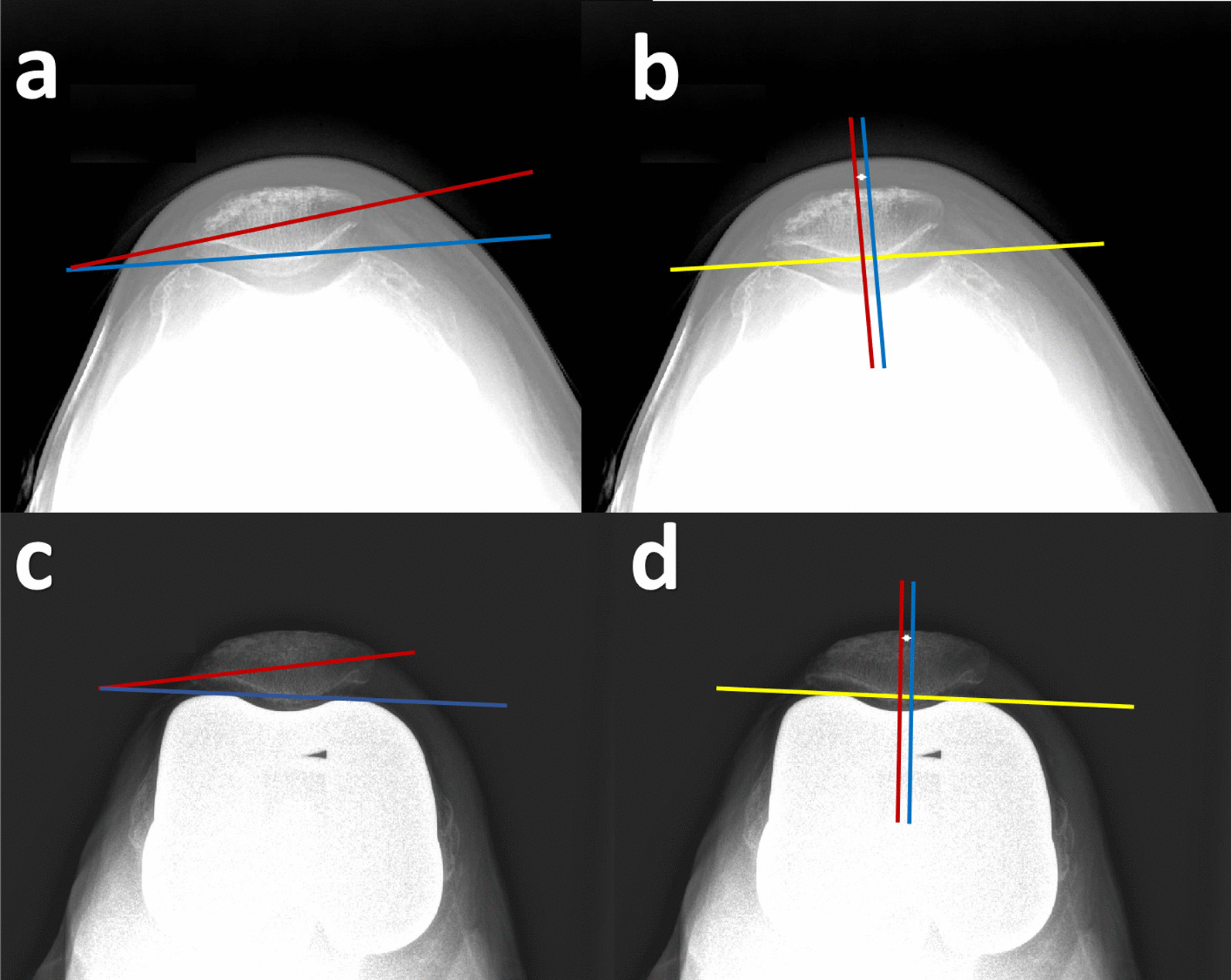
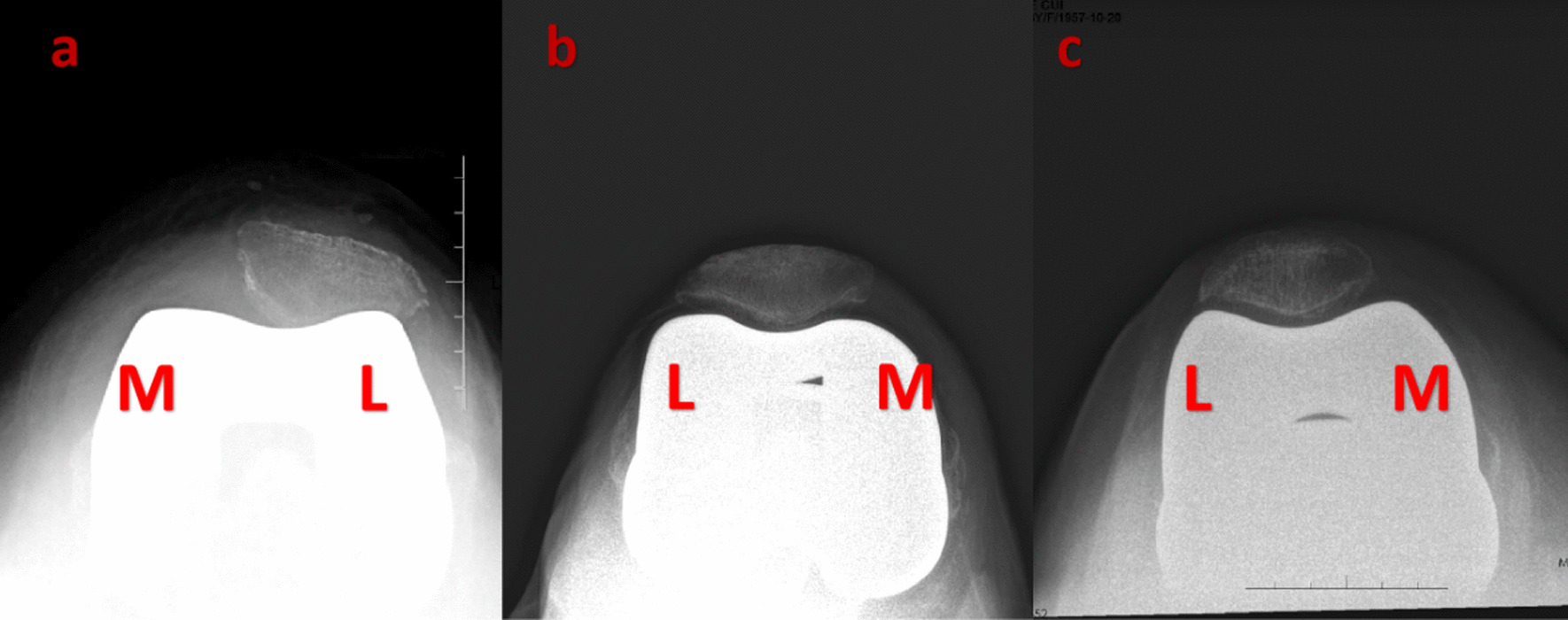
RADIOGRAPHIC INVESTIGATIONS: The study included 401 patients who had a total of 480 knee prostheses implanted without patellar resurfacing. The prostheses used were Genesis II (external rotation design of femoral prosthesis), Triathlon (design with deep trochlear grooves), and Gemini MK II (deepening of trochlear groove and lateral condylar protrusion that closely follows the anatomical shape). The patients' patellar tracking was assessed by measuring patellar tilt and displacement during postoperative follow-up. Furthermore, postoperative knee function and pain were evaluated through range of motion, Knee Society scores (KSS), and Forgotten Joint Score (FJS) to compare the different groups.
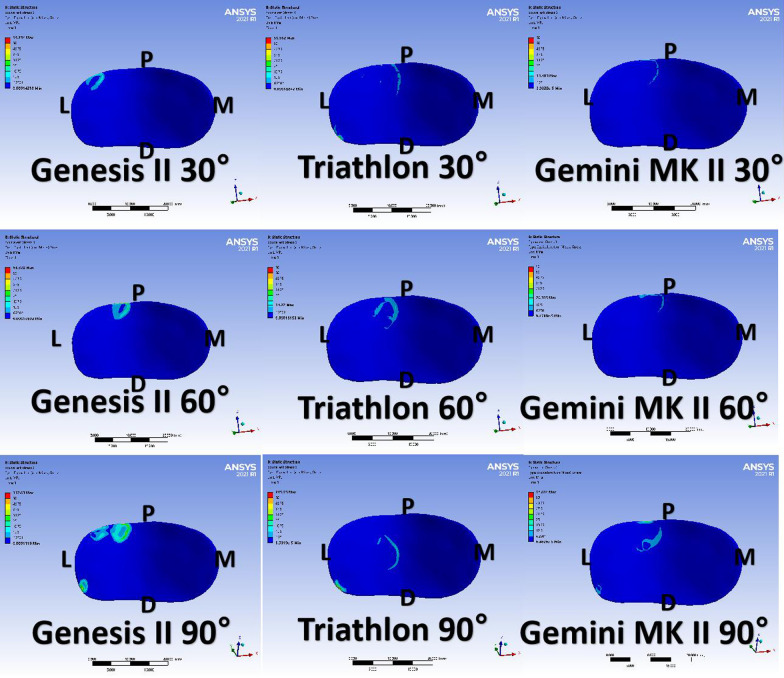
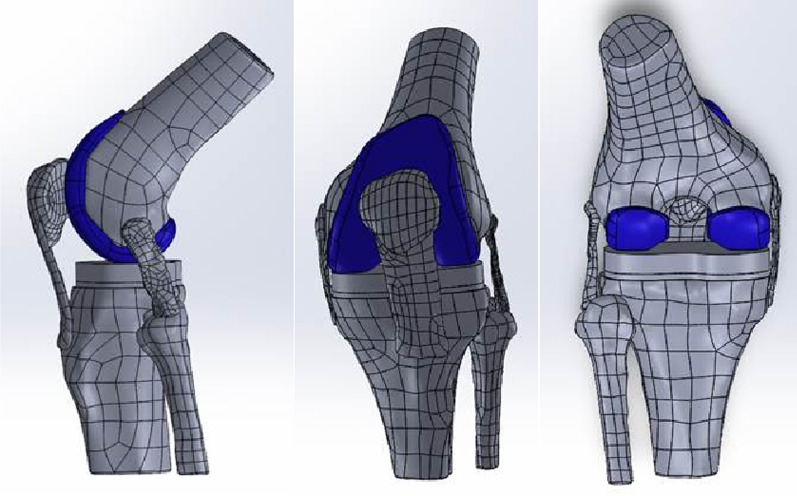
Constructing a finite element model of the knee joint of a normal volunteer after total knee arthroplasty using different prostheses for nonpatellar replacement. The three models' von Mises stress distribution heat map, peak contact pressure, and patellar transverse displacement were compared at 30°, 60°, and 90°, respectively.
RADIOGRAPHIC INVESTIGATIONS: A total of 456 knees of 384 patients were investigated at a 3-year follow-up after TKA without patellar resurfacing. There were no significant differences in patellar tracking between the three groups. Patients with all three prostheses demonstrated favorable clinical outcomes at 3 years postoperatively, with no statistically significant differences in knee scores (91.9 vs 92.3 vs 91.8) or range of motion (127.9° vs 128.5° vs 127.7°) between the groups. However, there was a significant difference between Genesis II and Gemini MK II in the Forgotten Joint Score (59.7 vs 62.4). Patients with persistent postoperative anterior knee pain were present in all three groups (16 vs 12 vs 10), but the incidence was not significantly different.
The von Mises stress distribution heat map showed that during flexion, the patellofemoral stresses were mainly concentrated on the lateral side of the prosthesis side, and the contact site gradually shifted downward with increasing flexion angle. At the same time, the peak contact stress of the patellofemoral joint increased with the gradual increase in the flexion angle. Genesis II, with a wider and shallower trochlear groove, showed greater patellofemoral stresses and lateral patellar displacement after TKA without patellar resurfacing. The Gemini MK II with a deeper trochlear groove and slightly protruding lateral condyle is more in line with anatomical design, with smaller patellofemoral joint pressure and better patellar tracking.
In TKA without patellar resurfacing, a prosthesis with a deeper trochlear groove, a slightly higher lateral femoral condyle, and a more anatomically designed knee that better matches the patellar morphology should be a better choice.
本研究旨在探讨在全膝关节置换术(TKA)中不进行髌骨表面置换的情况下,使用三种不同设计的假体,至少在 3 年的随访中,术后髌股关节压力和髌骨轨迹的差异。
影像学研究:本研究纳入了 401 名患者,共植入了 480 个膝关节假体,均未进行髌骨表面置换。所使用的假体包括 Genesis II(股骨假体的外旋设计)、Triathlon(深滑车沟设计)和 Gemini MK II(加深滑车沟和外侧髁突出,紧密贴合解剖形状)。通过测量术后随访过程中的髌骨倾斜和位移来评估患者的髌骨轨迹。此外,通过测量膝关节活动度、膝关节协会评分(KSS)和遗忘关节评分(FJS)来评估术后膝关节功能和疼痛,以比较不同组之间的差异。
使用不同的假体对正常志愿者进行全膝关节置换术后的膝关节进行建模,构建一个正常志愿者的膝关节有限元模型。比较三种模型在 30°、60°和 90°时的 von Mises 等效应力分布图、峰值接触压力和髌骨横向位移。
影像学研究:对 384 名患者中的 456 个膝关节进行了 TKA 后 3 年的随访,未进行髌骨表面置换。三组之间的髌骨轨迹无显著差异。所有三种假体的患者在术后 3 年均有良好的临床效果,膝关节评分(91.9 分 vs 92.3 分 vs 91.8 分)或膝关节活动度(127.9° vs 128.5° vs 127.7°)无统计学差异。然而,Genesis II 和 Gemini MK II 之间的遗忘关节评分有显著差异(59.7 分 vs 62.4 分)。三组患者均存在持续性术后膝关节前痛(16 例 vs 12 例 vs 10 例),但发生率无显著差异。
von Mises 等效应力分布图显示,在膝关节屈曲过程中,髌股关节应力主要集中在假体的外侧,随着屈曲角度的增加,接触点逐渐向下移动。同时,髌股关节的峰值接触压力随着屈曲角度的逐渐增加而增加。未进行髌骨表面置换的 TKA 后,Genesis II 具有更宽且更浅的滑车沟,显示出更大的髌股关节应力和髌骨外侧位移。具有更深滑车沟和轻微突出外侧髁的 Gemini MK II 更符合解剖学设计,髌股关节压力更小,髌骨轨迹更好。
在 TKA 中不进行髌骨表面置换的情况下,应选择具有更深滑车沟、稍高的外侧股骨髁和更符合髌股形态的解剖学设计的假体,以获得更好的效果。