Division of Developmental Biology, Department of Pediatrics, Cincinnati Children's Hospital Medical Center, University of Cincinnati College of Medicine, Cincinnati, OH, USA.
J Exp Clin Cancer Res. 2023 Oct 20;42(1):273. doi: 10.1186/s13046-023-02850-7.
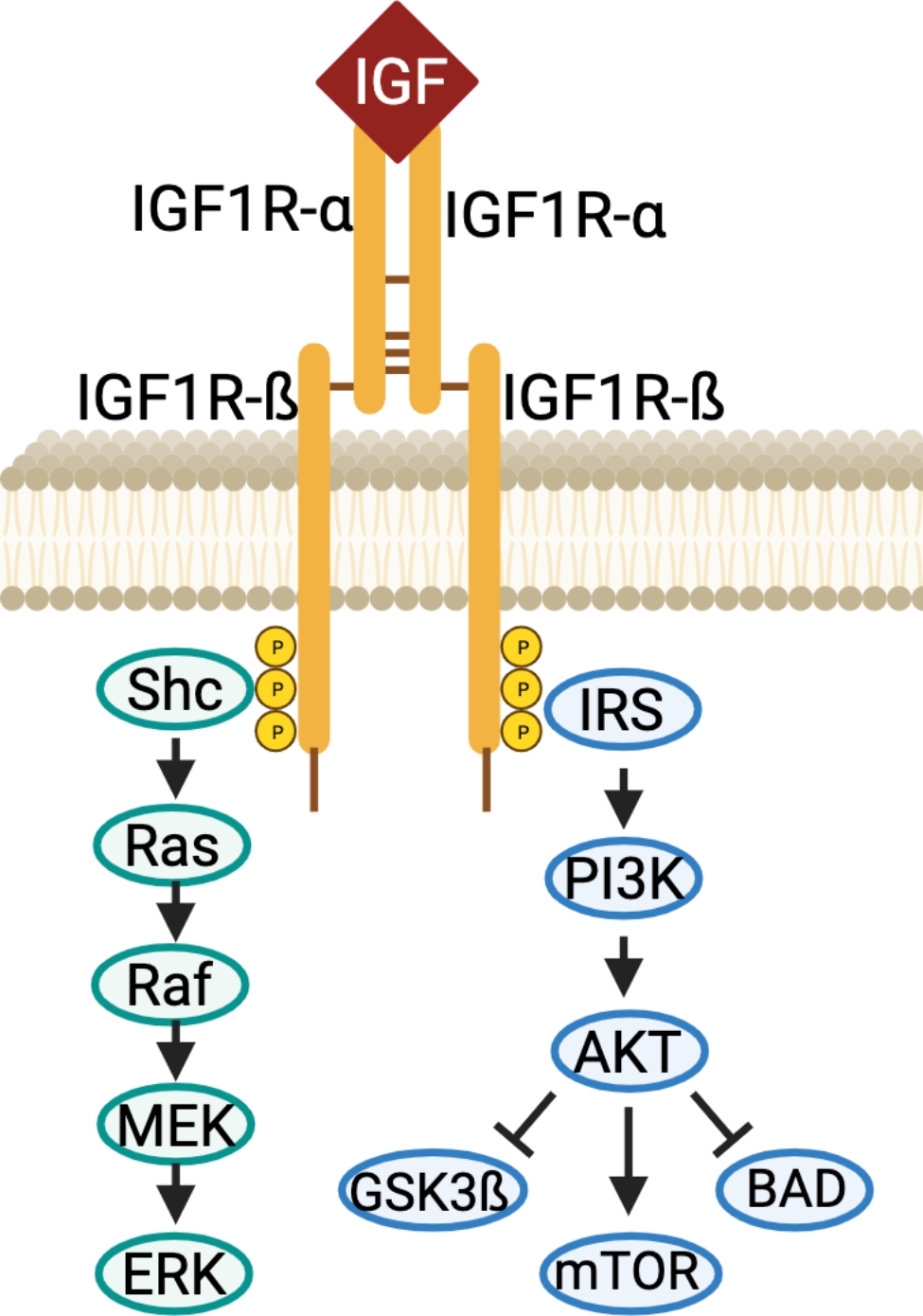
The insulin-like growth factor receptor (IGF-1R) was among the most intensively pursued kinase targets in oncology. However, even after a slew of small-molecule and antibody therapeutics reached clinical trials for a range of solid tumors, the initial promise remains unfulfilled. Mechanisms of resistance to, and toxicities resulting from, IGF-1R-targeted drugs are well-catalogued, and there is general appreciation of the fact that a lack of biomarker-based patient stratification was a limitation of previous clinical trials. But no next-generation therapeutic strategies have yet successfully exploited this understanding in the clinic.Currently there is emerging interest in re-visiting IGF-1R targeted therapeutics in combination-treatment protocols with predictive biomarker-driven patient-stratification. One such biomarker that emerged from early clinical trials is the sub-cellular localization of IGF-1R. After providing some background on IGF-1R, its drugging history, and the trials that led to the termination of drug development for this target, we look more deeply into the correlation between sub-cellular localization of IGF-1R and susceptibility to various classes of IGF-1R - targeted agents.
胰岛素样生长因子受体 (IGF-1R) 是肿瘤学中研究最深入的激酶靶点之一。然而,即使有大量小分子和抗体治疗药物针对一系列实体瘤进入临床试验,最初的承诺仍未实现。针对 IGF-1R 靶向药物的耐药机制和毒性已经得到了很好的记录,人们普遍认识到,缺乏基于生物标志物的患者分层是以前临床试验的一个局限性。但是,目前还没有下一代治疗策略能够成功地将这一认识应用于临床。目前,人们对重新将 IGF-1R 靶向治疗与具有预测性生物标志物驱动的患者分层的联合治疗方案结合起来产生了兴趣。早期临床试验中出现的一个此类生物标志物是 IGF-1R 的亚细胞定位。在提供了关于 IGF-1R、其药物开发历史以及导致该靶点药物开发终止的试验的背景信息之后,我们更深入地研究了 IGF-1R 的亚细胞定位与对各种 IGF-1R 靶向药物的敏感性之间的相关性。