Andújar-Tenorio Natalia, Cobo Antonio, Martínez-Rodríguez Ana Mª, Hidalgo Marina, Prieto Isabel, Gálvez Antonio, Martínez-Cañamero Magdalena
Área de Microbiología, Departamento Ciencias de la Salud, Universidad de Jaén, Jaén, Spain.
Departamento de Microbiología, Universidad de Granada, Granada, Spain.
Front Nutr. 2023 Oct 4;10:1272139. doi: 10.3389/fnut.2023.1272139. eCollection 2023.
Previously we have reported a r16S gene next generation sequencing study on the effect of high fat diets in the intestinal microbiota using a murine model. However, many important microbial traits occur at strain level and, in order to detect these population changes, culture-dependent approaches need to be applied. With this goal, we decided to study a very well-known commensal genus, , and therefore, intestinal enterococci methodically isolated during the above-mentioned experiment were analyzed.
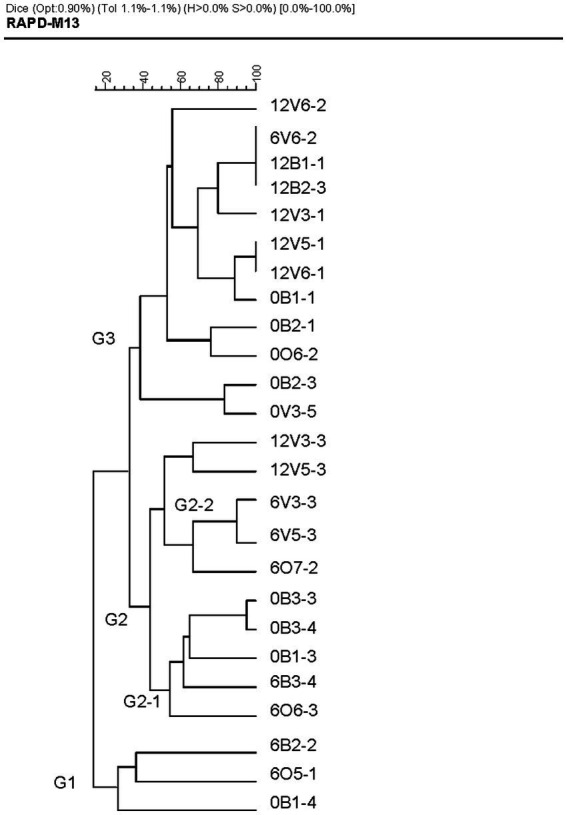
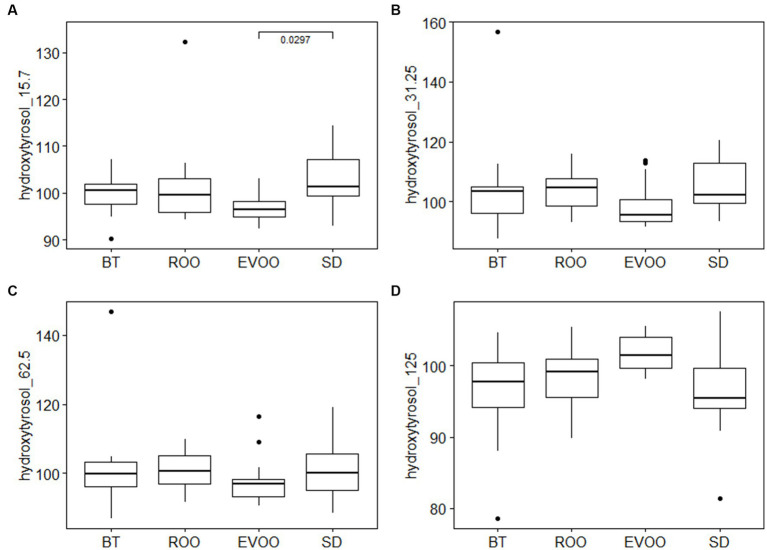
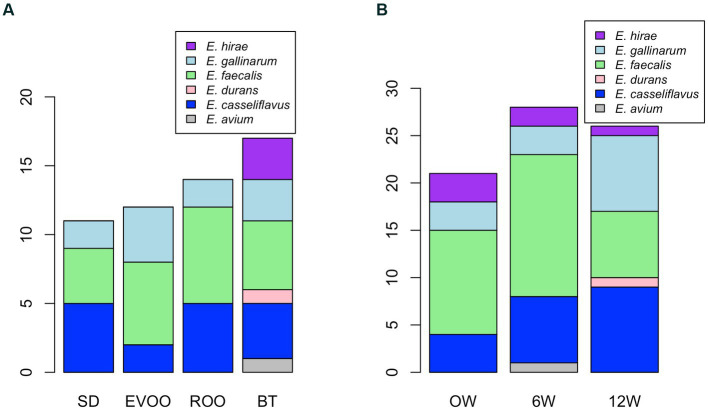
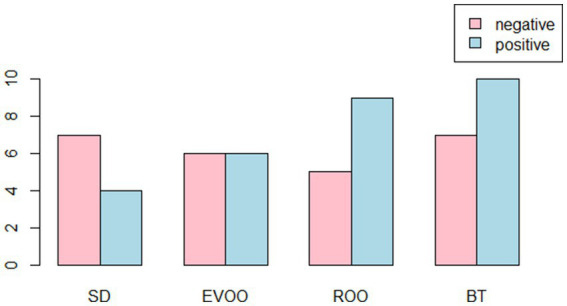
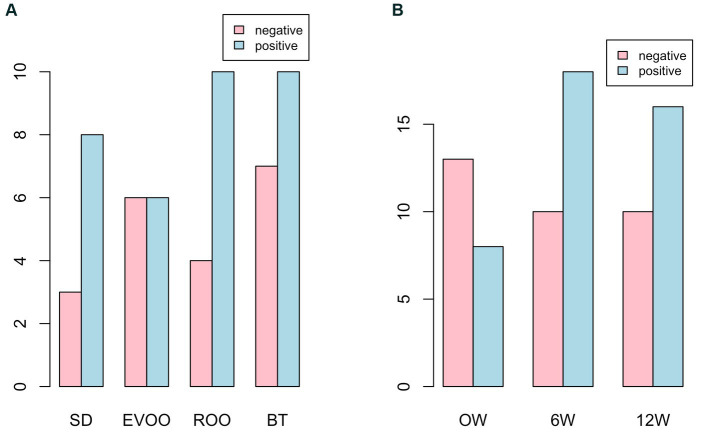
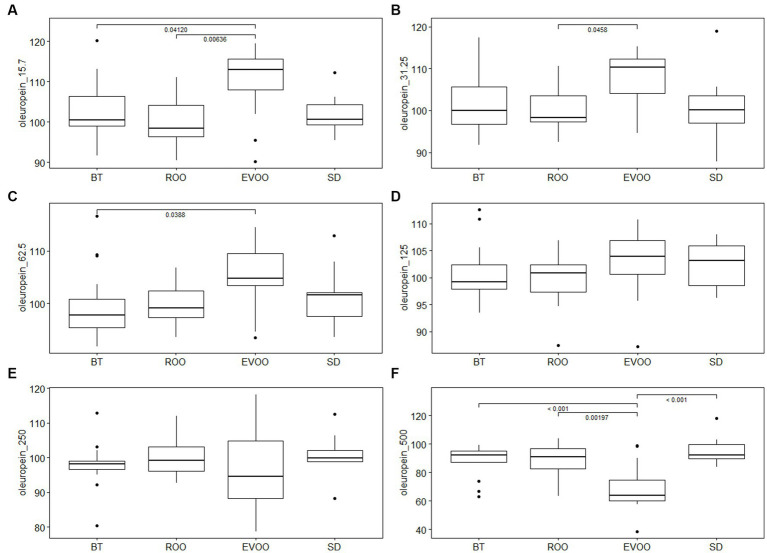
A collection of 75 distinct enterococcal strains isolated from feces of mice fed a standard diet or high-fat diets enriched with butter, refined olive oil, or extra virgin olive oil and after 0, 6 or 12 weeks of diet, were genetically and phenotypically characterized in search of virulence factors, biogenic amine production and antibiotic resistance. All strains were tested for the susceptibility to two virgin olive oil polyphenols, oleuropein (the bitter principle of olives) and hydroxytyrosol (derived from oleuropein by enzymatic hydrolysis and responsible for the high stability of olive oil).
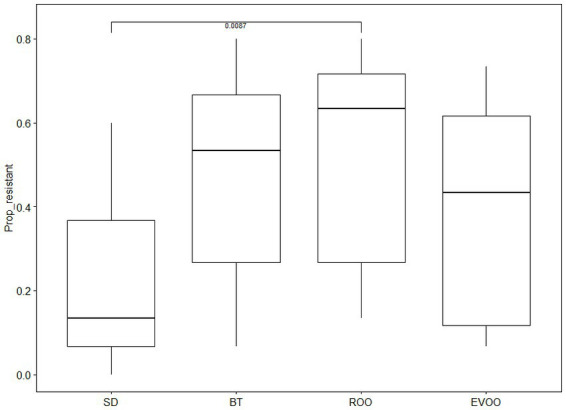
No drastic polyphenol effect was found except at high concentrations. However, when carrying out a comparative statistical study in the 75 strains of the collection according to the different diets, we have detected significant differences between the strains isolated from mice fed with a diet enriched with virgin olive oil and the rest of the diets. EVOO strains also presented less resistance to antibiotics and a more beneficial profile overall.
These results support the prebiotic role of polyphenols, showing how they are able to modulate the set of strains that comprises a genus in the gut, allowing them to adapt to a changing environment in the host's intestine and possibly exerting effects on its physiology.
此前我们报道了一项利用小鼠模型对高脂肪饮食对肠道微生物群影响的16S基因下一代测序研究。然而,许多重要的微生物特征发生在菌株水平,为了检测这些种群变化,需要应用依赖培养的方法。出于这个目的,我们决定研究一个非常著名的共生菌属,因此,对在上述实验中系统分离的肠道肠球菌进行了分析。
从喂食标准饮食或富含黄油、精制橄榄油或特级初榨橄榄油的高脂肪饮食的小鼠粪便中分离出75株不同的肠球菌菌株,并在饮食0、6或12周后,对其进行遗传和表型特征分析,以寻找毒力因子、生物胺产生和抗生素抗性。所有菌株都测试了对两种初榨橄榄油多酚、橄榄苦苷(橄榄的苦味成分)和羟基酪醇(由橄榄苦苷通过酶水解衍生而来,是橄榄油高稳定性的原因)的敏感性。
除高浓度外,未发现多酚有显著影响。然而,当根据不同饮食对收集的75株菌株进行比较统计研究时,我们发现从喂食富含初榨橄榄油饮食的小鼠中分离出的菌株与其他饮食的菌株之间存在显著差异。特级初榨橄榄油菌株对抗生素的抗性也较低,总体上具有更有益的特征。
这些结果支持了多酚的益生元作用,表明它们如何能够调节肠道中构成一个菌属的菌株组,使它们能够适应宿主肠道不断变化的环境,并可能对其生理产生影响。