The Hospital for Sick Children, Program in Developmental and Stem Cell Biology, Toronto, ON, M5G0A4, Canada.
Department of Molecular Genetics, University of Toronto, Toronto, ON, M5S1A8, Canada.
BMC Biol. 2023 Oct 20;21(1):227. doi: 10.1186/s12915-023-01730-y.
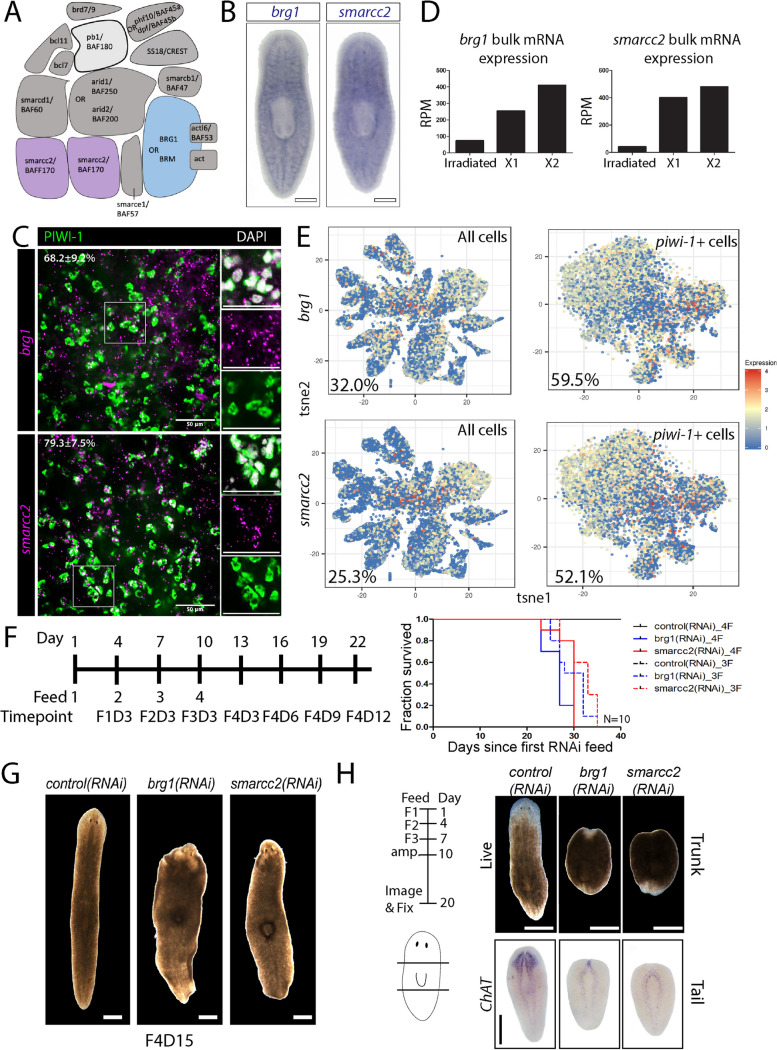
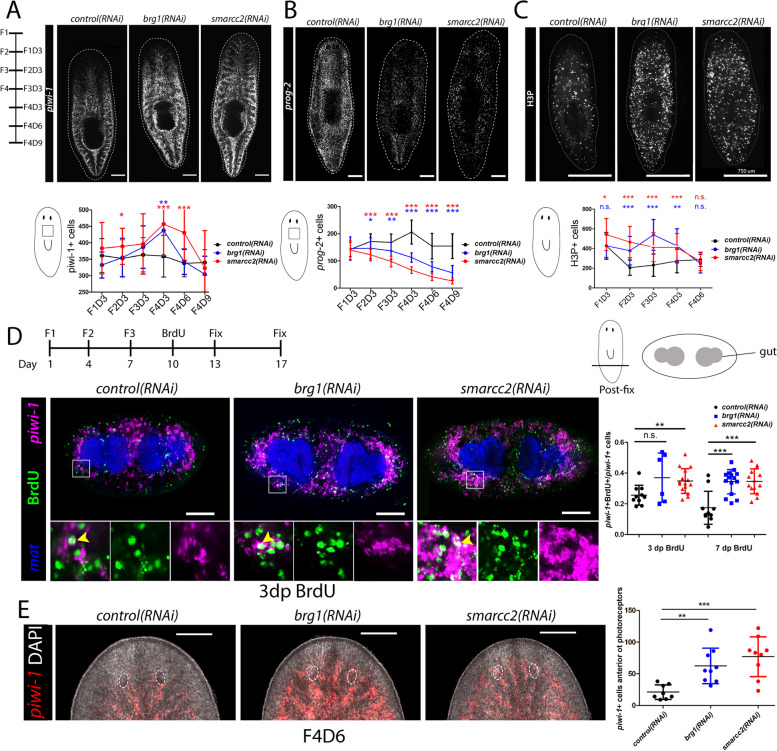
The flatworm planarian, Schmidtea mediterranea, has a large population of adult stem cells (ASCs) that replace any cell type during tissue turnover or regeneration. How planarian ASCs (called neoblasts) manage self-renewal with the ability to produce daughter cells of different cell lineages (multipotency) is not well understood. Chromatin remodeling complexes ultimately control access to DNA regions of chromosomes and together with specific transcription factors determine whether a gene is transcribed in a given cell type. Previous work in planarians determined that RNAi of core components of the BAF chromatin remodeling complex, brg1 and smarcc2, caused increased ASCs and failed regeneration, but how these cellular defects arise at the level of gene regulation in neoblasts is unknown.
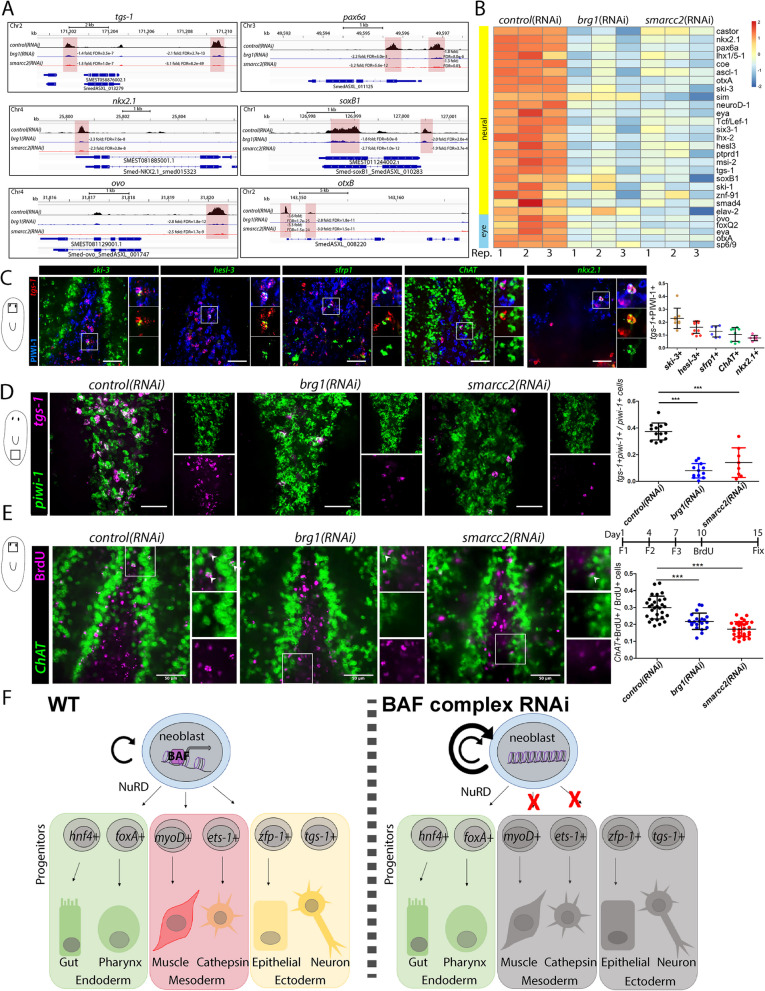
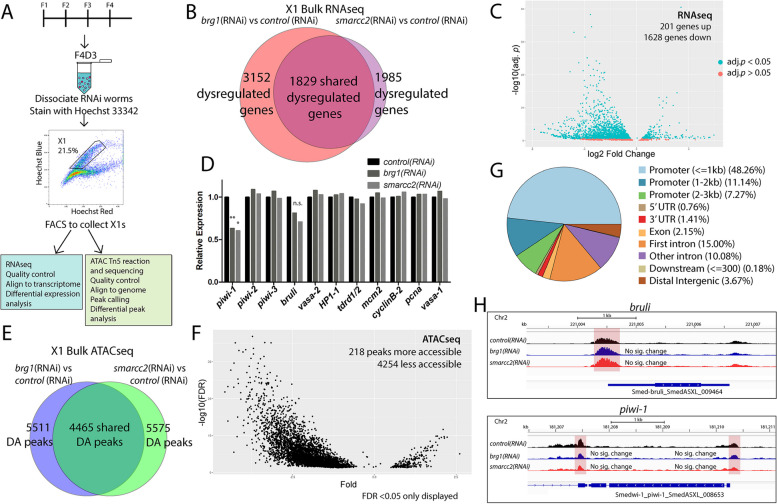
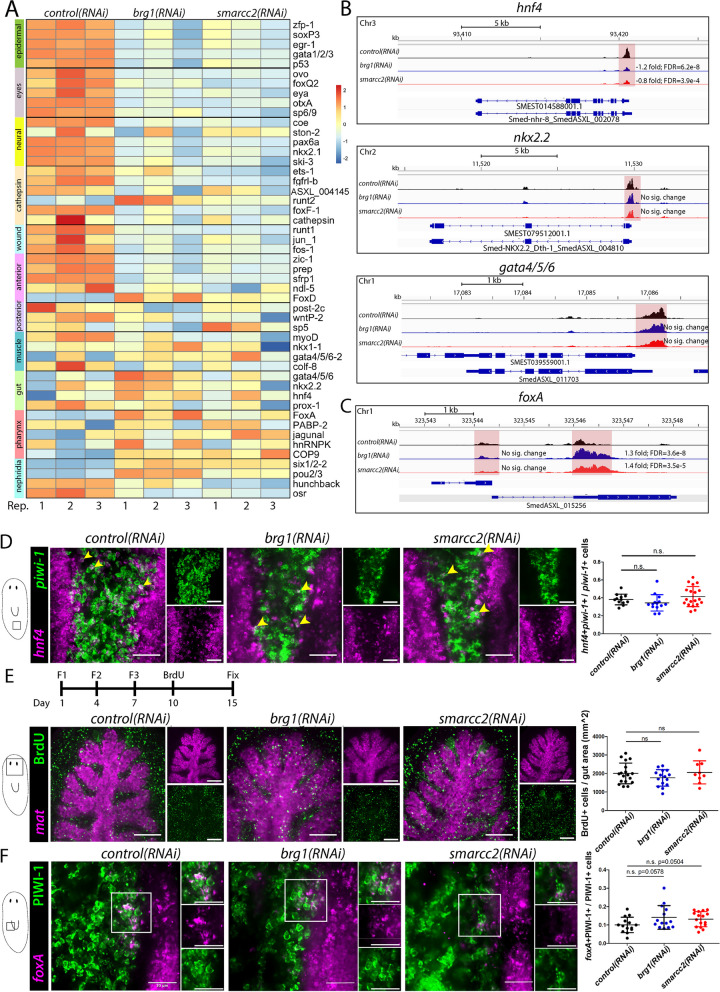
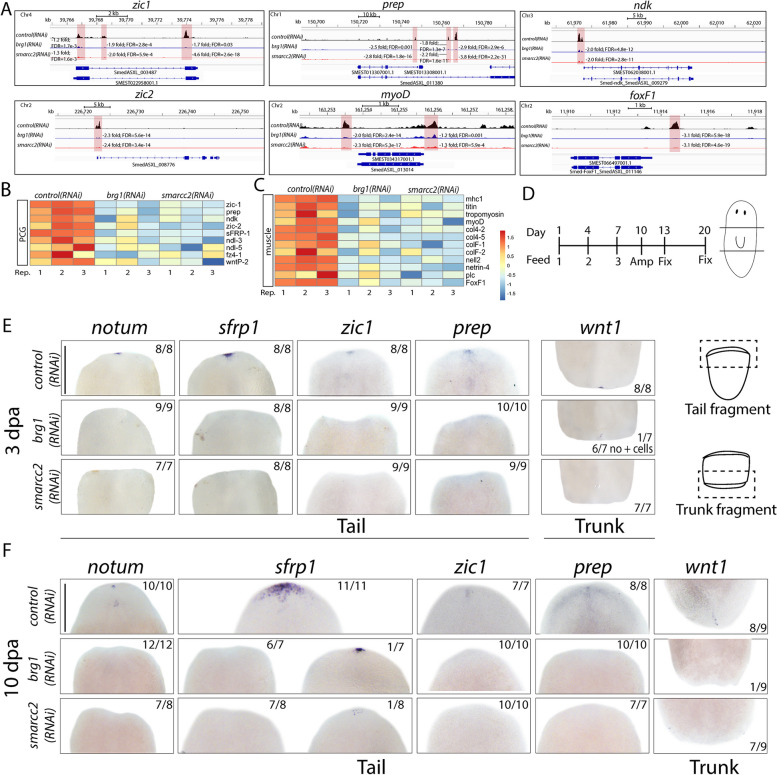
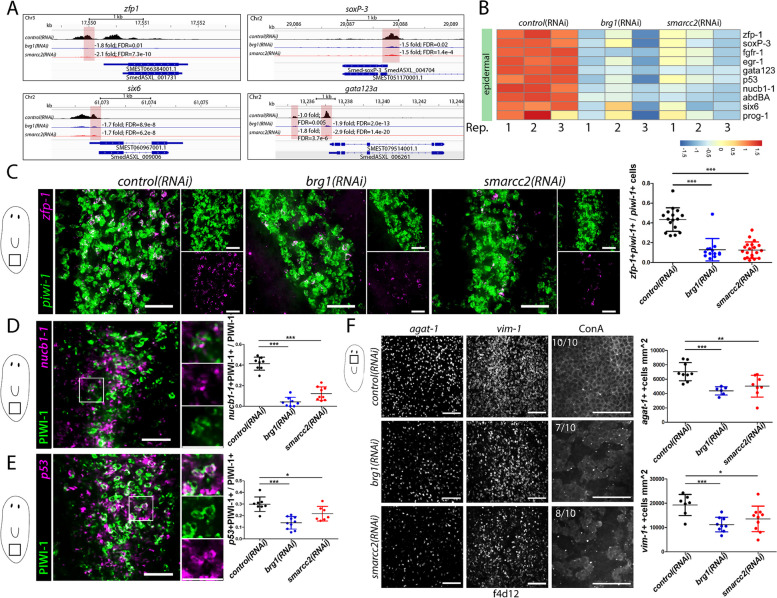
Here, we perform ATAC and RNA sequencing on purified neoblasts, deficient for the BAF complex subunits brg-1 and smarcc2. The data demonstrate that the BAF complex promotes chromatin accessibility and facilitates transcription at target loci, as in other systems. Interestingly, we find that the BAF complex enables access to genes known to be required for the generation of mesoderm- and ectoderm-derived lineages, including muscle, parenchymal cathepsin, neural, and epithelial lineages. BAF complex knockdowns result in disrupted differentiation into these cell lineages and functional consequences on planarian regeneration and tissue turnover. Notably, we did not detect a role for the BAF complex in neoblasts making endodermal lineages.
Our study provides functional insights into how the BAF complex contributes to cell fate decisions in planarian ASCs in vivo.
扁形动物涡虫(Schmidtea mediterranea)拥有大量成体干细胞(ASCs),这些细胞可在组织更新或再生过程中替代任何细胞类型。扁形动物 ASCs(称为神经干细胞)如何在维持自我更新能力的同时产生不同细胞谱系的子细胞(多能性)尚不清楚。染色质重塑复合物最终控制着染色体上 DNA 区域的可及性,与特定的转录因子一起决定特定细胞类型中基因的转录。之前的研究已经确定,BRG1 和 SMARCC2 等 BAF 染色质重塑复合物的核心成分的 RNAi 会导致 ASCs 增加和再生失败,但这些细胞缺陷是如何在神经干细胞的基因调控水平上产生的尚不清楚。
在这里,我们对缺乏 BAF 复合物亚基 brg-1 和 smarcc2 的纯化神经干细胞进行了 ATAC 和 RNA 测序。数据表明,BAF 复合物促进了染色质的可及性,并在靶基因位点促进转录,就像在其他系统中一样。有趣的是,我们发现 BAF 复合物使参与中胚层和外胚层谱系生成的基因(包括肌肉、实质组织 cathepsin、神经和上皮谱系)能够获得可及性。BAF 复合物的敲低导致这些细胞谱系的分化受到干扰,并对涡虫的再生和组织更新产生功能影响。值得注意的是,我们没有发现 BAF 复合物在神经干细胞产生内胚层谱系中发挥作用。
我们的研究提供了功能上的见解,说明了 BAF 复合物如何在体内促进扁形动物 ASCs 的细胞命运决定。