Key Laboratory of Chinese Materia Medica, Heilongjiang University of Chinese Medicine, Ministry of Education, Harbin, China.
College of Pharmacy, Xinjiang Medical University, Ministry of Education, Urumqi, China.
Medicine (Baltimore). 2022 Oct 21;101(42):e31009. doi: 10.1097/MD.0000000000031009.
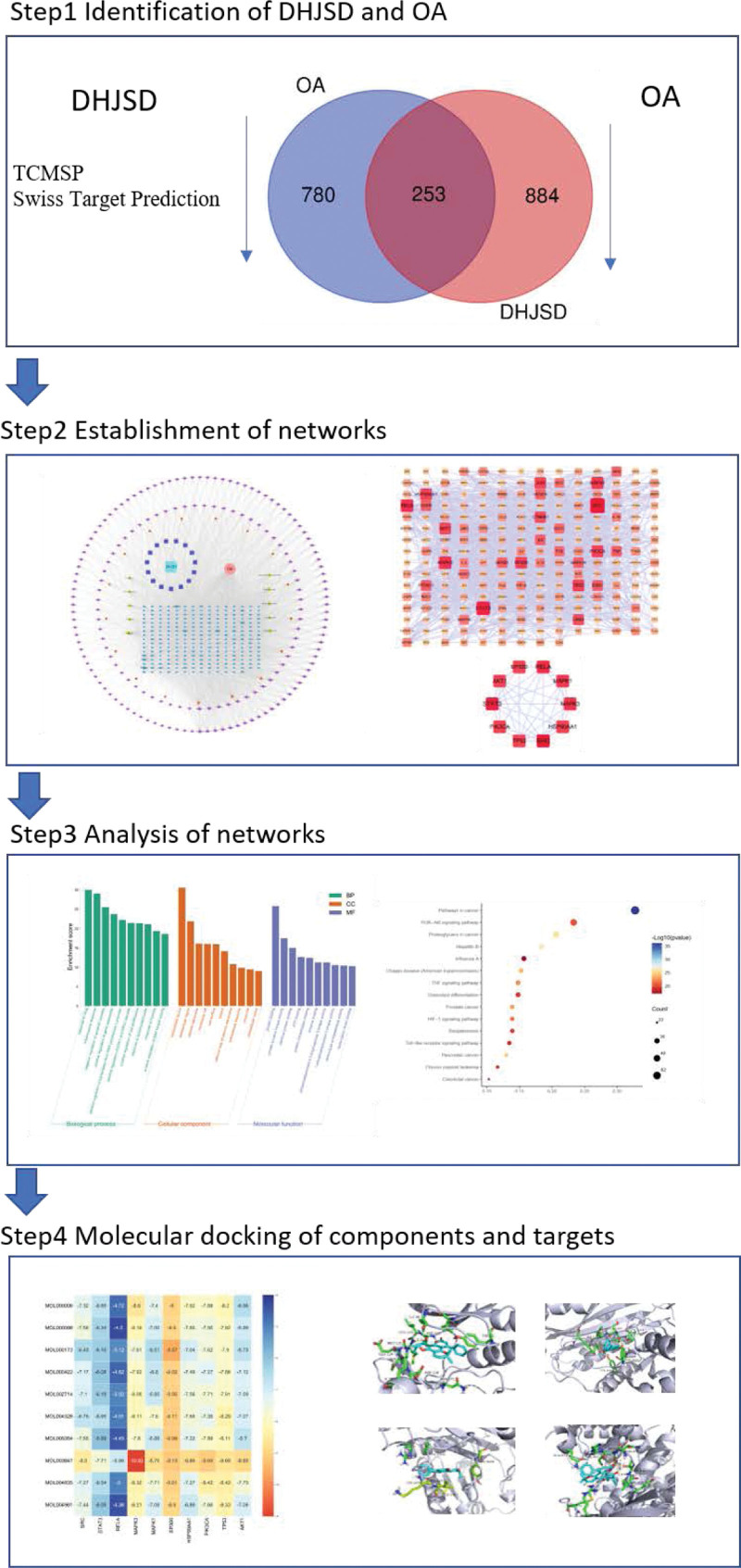
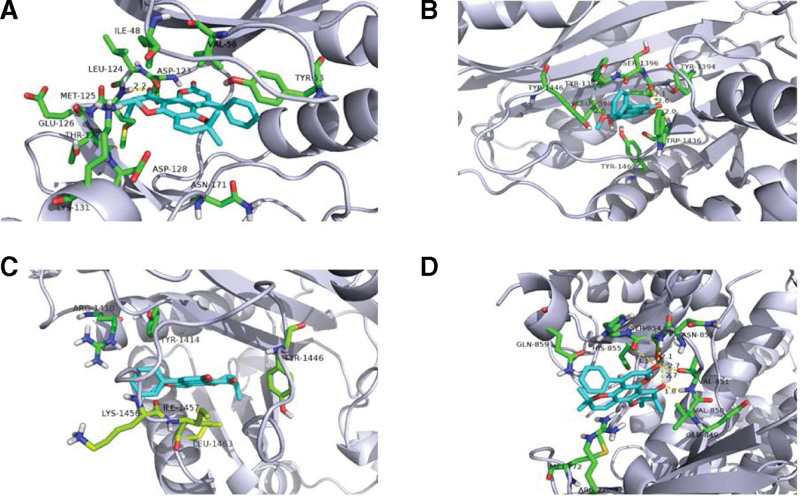
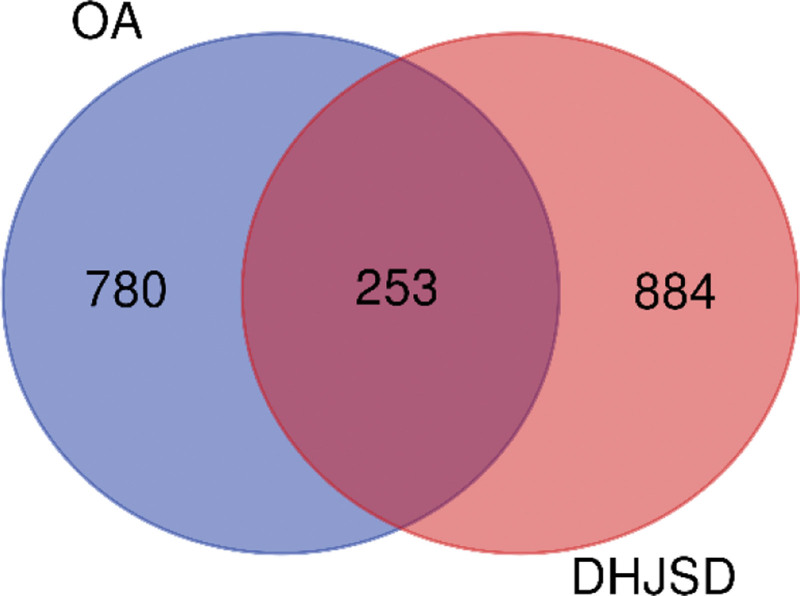
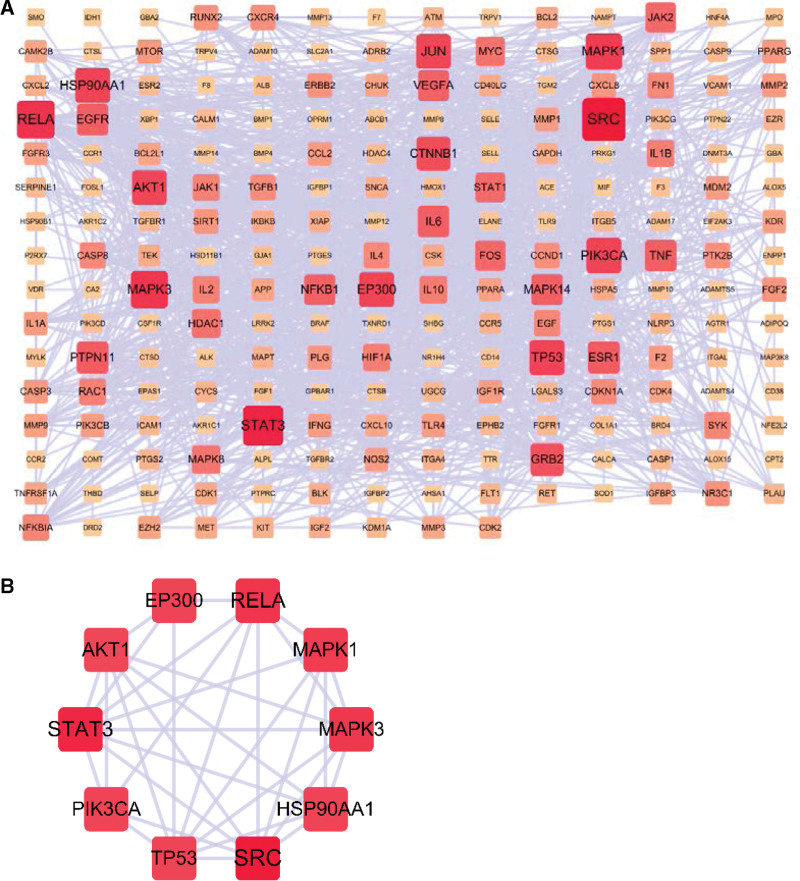
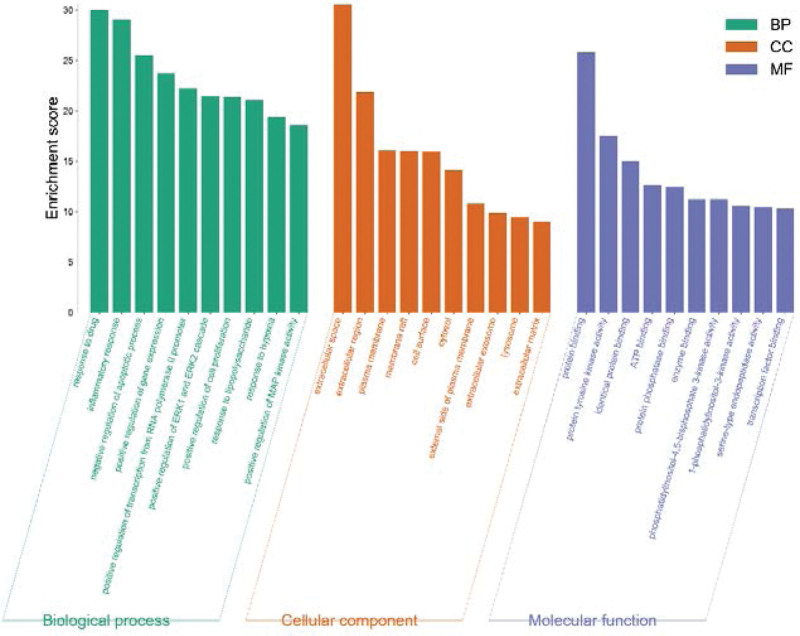
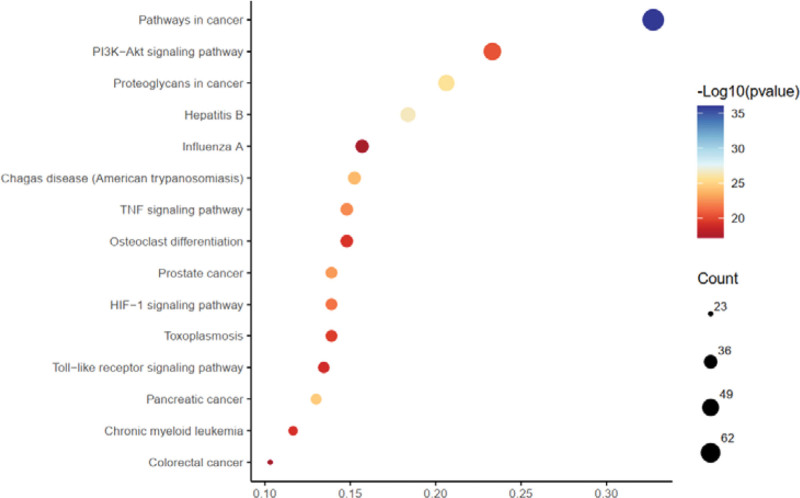
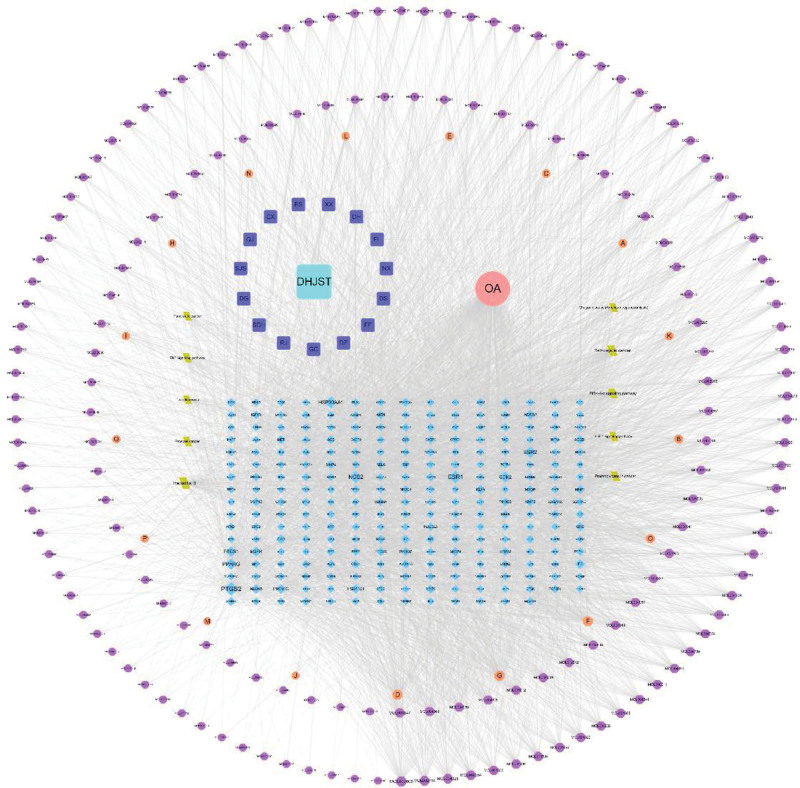
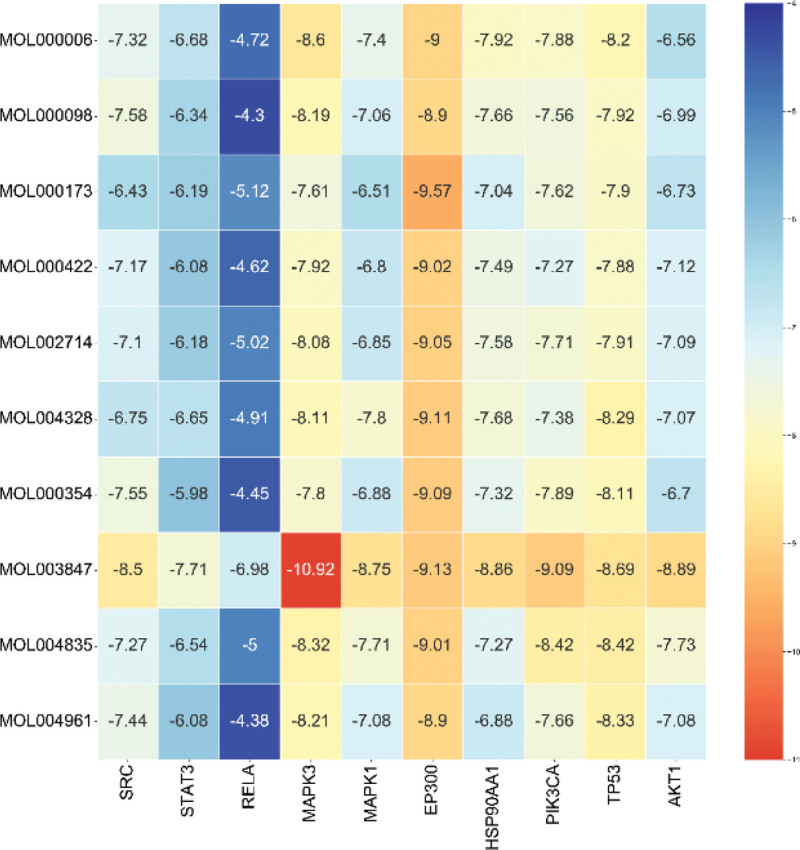
In this study, network pharmacology and molecular docking technology were used to explore the molecular mechanisms of the Duhuo Jisheng decoction in the treatment of osteoarthritis (OA). The chemical composition of the prescriptions was obtained from the traditional Chinese medicine systems pharmacology database and analysis platform (TCMSP) database and the retrieved literature. Targets for the active ingredients were obtained using TCMSP and the Swiss Target Prediction Database. Disease targets were obtained from GeneCards and DisGeNET databases. The online tool, Venny, was used to obtain common targets for drugs and diseases. Protein-protein interactions (PPI) between common targets were analyzed using the search tool for the retrieval of interacting genes/proteins (STRING) database. Common targets were analyzed for gene ontology (GO) and Kyoto encyclopedia of genes and genomes (KEGG) pathway enrichment using the database for annotation, visualization and integrated discovery (DAVID) database. Molecular docking of the first 10 targets and first 10 components was verified using AutoDock Tools software, and the docking diagram was visualized using PyMOL software. After screening, 210 chemical components of the Duhuo Jisheng decoction (DHJSD) were identified. The 253 common targets of drugs and diseases were combined by eliminating repeat values. Based on PPI network analysis, the top ten targets were SRC, STAT3, MAPK3, MAPK1, RELA, PIK3R1, HSP90AA1, TP53, EP300, and AKT1. KEGG analysis showed that DHJSD could regulate the HIF-1, PI3K-Akt, and JAK-STAT signaling pathways. The biological processes involved include inflammatory reactions, the negative regulation of apoptosis, and the positive regulation of cell proliferation. Molecular docking results showed that all targets, except the RELA protein, showed good binding to the compounds, indicating that the 10 components might exert therapeutic effects by binding to the above targets. DHJSD can treat OA by regulating the HIF-1, PI3K-Akt, and JAK-STAT signaling pathways. The proteins involved were SRC, STAT3, MAPK3, MAPK1, and PIK3R1. In this study, network pharmacology was used to predict the mechanism of DHJSD in OA treatment, which was verified by molecular docking to provide experimental research ideas and scientific basis for OA treatment.
在这项研究中,采用网络药理学和分子对接技术探讨了独活寄生汤治疗骨关节炎(OA)的分子机制。通过中药系统药理学数据库和分析平台(TCMSP)数据库和检索文献获得方剂的化学成分。使用 TCMSP 和瑞士靶点预测数据库获得活性成分的靶点。从 GeneCards 和 DisGeNET 数据库获得疾病靶点。使用在线工具 Venny 获取药物和疾病的共同靶点。使用搜索工具检索基因/蛋白质(STRING)数据库分析共同靶点的蛋白质-蛋白质相互作用(PPI)。使用数据库注释、可视化和综合发现(DAVID)数据库对共同靶点进行基因本体论(GO)和京都基因与基因组百科全书(KEGG)通路富集分析。使用 AutoDock Tools 软件验证前 10 个靶标和前 10 个成分的分子对接,并使用 PyMOL 软件可视化对接图。筛选后,确定独活寄生汤(DHJSD)的 210 种化学成分。通过消除重复值,将药物和疾病的 253 个共同靶点组合在一起。基于 PPI 网络分析,前 10 个靶标为 SRC、STAT3、MAPK3、MAPK1、RELA、PIK3R1、HSP90AA1、TP53、EP300 和 AKT1。KEGG 分析表明,DHJSD 可以调节 HIF-1、PI3K-Akt 和 JAK-STAT 信号通路。涉及的生物学过程包括炎症反应、细胞凋亡的负调节和细胞增殖的正调节。分子对接结果表明,除 RELA 蛋白外,所有靶标均与化合物具有良好的结合性,表明这 10 种成分可能通过与上述靶标结合发挥治疗作用。DHJSD 通过调节 HIF-1、PI3K-Akt 和 JAK-STAT 信号通路治疗 OA。涉及的蛋白质为 SRC、STAT3、MAPK3、MAPK1 和 PIK3R1。本研究采用网络药理学预测 DHJSD 治疗 OA 的机制,并通过分子对接验证,为 OA 治疗提供实验研究思路和科学依据。