Fan Xiangyu, Ji Mengzhi, Mu Dashuai, Zeng Xianghe, Tian Zhen, Sun Kaili, Gao Rongfeng, Liu Yang, He Xinyuan, Wu Linwei, Li Qiang
School of Biological Science and Technology, University of Jinan, Jinan, Shandong Province, China.
Artificial Intelligence Institute, University of Jinan, Jinan, Shandong Province, China.
Microbiome. 2023 Oct 21;11(1):234. doi: 10.1186/s40168-023-01672-1.
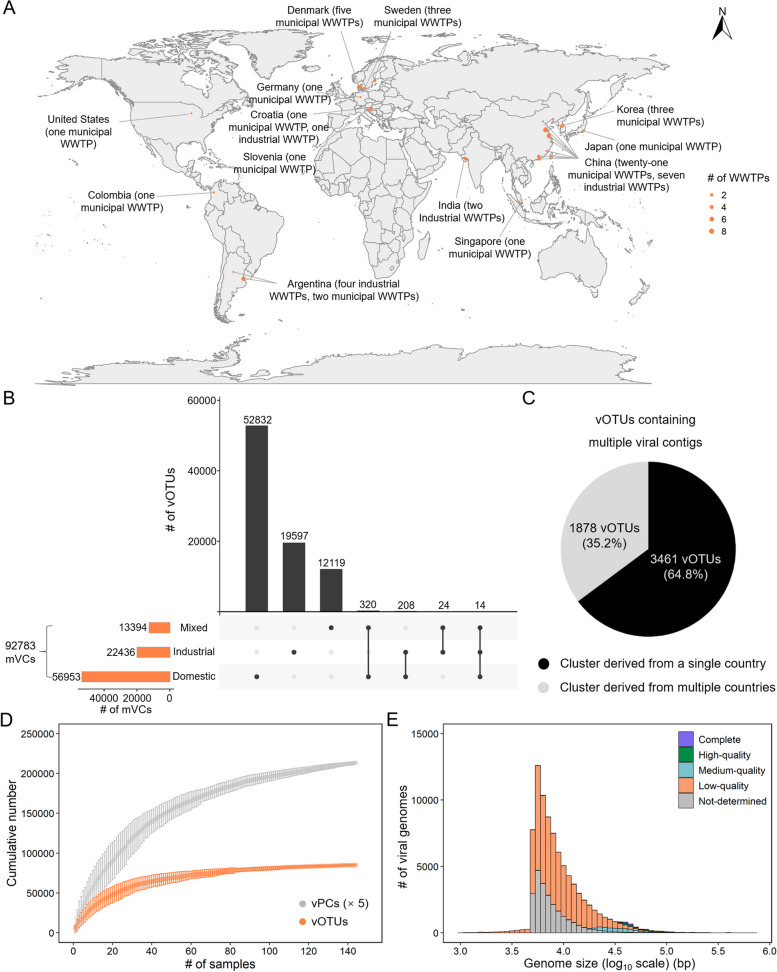
Activated sludge (AS) systems in wastewater treatment plants (WWTPs) harbor enormous viruses that regulate microbial metabolism and nutrient cycling, significantly influencing the stability of AS systems. However, our knowledge about the diversity of viral taxonomic groups and functional traits in global AS systems is still limited. To address this gap, we investigated the global diversity and biogeography of DNA viral communities in AS systems using 85,114 viral operational taxonomic units (vOTUs) recovered from 144 AS samples collected across 54 WWTPs from 13 different countries.
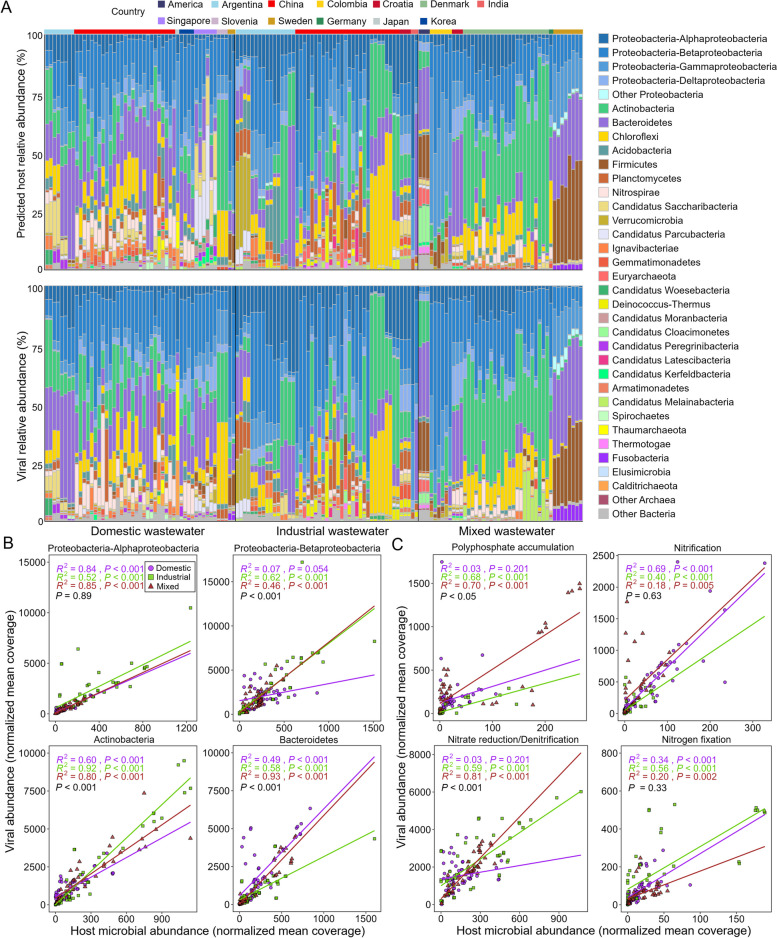
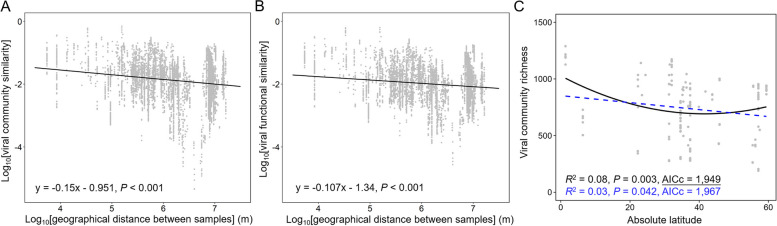
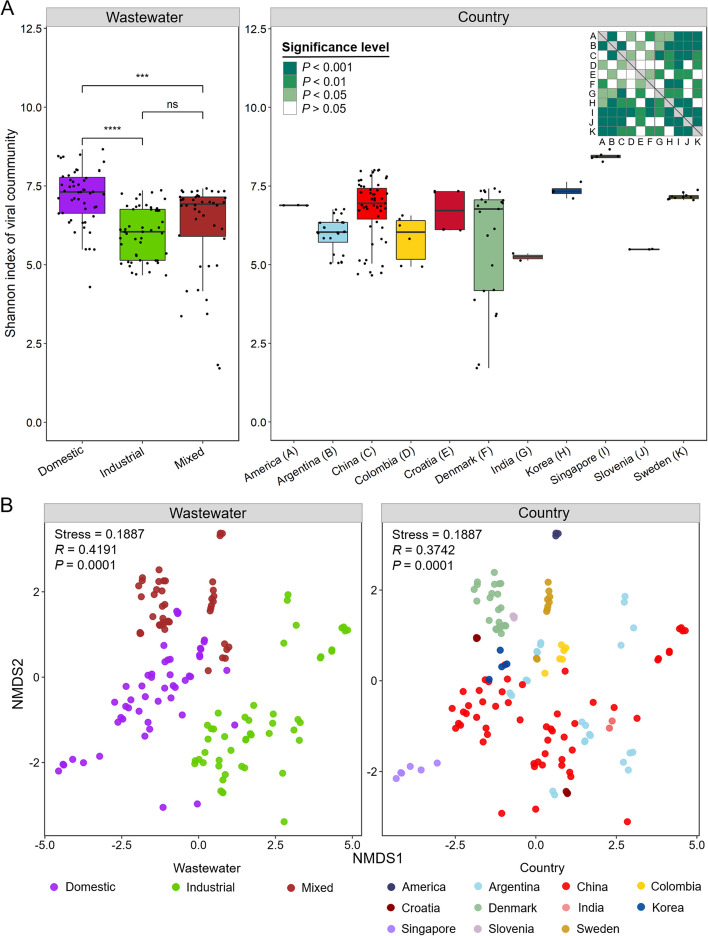
AS viral communities and their functional traits exhibited distance-decay relationship (DDR) at the global scale and latitudinal diversity gradient (LDG) from equator to mid-latitude. Furthermore, it was observed that AS viral community and functional gene structures were largely driven by the geographic factors and wastewater types, of which the geographic factors were more important. Carrying and disseminating auxiliary metabolic genes (AMGs) associated with the degradation of polysaccharides, sulfate reduction, denitrification, and organic phosphoester hydrolysis, as well as the lysis of crucial functional microbes that govern biogeochemical cycles were two major ways by which viruses could regulate AS functions. It was worth noting that our study revealed a high abundance of antibiotic resistance genes (ARGs) in viral genomes, suggesting that viruses were key reservoirs of ARGs in AS systems.
Our results demonstrated the highly diverse taxonomic groups and functional traits of viruses in AS systems. Viral lysis of host microbes and virus-mediated HGT can regulate the biogeochemical and nutrient cycles, thus affecting the performance of AS systems. These findings provide important insights into the viral diversity, function, and ecology in AS systems on a global scale. Video Abstract.
污水处理厂的活性污泥系统中存在大量病毒,这些病毒调节微生物代谢和养分循环,对活性污泥系统的稳定性有重大影响。然而,我们对全球活性污泥系统中病毒分类群多样性和功能特征的了解仍然有限。为了填补这一空白,我们利用从13个不同国家54个污水处理厂采集的144个活性污泥样本中获得的85,114个病毒操作分类单元(vOTU),研究了活性污泥系统中DNA病毒群落的全球多样性和生物地理学。
活性污泥病毒群落及其功能特征在全球尺度和从赤道到中纬度的纬度多样性梯度上呈现距离衰减关系(DDR)。此外,观察到活性污泥病毒群落和功能基因结构在很大程度上受地理因素和废水类型驱动,其中地理因素更为重要。携带和传播与多糖降解、硫酸盐还原、反硝化和有机磷酸酯水解相关的辅助代谢基因(AMG),以及裂解控制生物地球化学循环的关键功能微生物,是病毒调节活性污泥功能的两种主要方式。值得注意的是,我们的研究揭示了病毒基因组中抗生素抗性基因(ARG)的高丰度,表明病毒是活性污泥系统中ARG的关键储存库。
我们的结果证明了活性污泥系统中病毒的分类群和功能特征高度多样。宿主微生物的病毒裂解和病毒介导的水平基因转移可以调节生物地球化学和养分循环,从而影响活性污泥系统的性能。这些发现为全球范围内活性污泥系统中的病毒多样性、功能和生态学提供了重要见解。视频摘要。