Department of Pharmaceutical Sciences, College of Pharmacy, Mercer University Health Sciences Center, Mercer University, Atlanta, GA 30341, USA.
Department of Pharmaceutical Sciences, College of Pharmacy, Mercer University Health Sciences Center, Mercer University, Atlanta, GA 30341, USA; Department of Biomedical Sciences, School of Medicine, Mercer University Health Sciences Center, Mercer University, Macon, GA 31207, USA.
Biomed Pharmacother. 2023 Dec;168:115763. doi: 10.1016/j.biopha.2023.115763. Epub 2023 Oct 20.
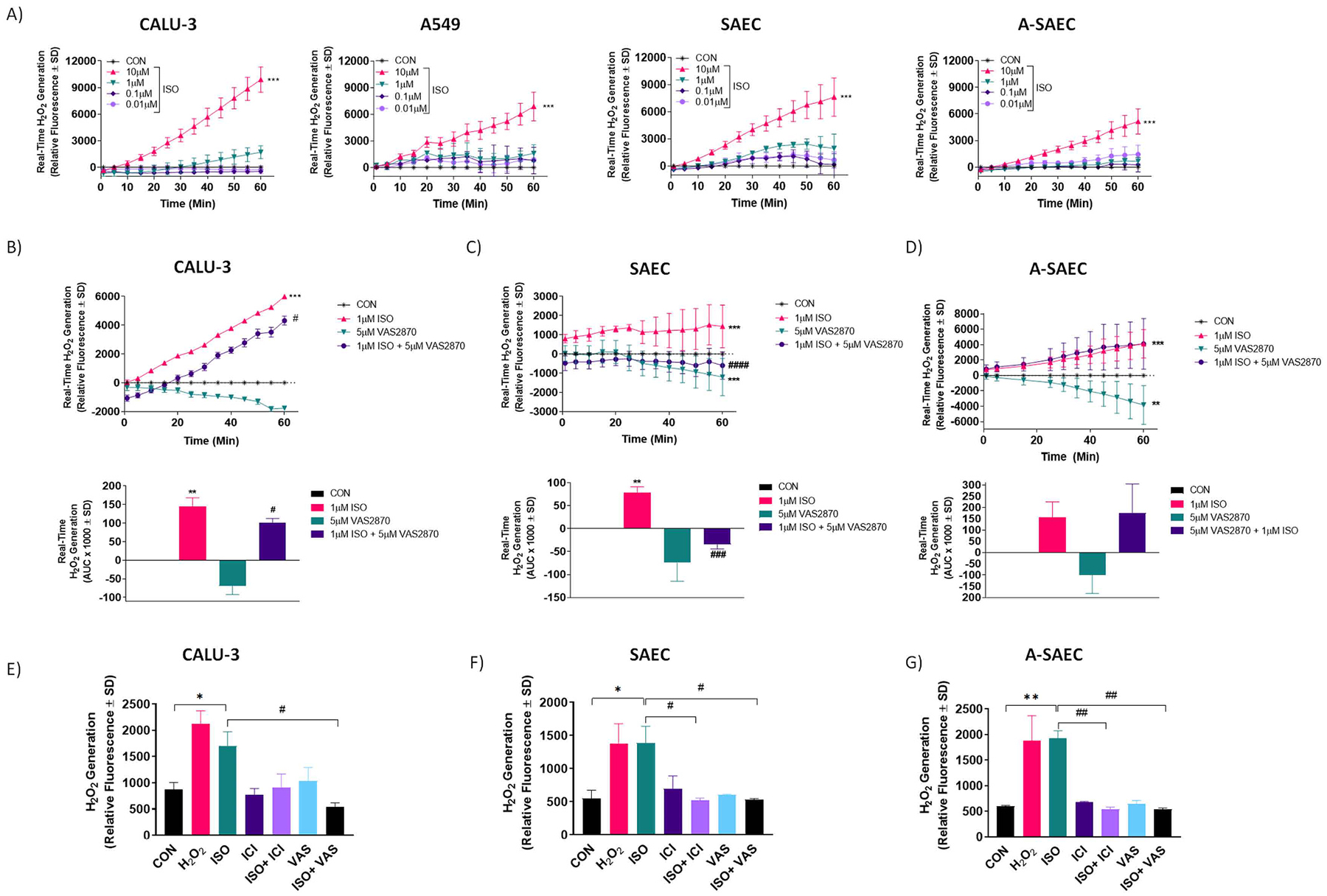
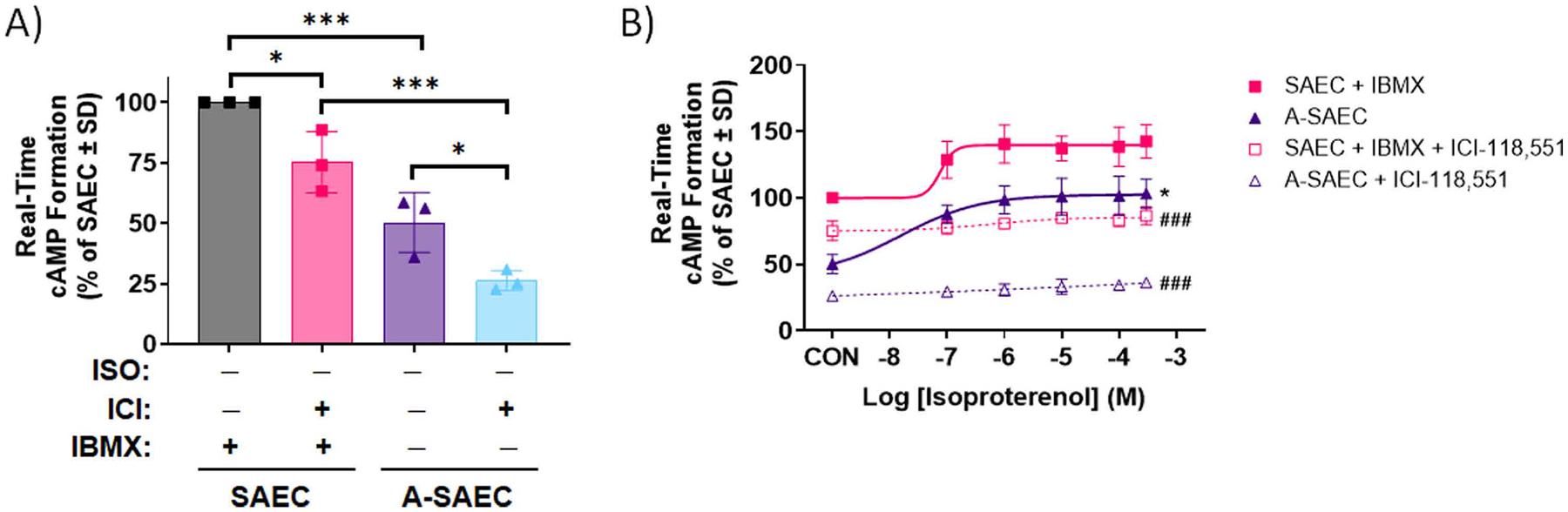
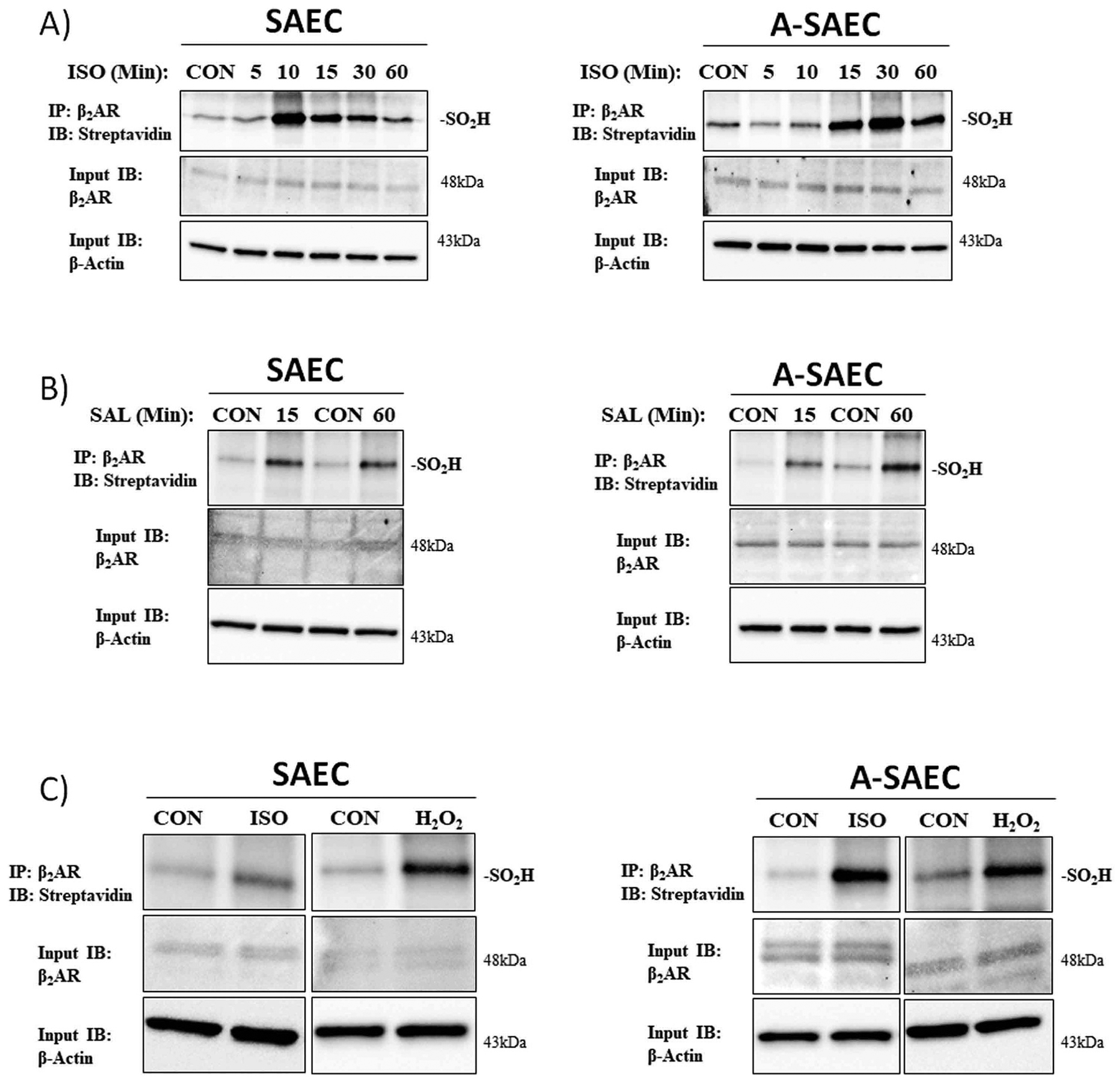
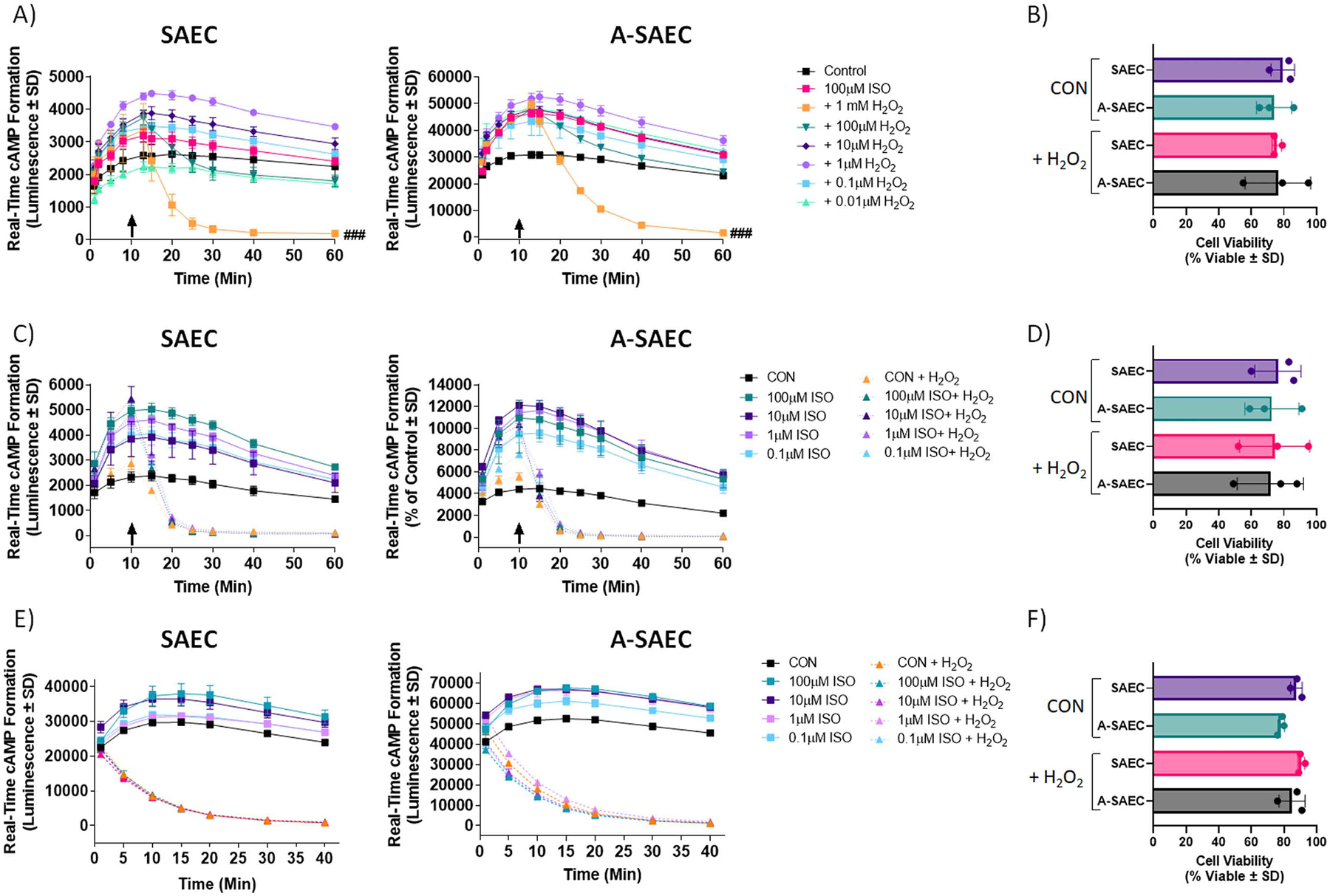
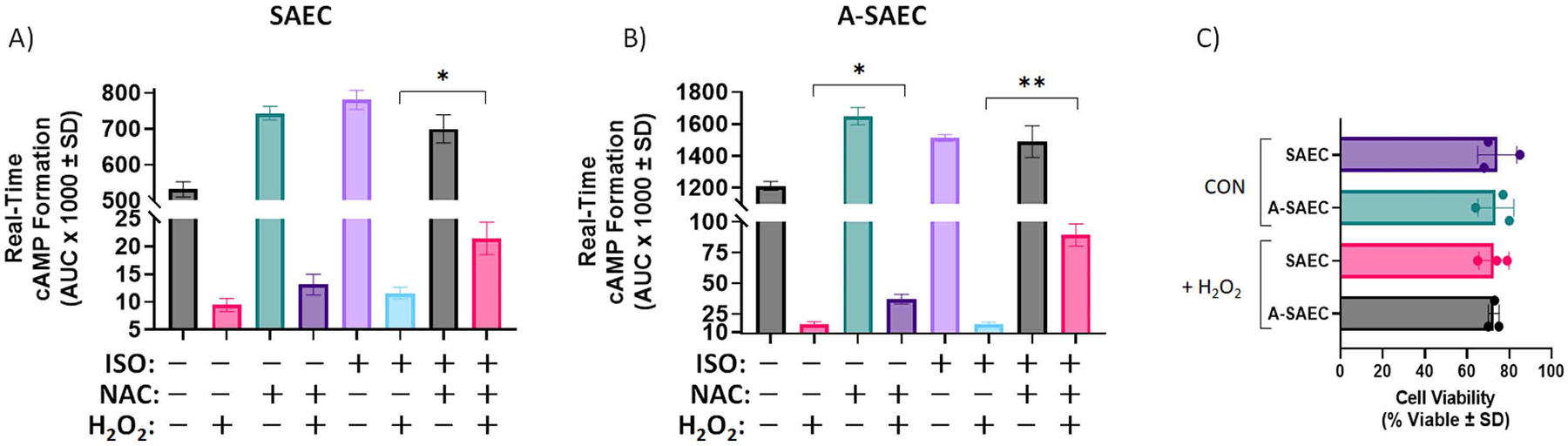
Asthma and other airway obstructive disorders are characterized by heightened inflammation and excessive airway epithelial cell reactive oxygen species (ROS), which give rise to a highly oxidative environment. After decades of use, β2-adrenergic receptor (β2AR) agonists remain at the forefront of treatment options for asthma, however, chronic use of β2-agonists leads to tachyphylaxis to the bronchorelaxant effects, a phenomenon that remains mechanistically unexplained. We have previously demonstrated that β2AR agonism increases ROS generation in airway epithelial cells, which upholds proper receptor function via feedback oxidation of β2AR cysteine thiolates to Cys-S-sulfenic acids (Cys-SOH). Our previous results also demonstrate that prevention of normal redox cycling of this post-translational oxi-modification back to the thiol prevents proper receptor function. Given that Cys-S-sulfenic acids can be irreversibly overoxidized to Cys-S-sulfinic (Cys-SOH) or S-sulfonic (Cys-SOH) acids, which are incapable of further participation in redox reactions, we hypothesized that β2-agonist tachyphylaxis may be explained by hyperoxidation of β2AR to S-sulfinic acids. Here, using airway epithelial cell lines and primary small airway epithelial cells from healthy and asthma-diseased donors, we show that β2AR agonism generates HO in a receptor and NAPDH oxidase-dependent manner. We also demonstrate that acute and chronic receptor agonism can facilitate β2AR S-sulfination, and that millimolar HO concentrations are deleterious to β2AR-mediated cAMP formation, an effect that can be rescued to a degree in the presence of the cysteine-donating antioxidant N-acetyl--cysteine. Our results reveal that the oxidative state of β2AR may contribute to receptor functionality and may, at least in part, explain β2-agonist tachyphylaxis.
哮喘和其他气道阻塞性疾病的特征是炎症加剧和气道上皮细胞活性氧(ROS)过度,导致高度氧化的环境。β2 肾上腺素能受体(β2AR)激动剂在哮喘治疗选择中仍然处于领先地位,尽管β2-激动剂的长期使用会导致支气管舒张作用的快速耐受,但其机制仍未得到解释。我们之前的研究表明,β2AR 激动剂会增加气道上皮细胞中 ROS 的产生,通过β2AR 半胱氨酸硫醚的反馈氧化将 Cys-S-亚磺酸(Cys-SOH)转化为 Cys-SOH,从而维持适当的受体功能。我们之前的研究结果还表明,阻止这种翻译后氧化修饰的正常氧化还原循环回巯基会阻止适当的受体功能。鉴于 Cys-S-亚磺酸可以不可逆地过度氧化为 Cys-S-亚磺酸(Cys-SOH)或 S-磺酸(Cys-SOH),而不能进一步参与氧化还原反应,我们假设β2-激动剂快速耐受可能是由于β2AR 被过度氧化为 S-亚磺酸所致。在这里,我们使用气道上皮细胞系和来自健康和哮喘疾病供体的原代小气道上皮细胞,证明β2AR 激动剂以受体和 NAPDH 氧化酶依赖的方式产生 HO。我们还表明,急性和慢性受体激动剂可以促进β2AR 的 S-磺酸化,并且毫摩尔浓度的 HO 对β2AR 介导的 cAMP 形成具有有害影响,而在存在半胱氨酸供体抗氧化剂 N-乙酰-L-半胱氨酸的情况下,该影响可以在一定程度上得到挽救。我们的结果表明,β2AR 的氧化状态可能有助于受体功能,并且至少部分解释了β2-激动剂快速耐受的原因。