Singh Kirti, Witek Marta, Brahmbhatt Jaladhi, McEntire Jacquelyn, Thirunavukkarasu Kannan, Oladipupo Sunday S
Biotherapeutics Enabling Biology, Lilly Research Laboratories, Eli Lilly and Company, Indianapolis, IN 46225, USA.
Protein Optimization, Lilly Research Laboratories, Eli Lilly and Company, Indianapolis, IN 46225, USA.
Cells. 2024 Dec 5;13(23):2005. doi: 10.3390/cells13232005.
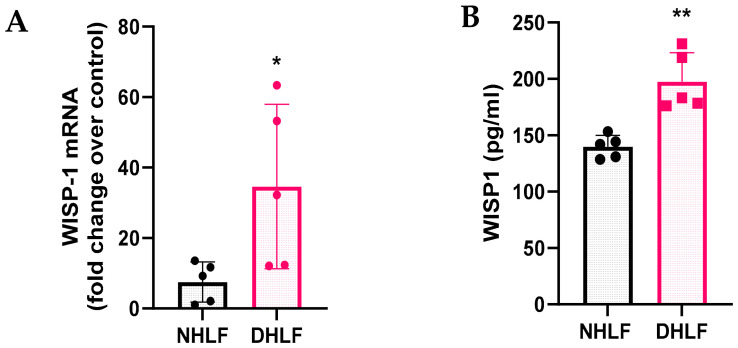
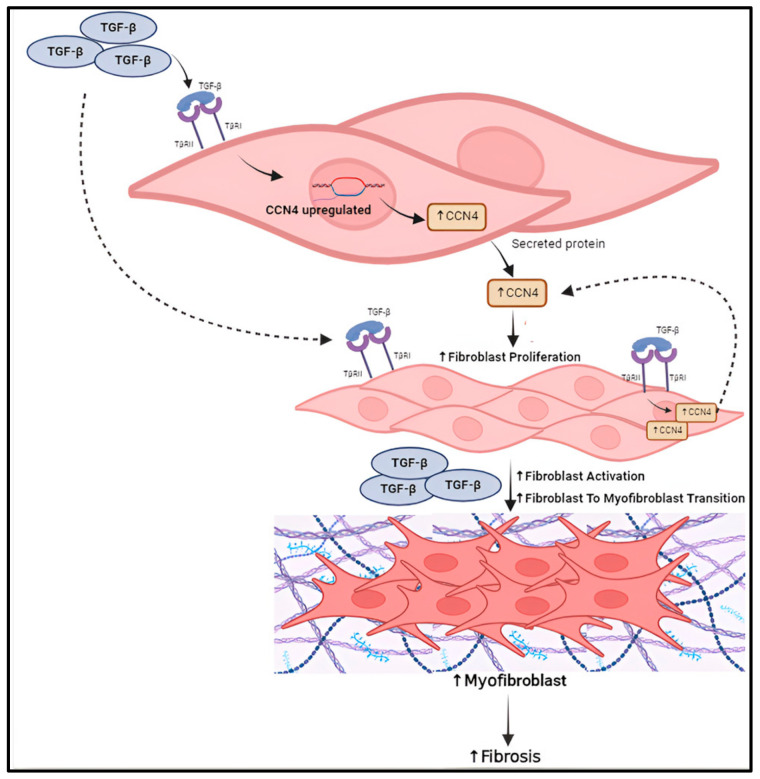
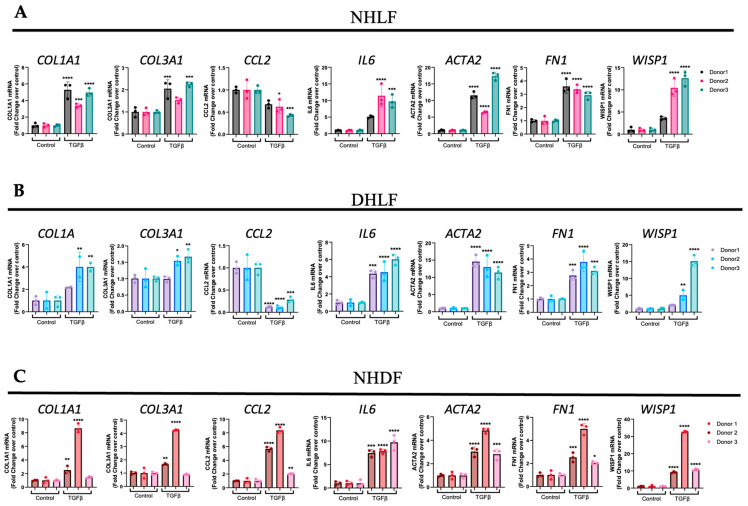
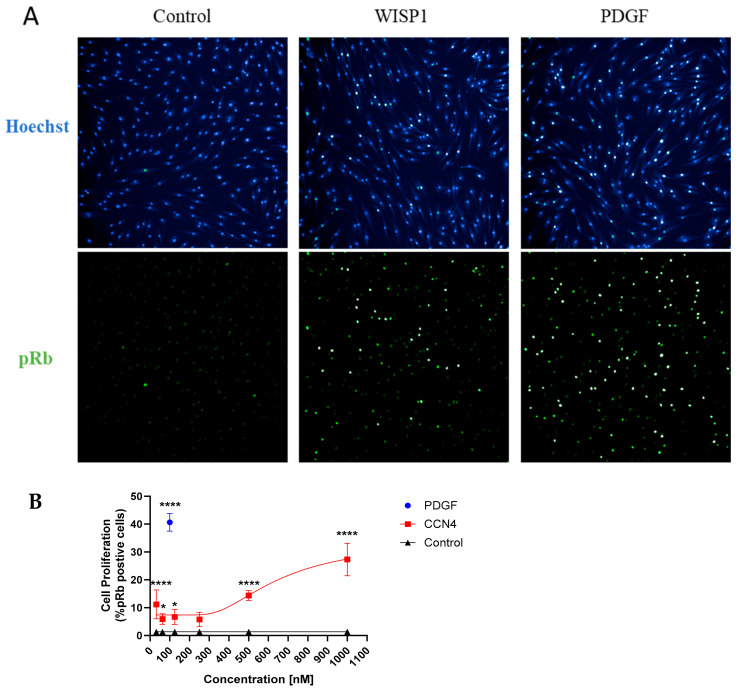
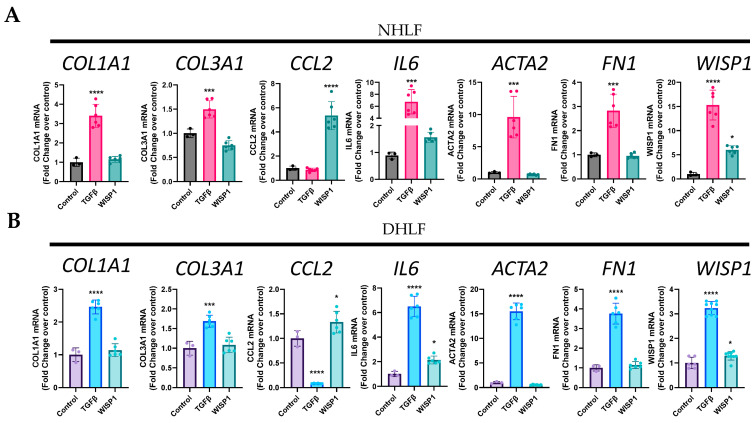
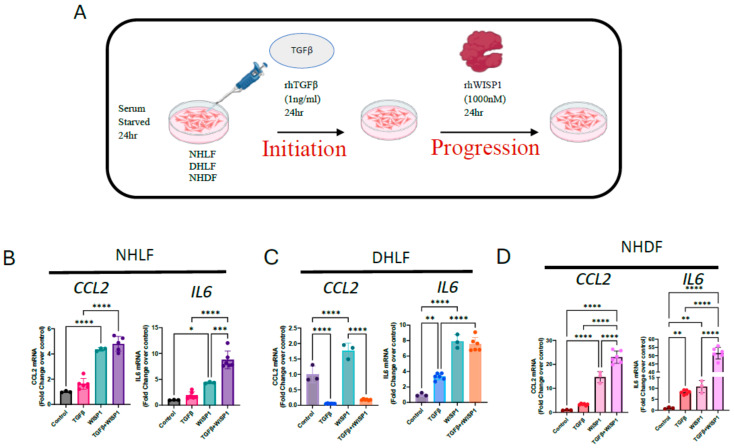
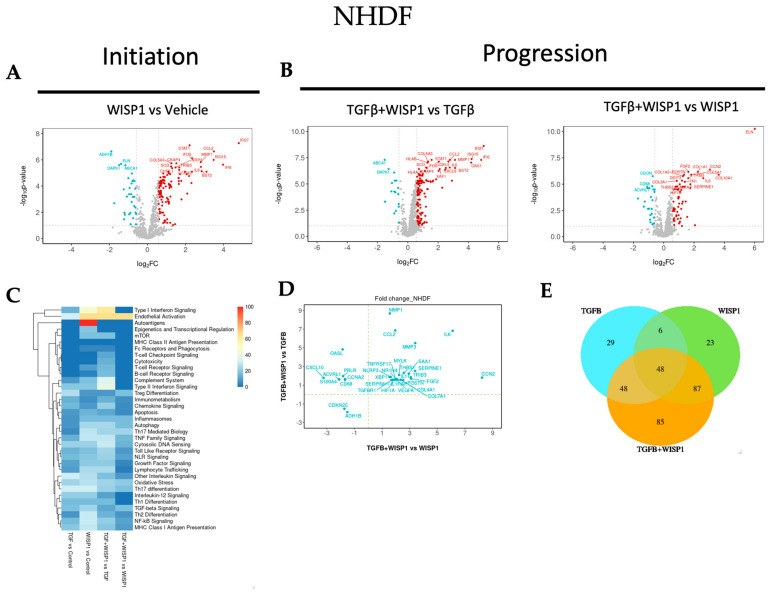
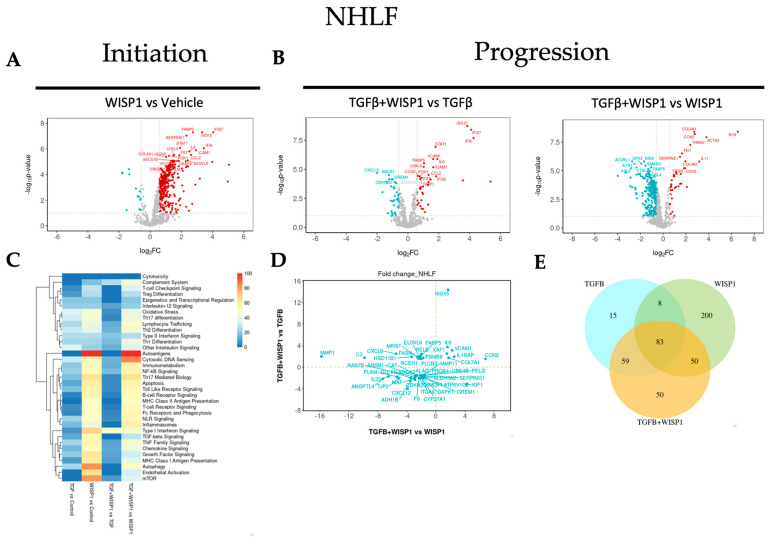
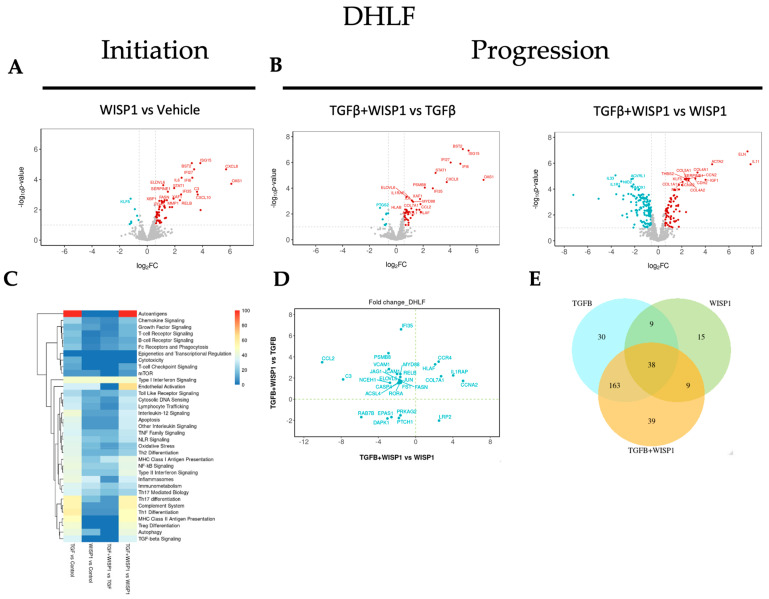
Idiopathic pulmonary fibrosis (IPF) is the most common interstitial lung disease with unknown etiology, characterized by chronic inflammation and tissue scarring. Although, Pirfenidone and Nintedanib slow the disease progression, no currently available drugs or therapeutic interventions address the underlying cause, highlighting the unmet medical need. A matricellular protein, Wnt-1-induced secreted protein 1 (WISP1), also referred to as CCN4 (cellular communication network factor 4), is a secreted multi-modular protein implicated in multi-organ fibrosis. Although the precise mechanism of WISP1-mediated fibrosis remains unclear, emerging evidence indicates that WISP1 is profibrotic in nature. While WISP1-targeting therapy is applied in the clinic for fibrosis, detailed interrogation of WISP1-mediated fibrogenic molecular and biological pathways is lacking. Here, for the first time, using NanoString technology, we identified a novel WISP1-associated profibrotic gene signature and molecular pathways potentially involved in the initiation and progression of fibrosis in primary human dermal and lung fibroblasts from both healthy individuals and IPF patients. Our data demonstrate that WISP1 is upregulated in IPF-lung fibroblasts as compared to healthy control. Furthermore, our results confirm that WISP1 is downstream of the transforming growth factor-β (TGFβ), and it induces fibroblast cell proliferation. Additionally, WISP1 induced IL6 and CCL2 in fibroblasts. We also developed a novel, combined TGFβ and WISP1 in vitro system to demonstrate a role for WISP1 in the progression of fibrosis. Overall, our findings uncover not only similarities but also striking differences in the molecular profile of WISP1 in human fibroblasts, both during the initiation and progression phases, as well as in disease-specific context.
特发性肺纤维化(IPF)是最常见的病因不明的间质性肺疾病,其特征为慢性炎症和组织瘢痕形成。尽管吡非尼酮和尼达尼布可减缓疾病进展,但目前尚无可用药物或治疗干预措施能解决其根本病因,这凸显了未被满足的医疗需求。一种基质细胞蛋白,即Wnt-1诱导分泌蛋白1(WISP1),也被称为CCN4(细胞通讯网络因子4),是一种与多器官纤维化有关的分泌型多模块蛋白。尽管WISP1介导纤维化的确切机制仍不清楚,但新出现的证据表明WISP1本质上具有促纤维化作用。虽然针对WISP1的疗法已应用于临床治疗纤维化,但缺乏对WISP1介导的纤维化分子和生物学途径的详细研究。在此,我们首次使用纳米孔技术,在来自健康个体和IPF患者的原代人皮肤和肺成纤维细胞中,鉴定出一种新的与WISP1相关的促纤维化基因特征以及可能参与纤维化起始和进展的分子途径。我们的数据表明,与健康对照相比,IPF肺成纤维细胞中WISP1表达上调。此外,我们的结果证实WISP1是转化生长因子-β(TGFβ)的下游因子,并且它可诱导成纤维细胞增殖。此外,WISP1可在成纤维细胞中诱导IL6和CCL2。我们还开发了一种新型的体外联合TGFβ和WISP1系统,以证明WISP1在纤维化进展中的作用。总体而言,我们的研究结果不仅揭示了人成纤维细胞在起始和进展阶段以及疾病特异性背景下WISP1分子谱的相似性,也揭示了其显著差异。