Holubekova Veronika, Loderer Dusan, Grendar Marian, Mikolajcik Peter, Kolkova Zuzana, Turyova Eva, Kudelova Eva, Kalman Michal, Marcinek Juraj, Miklusica Juraj, Laca Ludovit, Lasabova Zora
Laboratory of Genomics and Prenatal Diagnostics, Biomedical Center in Martin, Jessenius Faculty of Medicine, Comenius University in Bratislava, Martin, Slovakia.
Laboratory of Bioinformatics and Biostatistics, Biomedical Center in Martin, Jessenius Faculty of Medicine, Comenius University in Bratislava, Martin, Slovakia.
Front Oncol. 2023 Oct 5;13:1206482. doi: 10.3389/fonc.2023.1206482. eCollection 2023.
Colorectal cancer (CRC) is a heterogeneous disease caused by molecular changes, as driver mutations, gene methylations, etc., and influenced by tumor microenvironment (TME) pervaded with immune cells with both pro- and anti-tumor effects. The studying of interactions between the immune system (IS) and the TME is important for developing effective immunotherapeutic strategies for CRC. In our study, we focused on the analysis of expression profiles of inflammatory and immune-relevant genes to identify aberrant signaling pathways included in carcinogenesis, metastatic potential of tumors, and association of Kirsten rat sarcoma virus (KRAS) gene mutation.
A total of 91 patients were enrolled in the study. Using NGS, differential gene expression analysis of 11 tumor samples and 11 matching non-tumor controls was carried out by applying a targeted RNA panel for inflammation and immunity genes containing 475 target genes. The obtained data were evaluated by the CLC Genomics Workbench and R library. The significantly differentially expressed genes (DEGs) were analyzed in Reactome GSA software, and some selected DEGs were used for real-time PCR validation.
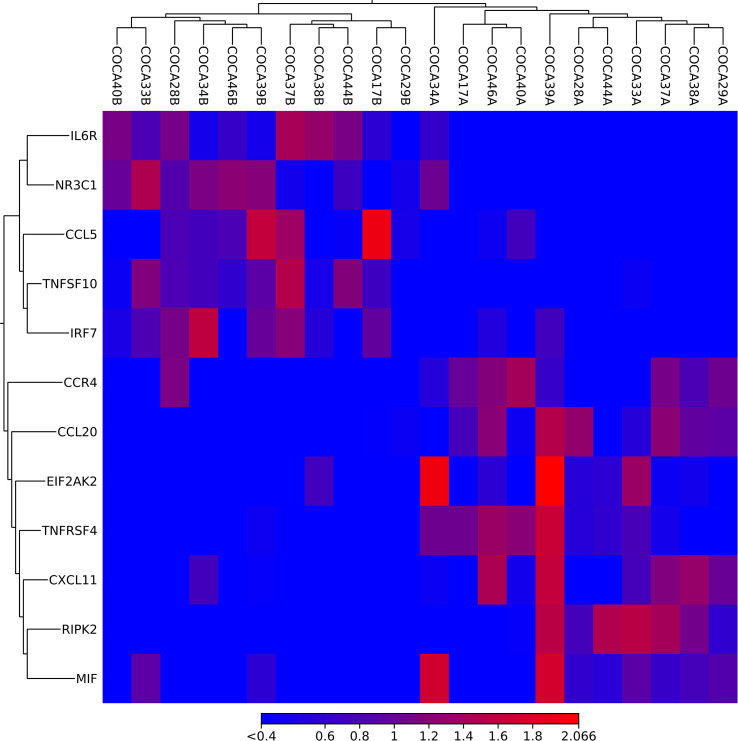
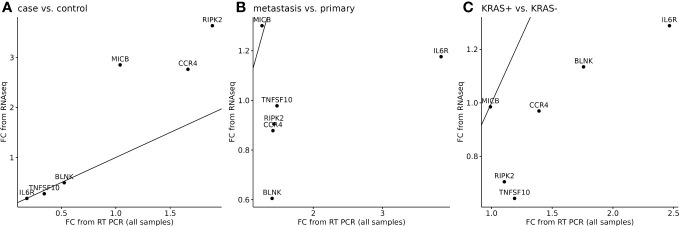
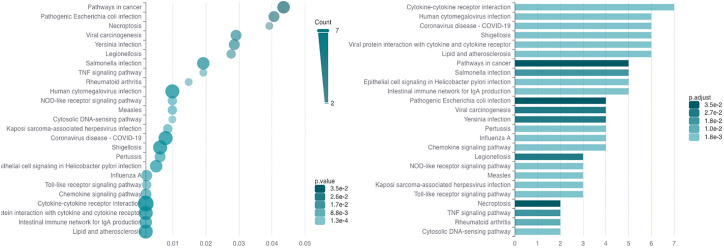
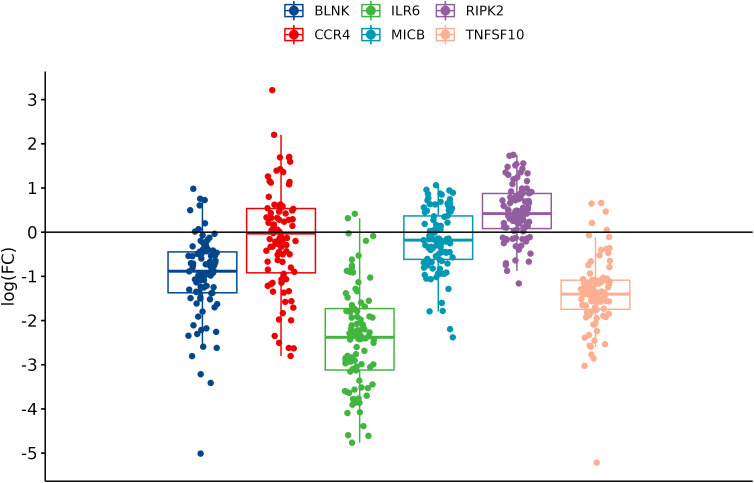
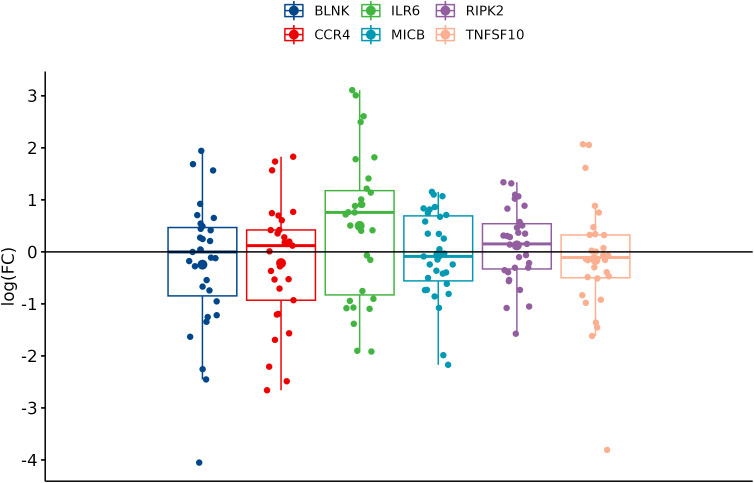
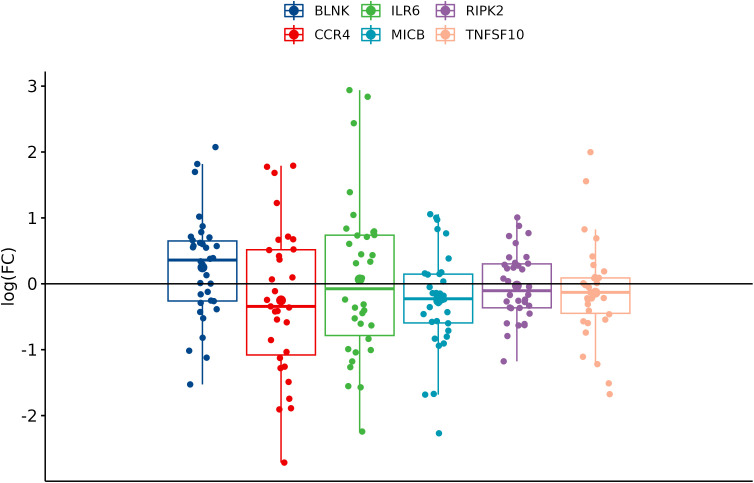
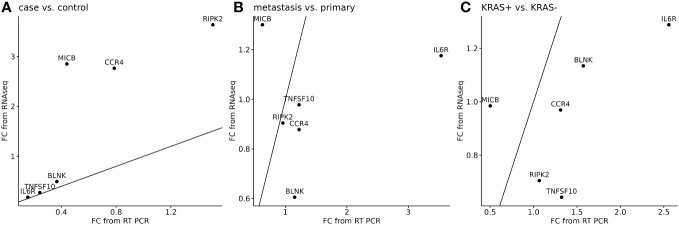
After prioritization, the most significant differences in gene expression were shown by the genes , , , , , , , , , , , and Validation analyses on 91 samples showed a correlation between RNA-seq data and qPCR for , , and gene expression. The top differently regulated signaling pathways between the studied groups (cancer vs. control, metastatic vs. primary CRC and KRAS positive and negative CRC) belong to immune system, signal transduction, disease, gene expression, DNA repair, and programmed cell death.
Analyzed data suggest the changes at more levels of CRC carcinogenesis, including surface receptors of epithelial or immune cells, its signal transduction pathways, programmed cell death modifications, alterations in DNA repair machinery, and cell cycle control leading to uncontrolled proliferation. This study indicates only basic molecular pathways that enabled the formation of metastatic cancer stem cells and may contribute to clarifying the function of the IS in the TME of CRC. A precise identification of signaling pathways responsible for CRC may help in the selection of personalized pharmacological treatment.
结直肠癌(CRC)是一种由分子变化引起的异质性疾病,这些分子变化包括驱动突变、基因甲基化等,并且受充满具有促肿瘤和抗肿瘤作用的免疫细胞的肿瘤微环境(TME)影响。研究免疫系统(IS)与TME之间的相互作用对于开发有效的CRC免疫治疗策略至关重要。在我们的研究中,我们专注于分析炎症和免疫相关基因的表达谱,以确定参与致癌过程、肿瘤转移潜能以及 Kirsten 大鼠肉瘤病毒(KRAS)基因突变关联的异常信号通路。
共有91名患者纳入本研究。使用二代测序(NGS)技术,通过应用包含475个靶基因的炎症和免疫基因靶向RNApanel,对11个肿瘤样本和11个匹配的非肿瘤对照进行差异基因表达分析。所得数据通过CLC基因组学工作台和R库进行评估。在Reactome基因集分析(GSA)软件中分析显著差异表达基因(DEG),并使用一些选定的DEG进行实时PCR验证。
经过优先级排序后,基因 、 、 、 、 、 、 、 、 、 、 和 显示出最显著的基因表达差异。对91个样本的验证分析表明,RNA测序数据与 、 和 基因表达的qPCR之间存在相关性。研究组(癌症与对照、转移性与原发性CRC以及KRAS阳性和阴性CRC)之间调控差异最大的信号通路属于免疫系统、信号转导、疾病、基因表达、DNA修复和程序性细胞死亡。
分析数据表明CRC致癌过程在多个层面发生变化,包括上皮细胞或免疫细胞的表面受体、其信号转导通路、程序性细胞死亡修饰、DNA修复机制改变以及导致不受控制增殖的细胞周期调控。本研究仅表明了促成转移性癌症干细胞形成的基本分子途径,并可能有助于阐明IS在CRC的TME中的功能。精确识别导致CRC的信号通路可能有助于选择个性化的药物治疗。