Department of Pharmaceutical and Health Economics, Alfred E. Mann School of Pharmacy and Pharmaceutical Sciences, University of Southern California, Los Angeles, CA, USA.
Semin Immunopathol. 2024 Jan;45(4-6):469-480. doi: 10.1007/s00281-023-00998-0. Epub 2023 Oct 23.
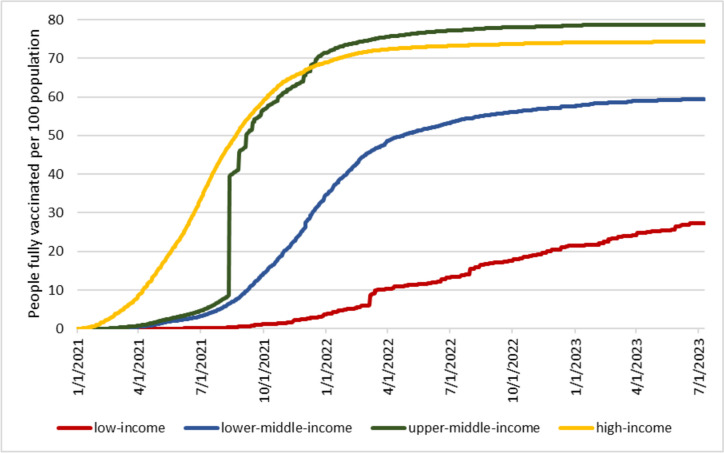
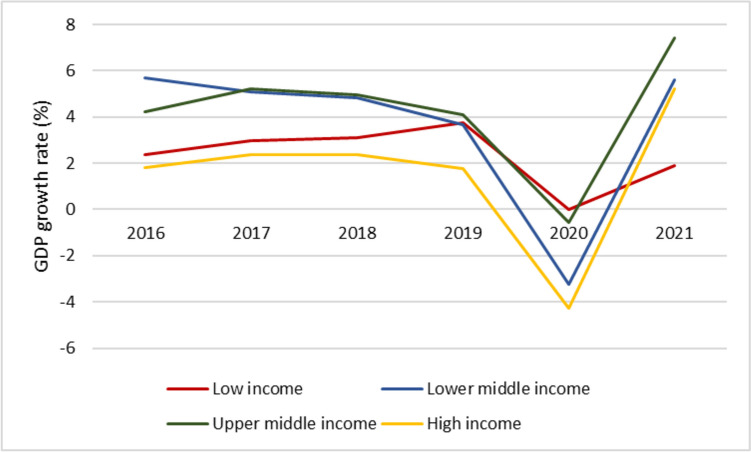
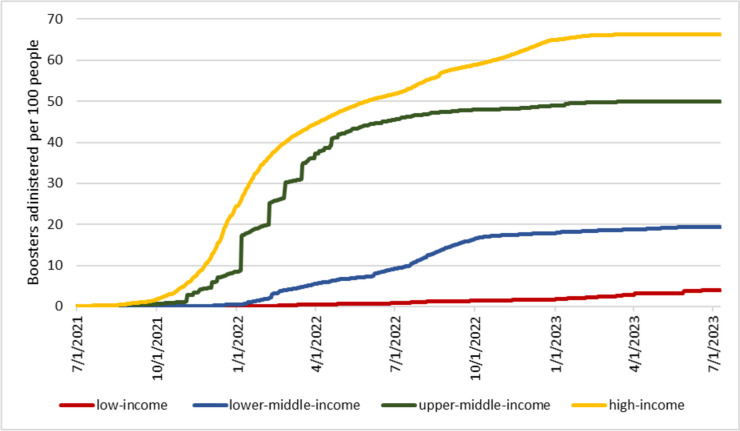
Despite the rapid development of safe and effective COVID-19 vaccines and the widely recognized health and economic benefits of vaccination, there exist stark differences in vaccination rates across country income groups. While more than 70% of the population is fully vaccinated in high-income countries, vaccination rates in low-income countries are only around 30%. The paper reviews the factors behind global COVID-19 vaccine inequity and the health, social, and economic costs triggered by this inequity. The main contributors to vaccine inequity include vaccine nationalism, intellectual property rights, constraints in manufacturing capacity, poor resilience of healthcare systems, and vaccine hesitancy. Vaccine inequity has high costs, including preventable deaths and cases of illnesses in low-income countries, slow economic recovery, and large learning losses among children. Increasing vaccination rates in low-income countries is in the self-interest of higher-income countries as it may prevent the emergence of new variants and continuous disruptions to global supply chains.
尽管 COVID-19 疫苗的安全性和有效性迅速提高,接种疫苗带来的广泛健康和经济效益也得到了广泛认可,但各国的疫苗接种率存在明显差异。高收入国家的疫苗接种率超过 70%,而低收入国家的接种率仅为 30%左右。本文回顾了全球 COVID-19 疫苗不平等的背后因素,以及这种不平等所引发的健康、社会和经济成本。疫苗不平等的主要原因包括疫苗民族主义、知识产权、生产能力的限制、医疗保健系统的弹性差以及疫苗犹豫。疫苗不平等代价高昂,包括低收入国家可预防的死亡和疾病病例、经济复苏缓慢以及儿童学习损失大。提高低收入国家的疫苗接种率符合高收入国家的自身利益,因为这可能防止新变种的出现和全球供应链的持续中断。