Division of Infection Medicine, Department of Clinical Sciences, Lund University, Lund, Sweden.
IPSC Laboratory for CNS Disease Modeling, Department of Experimental Medical Sciences, Lund University, Lund, Sweden.
Nat Commun. 2023 Oct 23;14(1):6693. doi: 10.1038/s41467-023-42572-0.
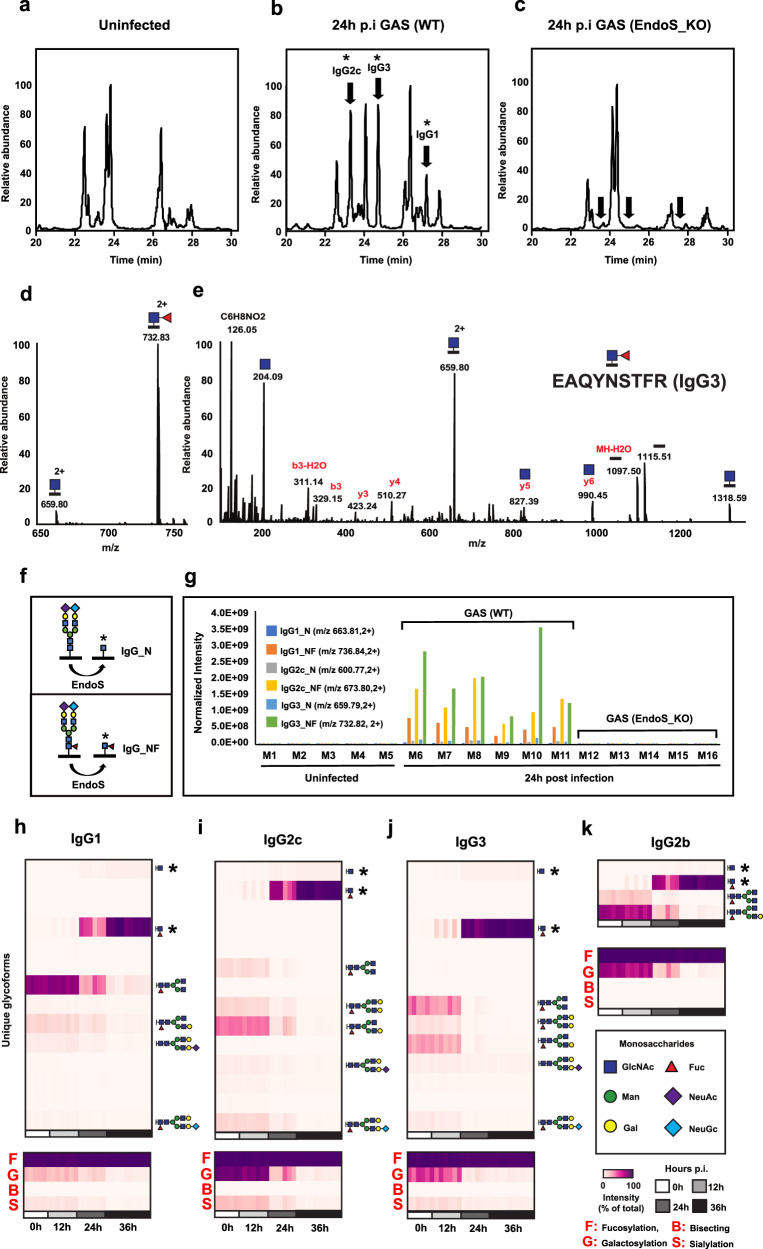
Group A streptococcus (GAS) is a major bacterial pathogen responsible for both local and systemic infections in humans. The molecular mechanisms that contribute to disease heterogeneity remain poorly understood. Here we show that the transition from a local to a systemic GAS infection is paralleled by pathogen-driven alterations in IgG homeostasis. Using animal models and a combination of sensitive proteomics and glycoproteomics readouts, we documented the progressive accumulation of IgG cleavage products in plasma, due to extensive enzymatic degradation triggered by GAS infection in vivo. The level of IgG degradation was modulated by the route of pathogen inoculation, and mechanistically linked to the combined activities of the bacterial protease IdeS and the endoglycosidase EndoS, upregulated during infection. Importantly, we show that these virulence factors can alter the structure and function of exogenous therapeutic IgG in vivo. These results shed light on the role of bacterial virulence factors in shaping GAS pathogenesis, and potentially blunting the efficacy of antimicrobial therapies.
A 组链球菌(GAS)是一种主要的细菌病原体,可导致人类局部和全身感染。导致疾病异质性的分子机制仍知之甚少。在这里,我们表明,从局部 GAS 感染到全身感染的转变伴随着病原体驱动的 IgG 动态平衡改变。我们使用动物模型和敏感的蛋白质组学和糖蛋白质组学读数组合,记录了由于体内 GAS 感染触发的广泛酶促降解,导致 IgG 裂解产物在血浆中的逐渐积累。IgG 降解的程度受病原体接种途径的调节,并且与细菌蛋白酶 IdeS 和内切糖苷酶 EndoS 的联合活性在感染过程中上调有关。重要的是,我们表明这些毒力因子可以在体内改变外源性治疗性 IgG 的结构和功能。这些结果揭示了细菌毒力因子在塑造 GAS 发病机制中的作用,并可能削弱抗菌治疗的效果。