Cassity Skylar, Choi Irene Jungyeon, Gregory Billy Howard, Igbasanmi Adeleke Malik, Bickford Sarah Cristi, Moore Kiara Tyanni, Seraiah Anna Elisabeth, Layfield Dylan, Newman Ehren Lee
Department of Psychological and Brain Sciences, College of Arts and Sciences, Indiana University Bloomington, 1101 E 10 St., Bloomington, IN, 47405, USA.
Intelligent Systems Engineering, Luddy School of Informatics Computing and Engineering, University Bloomington, 1101 E 10 St., Bloomington, IN, 47405, USA.
bioRxiv. 2023 Dec 3:2023.10.14.559618. doi: 10.1101/2023.10.14.559618.
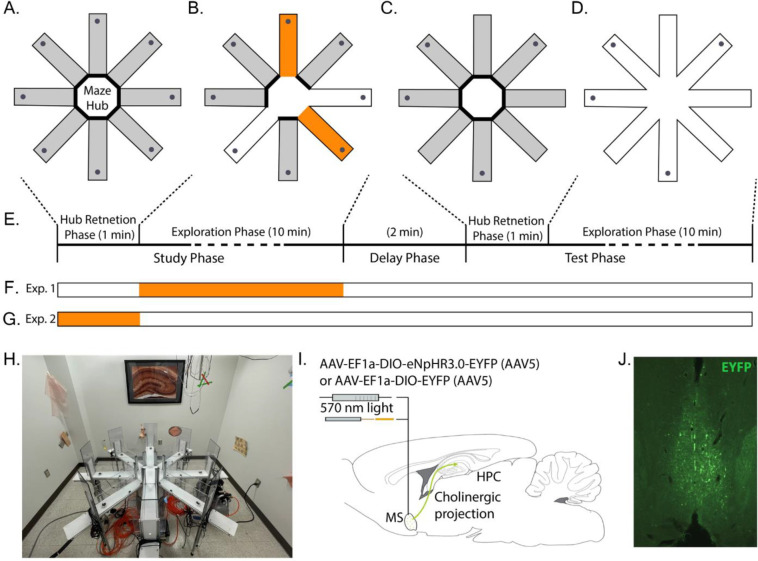
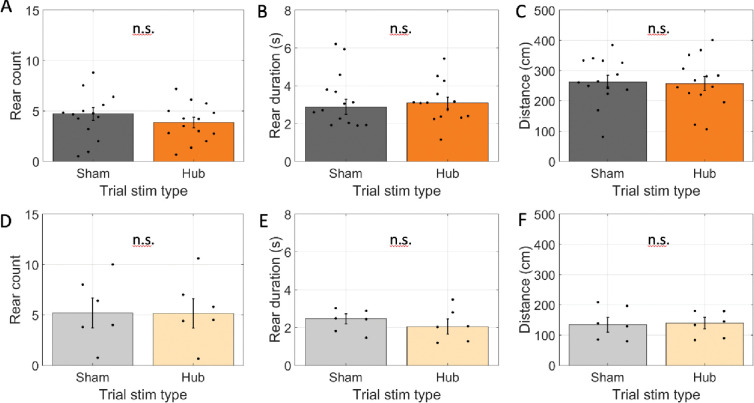
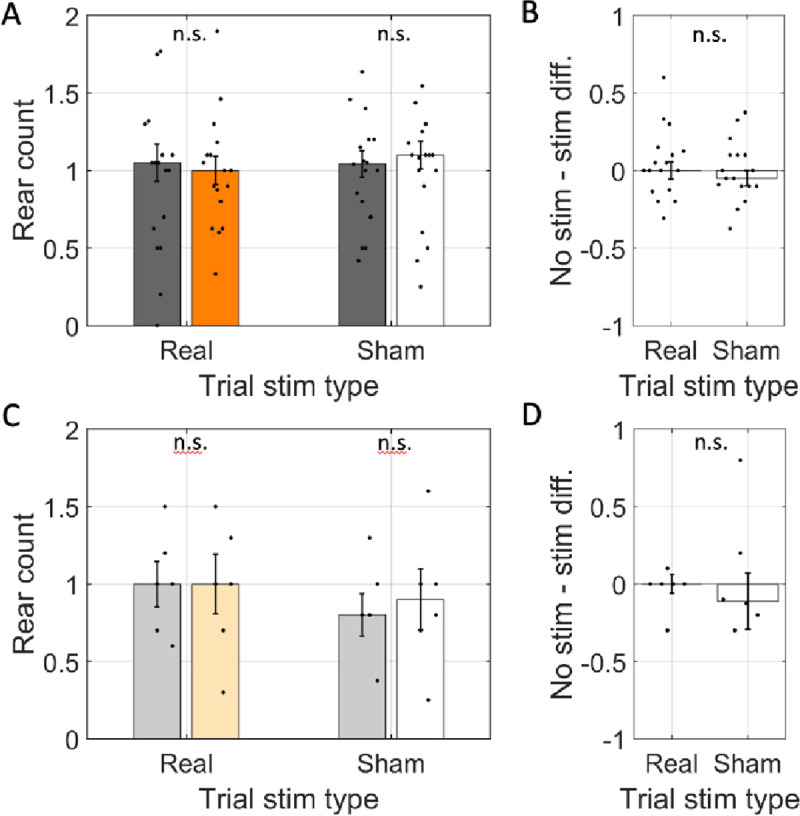
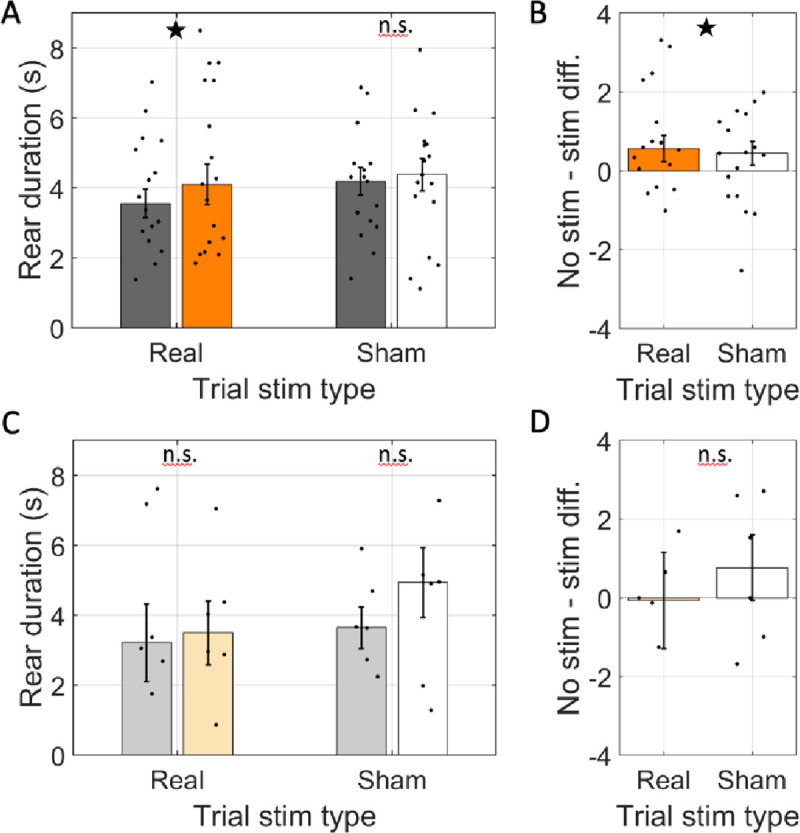
Spatial memory encoding depends in part on cholinergic modulation. How acetylcholine supports spatial memory encoding is not well understood. Prior studies indicate that acetylcholine release is correlated with exploration, including epochs of rearing onto hind legs. Here, to test whether elevated cholinergic tone increases the probability of rearing, we tracked rearing frequency and duration while optogenetically modulating the activity of choline acetyltransferase containing (i.e., acetylcholine producing) neurons of the medial septum in rats performing a spatial working memory task (n = 17 rats). The cholinergic neurons were optogenetically inhibited using halorhodopsin for the duration that rats occupied two of the four open arms during the study phase of an 8-arm radial arm maze win-shift task. Comparing rats' behavior in the two arm types showed that rearing frequency was not changed but the average duration of rearing epochs became significantly longer. This effect on rearing was observed during optogenetic inhibition but not during sham inhibition or in rats that received infusions of a fluorescent reporter virus (i.e., without halorhodopsin; n = 6 rats). Optogenetic inhibition of cholinergic neurons during the pre-trial waiting phase had no significant effect on rearing, indicating a context-specificity of the observed effects. These results are significant in that they indicate that cholinergic neuron activity in the medial septum is correlated with rearing not because it motivates an exploratory state but because it contributes to the processing of information acquired while rearing.
空间记忆编码部分依赖于胆碱能调节。乙酰胆碱如何支持空间记忆编码尚不清楚。先前的研究表明,乙酰胆碱释放与探索行为相关,包括后腿站立的时期。在此,为了测试胆碱能张力升高是否会增加后腿站立的概率,我们在大鼠执行空间工作记忆任务(n = 17只大鼠)时,通过光遗传学调节内侧隔中含胆碱乙酰转移酶(即产生乙酰胆碱)的神经元的活性,追踪了后腿站立的频率和持续时间。在八臂放射状迷宫赢-移任务的研究阶段,当大鼠占据四个开放臂中的两个时,使用嗜盐菌视紫红质对胆碱能神经元进行光遗传学抑制。比较大鼠在两种臂类型中的行为表明,后腿站立频率没有改变,但后腿站立时期的平均持续时间显著变长。这种对后腿站立的影响在光遗传学抑制期间观察到,但在假抑制期间或接受荧光报告病毒注射的大鼠中未观察到(即没有嗜盐菌视紫红质;n = 6只大鼠)。在试验前等待阶段对胆碱能神经元进行光遗传学抑制对后腿站立没有显著影响,表明观察到的效应具有情境特异性。这些结果具有重要意义,因为它们表明内侧隔中的胆碱能神经元活动与后腿站立相关,不是因为它激发了探索状态,而是因为它有助于处理在站立时获得的信息。