Departments of Neuroscience, Yale University School of Medicine, New Haven, CT 06510, USA.
Department of Psychiatry, Yale University School of Medicine, New Haven, CT 06510, USA.
Cereb Cortex. 2023 Dec 9;33(24):11501-11516. doi: 10.1093/cercor/bhad382.
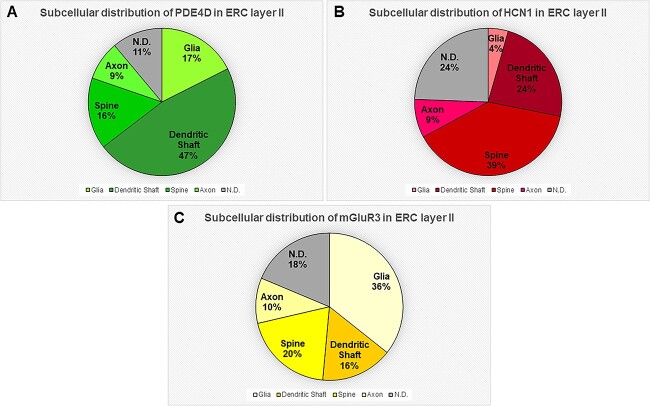
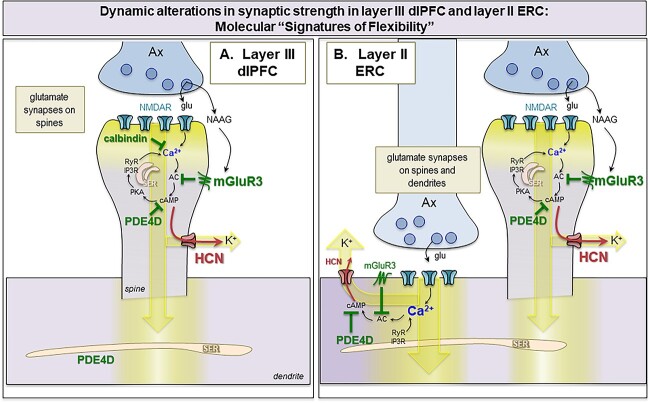
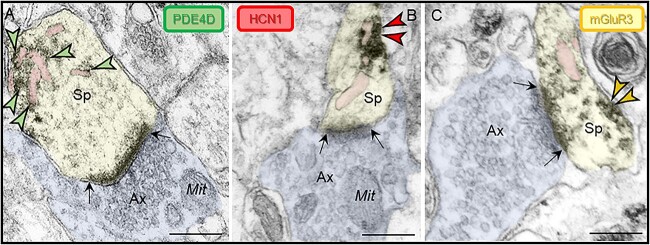
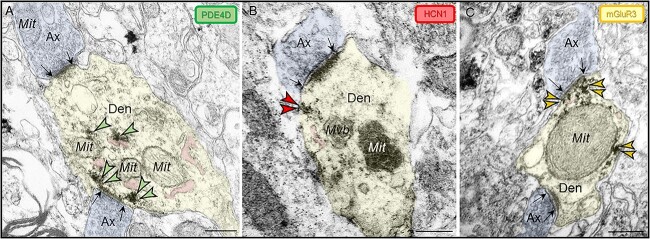
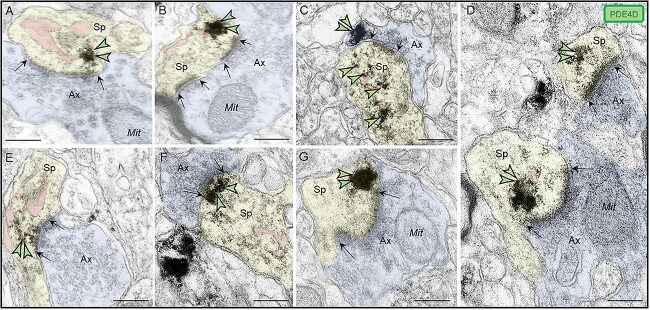
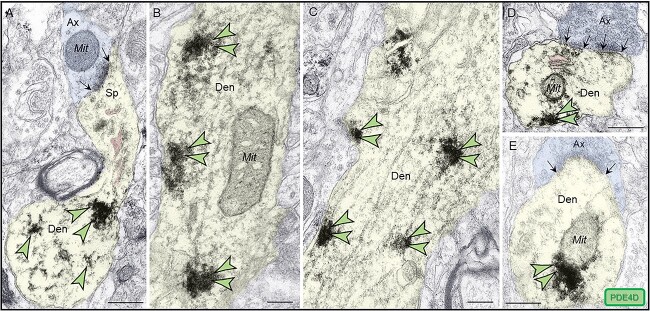
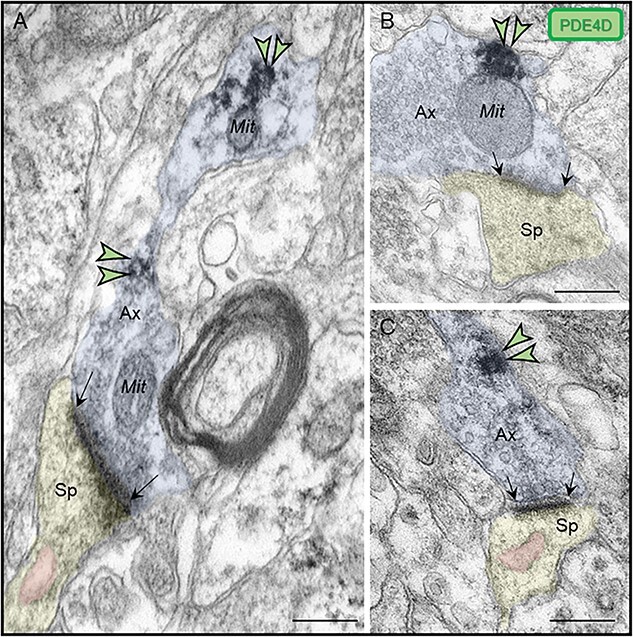
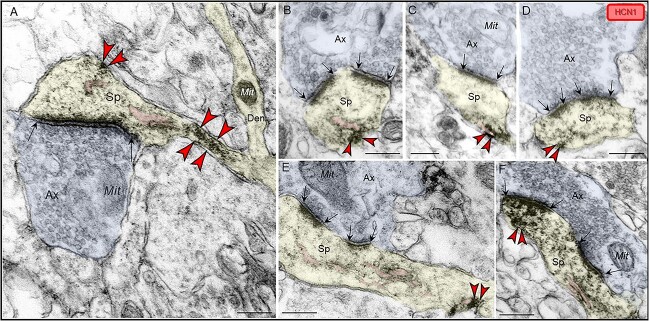
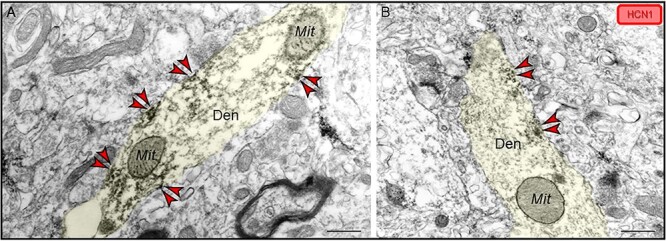
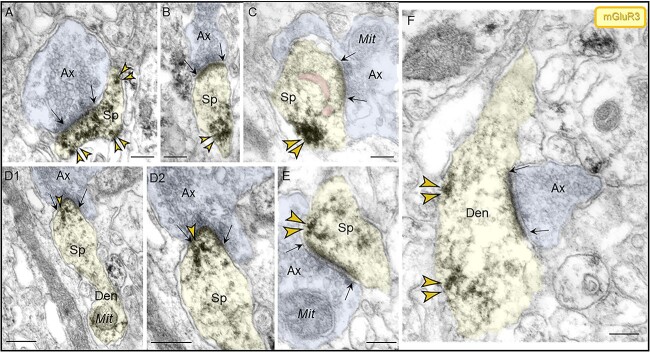
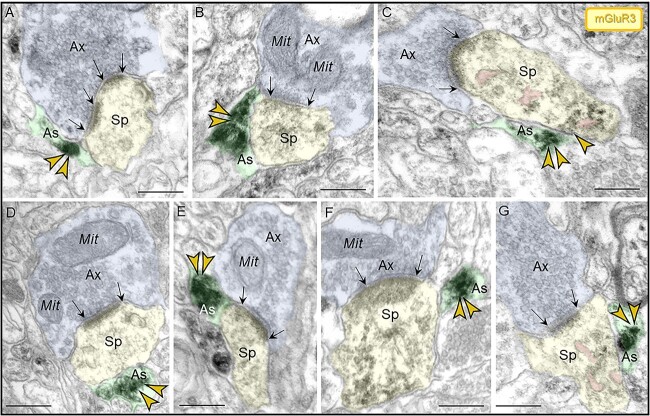
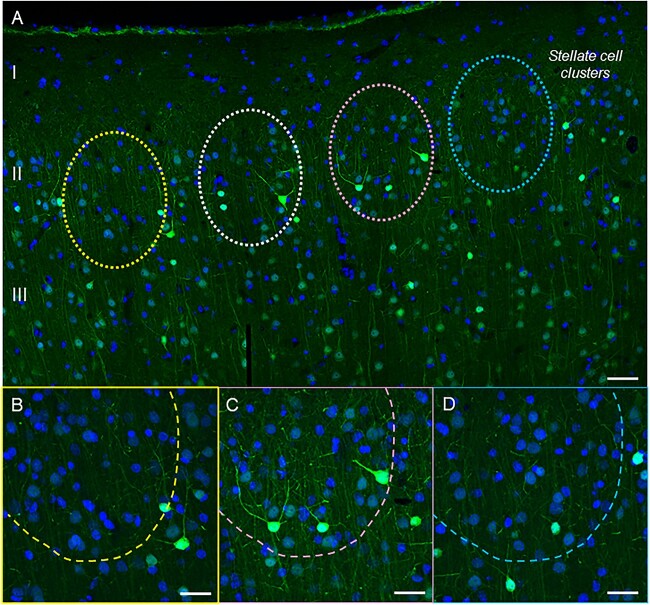
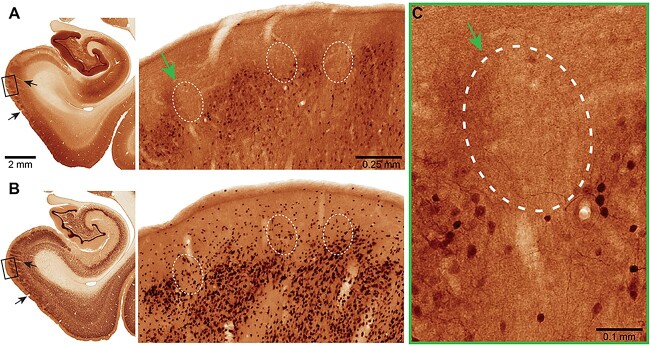
Alzheimer's disease cortical tau pathology initiates in the layer II cell clusters of entorhinal cortex, but it is not known why these specific neurons are so vulnerable. Aging macaques exhibit the same qualitative pattern of tau pathology as humans, including initial pathology in layer II entorhinal cortex clusters, and thus can inform etiological factors driving selective vulnerability. Macaque data have already shown that susceptible neurons in dorsolateral prefrontal cortex express a "signature of flexibility" near glutamate synapses on spines, where cAMP-PKA magnification of calcium signaling opens nearby potassium and hyperpolarization-activated cyclic nucleotide-gated channels to dynamically alter synapse strength. This process is regulated by PDE4A/D, mGluR3, and calbindin, to prevent toxic calcium actions; regulatory actions that are lost with age/inflammation, leading to tau phosphorylation. The current study examined whether a similar "signature of flexibility" expresses in layer II entorhinal cortex, investigating the localization of PDE4D, mGluR3, and HCN1 channels. Results showed a similar pattern to dorsolateral prefrontal cortex, with PDE4D and mGluR3 positioned to regulate internal calcium release near glutamate synapses, and HCN1 channels concentrated on spines. As layer II entorhinal cortex stellate cells do not express calbindin, even when young, they may be particularly vulnerable to magnified calcium actions and ensuing tau pathology.
阿尔茨海默病皮质 Tau 病理学始于内嗅皮层的 II 层细胞簇,但尚不清楚为什么这些特定神经元如此脆弱。衰老的猕猴表现出与人类相同的 Tau 病理学定性模式,包括内嗅皮层 II 层簇中的初始病理学,因此可以提供驱动选择性脆弱性的病因因素信息。猕猴数据已经表明,背外侧前额叶皮层中的易感神经元在谷氨酸突触附近的棘突上表达“灵活性特征”,其中 cAMP-PKA 放大钙信号会打开附近的钾和超极化激活环核苷酸门控通道,以动态改变突触强度。这个过程由 PDE4A/D、mGluR3 和钙结合蛋白调节,以防止钙毒性作用;这些调节作用随着年龄/炎症的增加而丧失,导致 Tau 磷酸化。本研究检查了类似的“灵活性特征”是否在内嗅皮层 II 层中表达,研究了 PDE4D、mGluR3 和 HCN1 通道的定位。结果显示与背外侧前额叶皮层相似的模式,PDE4D 和 mGluR3 定位于调节谷氨酸突触附近的内部钙释放,而 HCN1 通道集中在棘突上。由于 II 层内嗅皮层星状细胞甚至在年轻时也不表达钙结合蛋白,因此它们可能特别容易受到放大的钙作用和随后的 Tau 病理学的影响。