Department of Clinical Immunology, Jagiellonian University Medical College, Wielicka 265, Cracow 30-663, Poland.
Jagiellonian Centre for Experimental Therapeutics, Jagiellonian University, Cracow, Poland.
Cardiovasc Res. 2024 Feb 27;120(1):82-94. doi: 10.1093/cvr/cvad158.
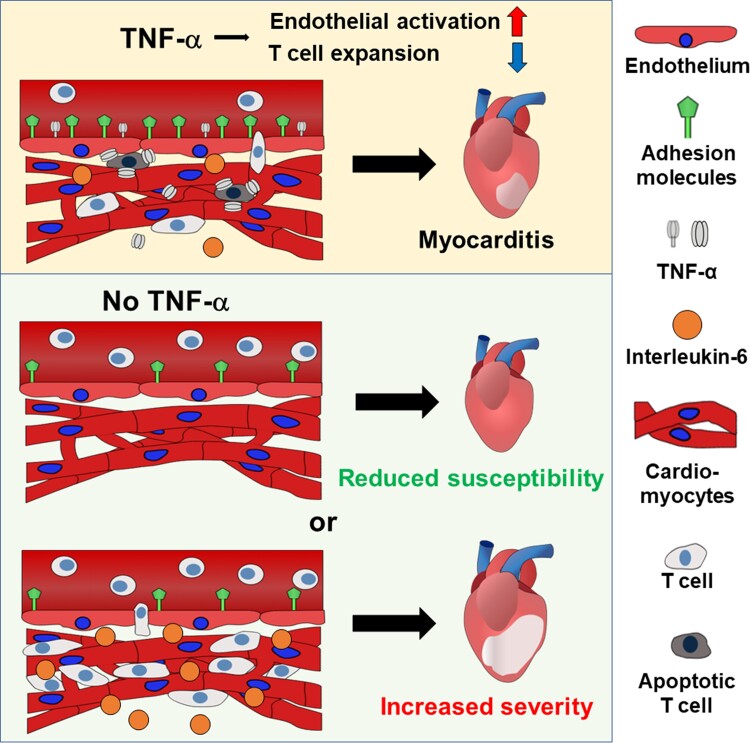
Tumour necrosis factor α (TNF-α) represents a classical pro-inflammatory cytokine, and its increased levels positively correlate with the severity of many cardiovascular diseases. Surprisingly, some heart failure patients receiving high doses of anti-TNF-α antibodies showed serious health worsening. This work aimed to examine the role of TNF-α signalling on the development and progression of myocarditis and heart-specific autoimmunity.
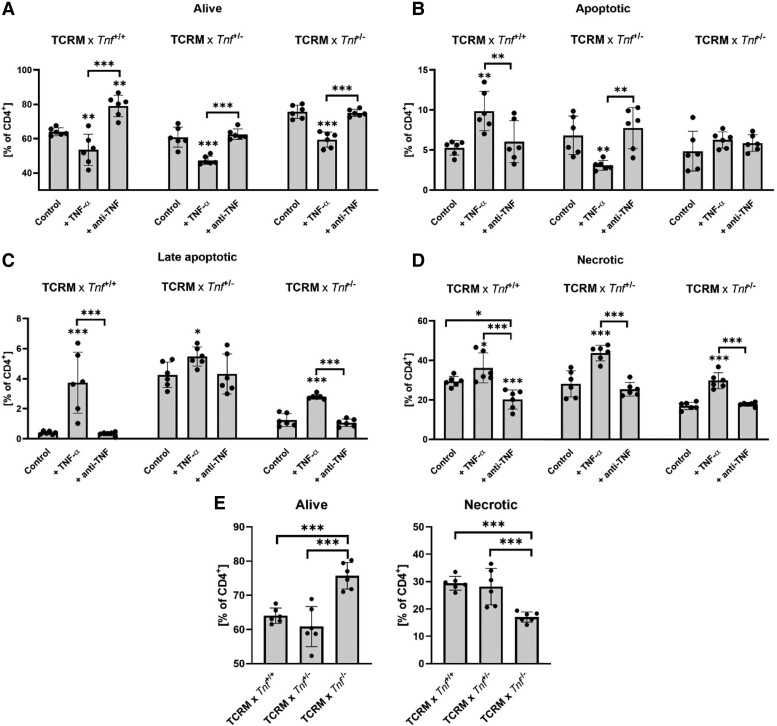
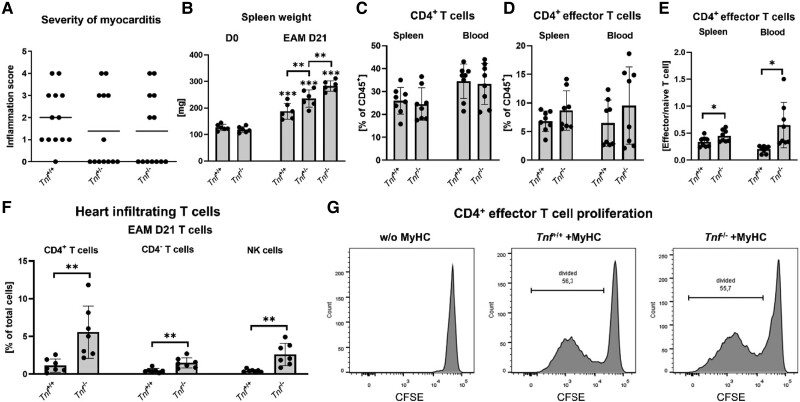
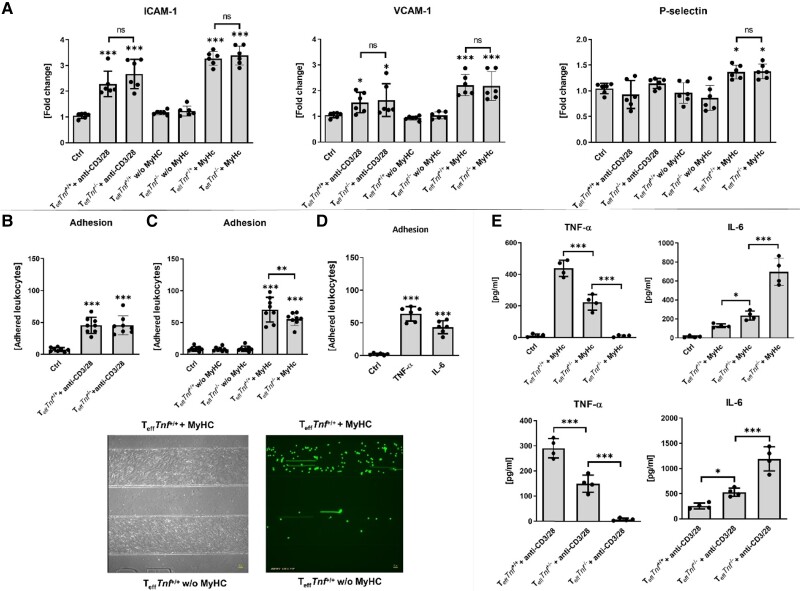
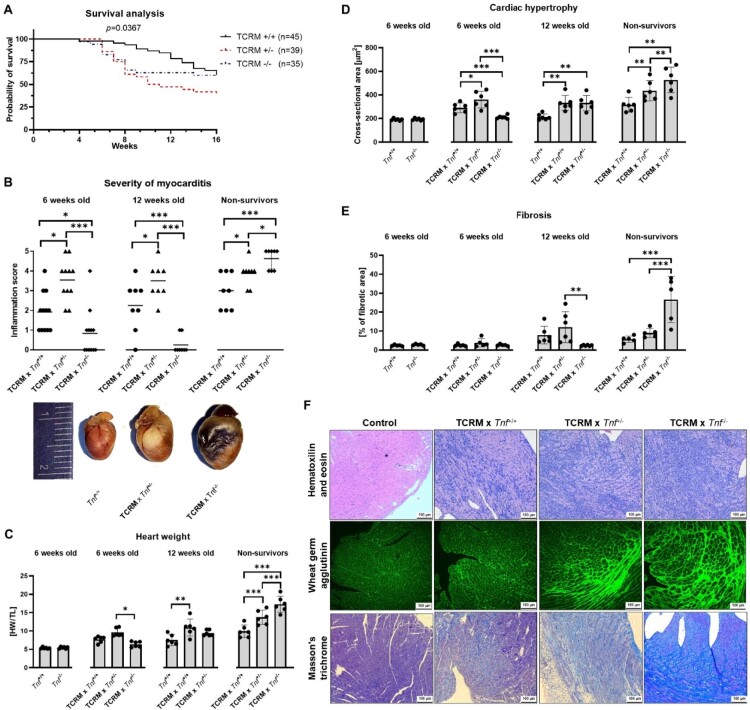
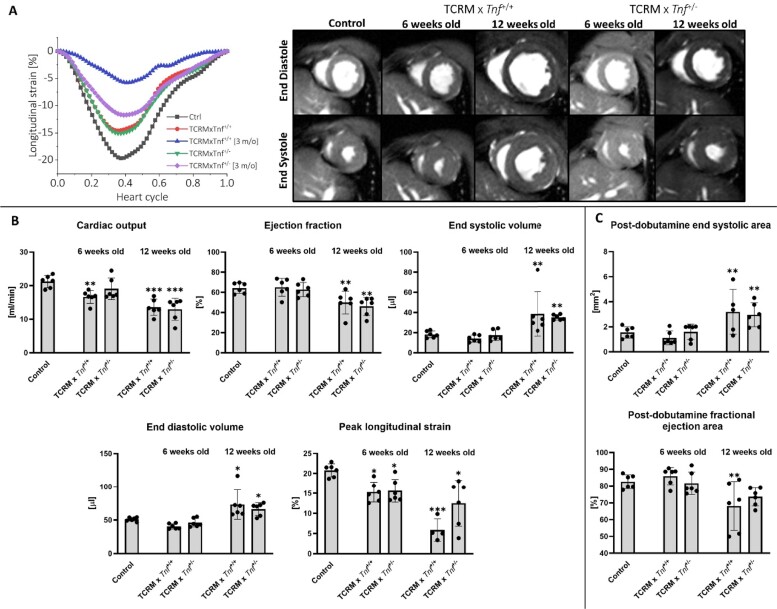
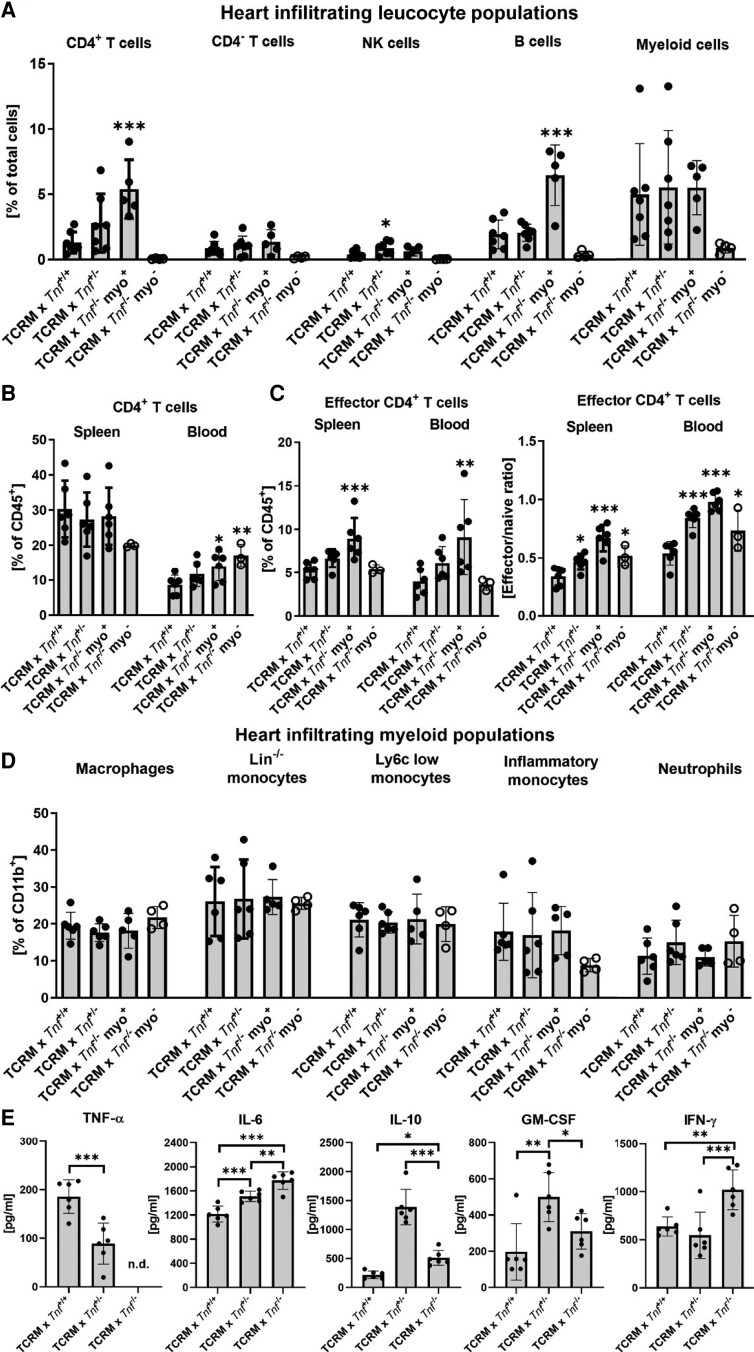
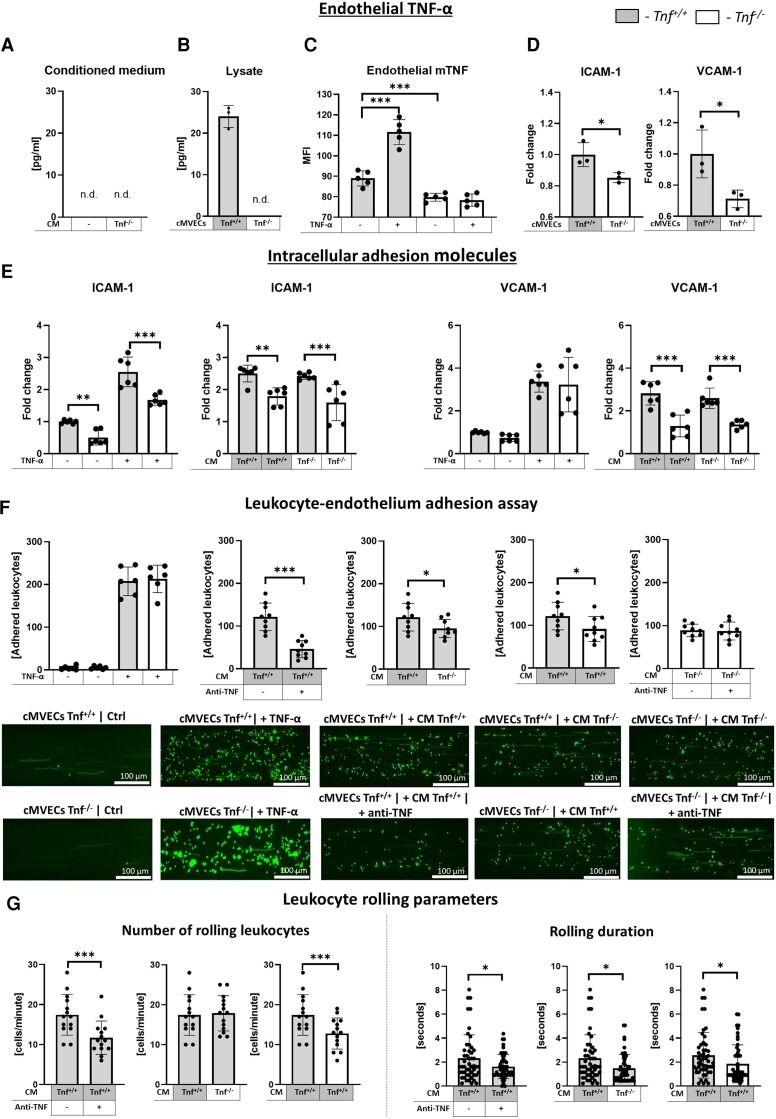
Mice with genetic deletion of TNF-α (Tnf+/- and Tnf-/-) and littermate controls (Tnf+/+) were used to study myocarditis in the inducible and the transgenic T cell receptor (TCRM) models. Tnf+/- and Tnf-/- mice immunized with α-myosin heavy chain peptide (αMyHC) showed reduced myocarditis incidence, but the susceptible animals developed extensive inflammation in the heart. In the TCRM model, defective TNF-α production was associated with increased mortality at a young age due to cardiomyopathy and cardiac fibrosis. We could confirm that TNF-α as well as the secretome of antigen-activated heart-reactive effector CD4+ T (Teff) cells effectively activated the adhesive properties of cardiac microvascular endothelial cells (cMVECs). Our data suggested that TNF-α produced by endothelial in addition to Teff cells promoted leucocyte adhesion to activated cMVECs. Analysis of CD4+ T lymphocytes from both models of myocarditis showed a strongly increased fraction of Teff cells in hearts, spleens, and in the blood of Tnf+/- and Tnf-/- mice. Indeed, antigen-activated Tnf-/- Teff cells showed prolonged long-term survival and TNF-α cytokine-induced cell death of heart-reactive Teff.
TNF-α signalling promotes myocarditis development by activating cardiac endothelial cells. However, in the case of established disease, TNF-α protects from exacerbating cardiac inflammation by inducing activation-induced cell death of heart-reactive Teff. These data might explain the lack of success of standard anti-TNF-α therapy in heart failure patients and open perspectives for T cell-targeted approaches.
肿瘤坏死因子 α(TNF-α)是一种经典的促炎细胞因子,其水平升高与许多心血管疾病的严重程度呈正相关。令人惊讶的是,一些接受高剂量抗 TNF-α 抗体治疗的心力衰竭患者的健康状况出现严重恶化。本研究旨在探讨 TNF-α信号在心肌炎和心脏特异性自身免疫的发展和进展中的作用。
使用基因敲除 TNF-α(Tnf+/- 和 Tnf-/-)的小鼠及其同窝对照(Tnf+/+)来研究诱导型和转基因 T 细胞受体(TCRM)模型中的心肌炎。用 α-肌球蛋白重链肽(αMyHC)免疫的 Tnf+/- 和 Tnf-/- 小鼠显示心肌炎发病率降低,但易感动物的心脏出现广泛炎症。在 TCRM 模型中,由于心肌病和心脏纤维化,TNF-α产生缺陷的动物在年轻时死亡率增加。我们可以证实 TNF-α以及抗原激活的心脏反应性效应 CD4+T(Teff)细胞的分泌组有效地激活了心脏微血管内皮细胞(cMVEC)的黏附特性。我们的数据表明,内皮细胞产生的 TNF-α以及 Teff 细胞促进了白细胞与激活的 cMVEC 的黏附。从两种心肌炎模型的 CD4+T 淋巴细胞分析中,我们发现 Tnf+/-和 Tnf-/- 小鼠的心脏、脾脏和血液中的 Teff 细胞比例明显增加。事实上,抗原激活的 Tnf-/-Teff 细胞表现出延长的长期存活和 TNF-α细胞因子诱导的心脏反应性 Teff 细胞的细胞死亡。
TNF-α信号通过激活心脏内皮细胞促进心肌炎的发展。然而,在疾病已经建立的情况下,TNF-α通过诱导心脏反应性 Teff 的激活诱导细胞死亡来保护心脏炎症恶化。这些数据可能解释了标准抗 TNF-α疗法在心力衰竭患者中缺乏成功的原因,并为针对 T 细胞的治疗方法开辟了前景。