Department of Chemistry and Biochemistry, University of Oklahoma, Norman, OK, USA.
Laboratories of Molecular Anthropology and Microbiome Research, University of Oklahoma, Norman, OK, USA.
Nat Commun. 2023 Oct 25;14(1):6769. doi: 10.1038/s41467-023-42247-w.
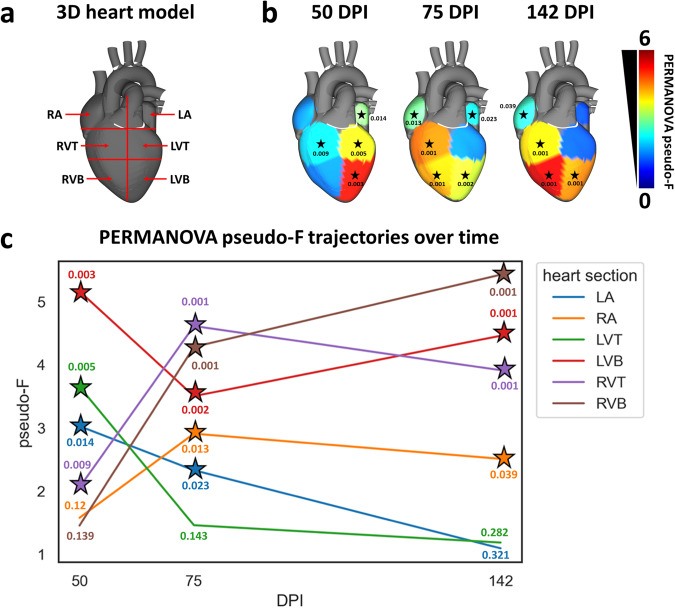
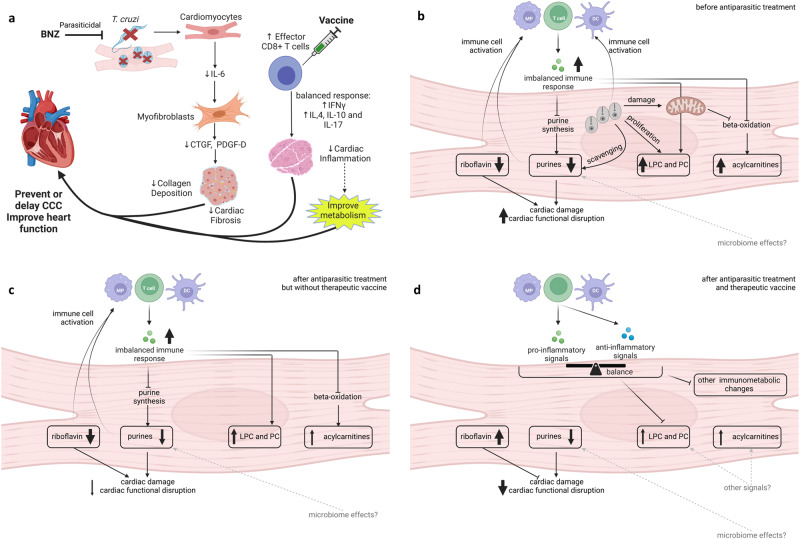
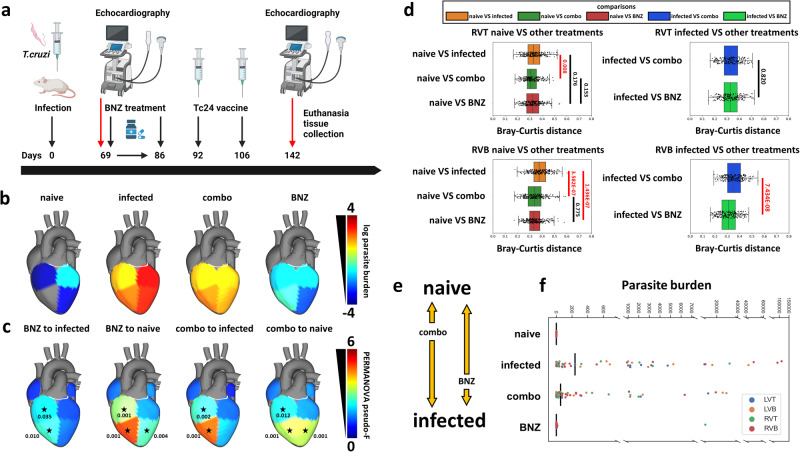
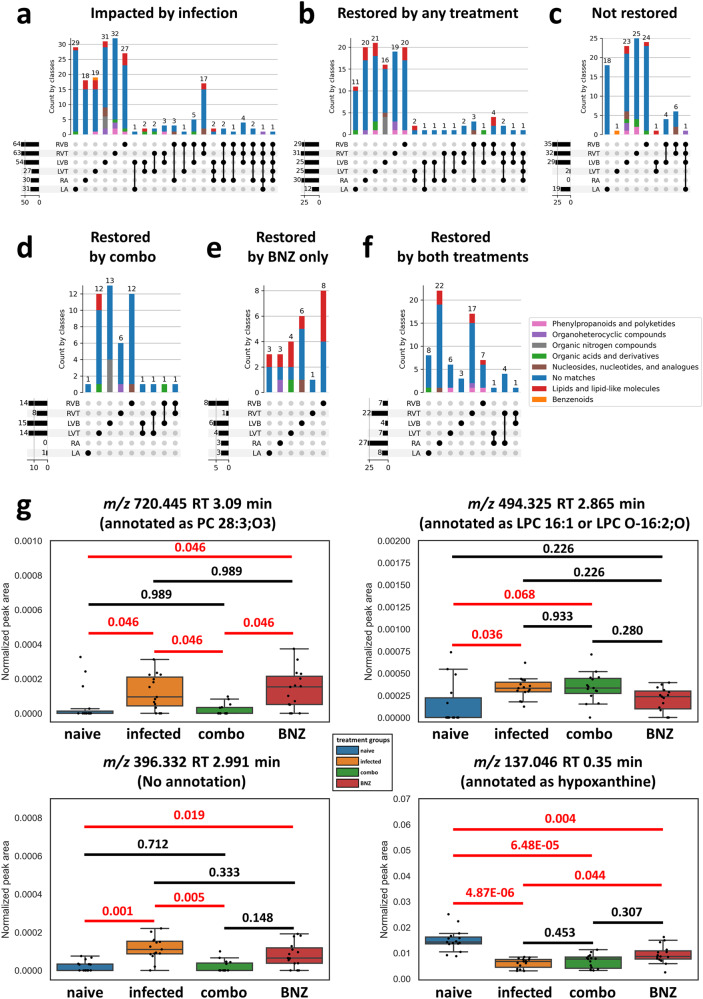
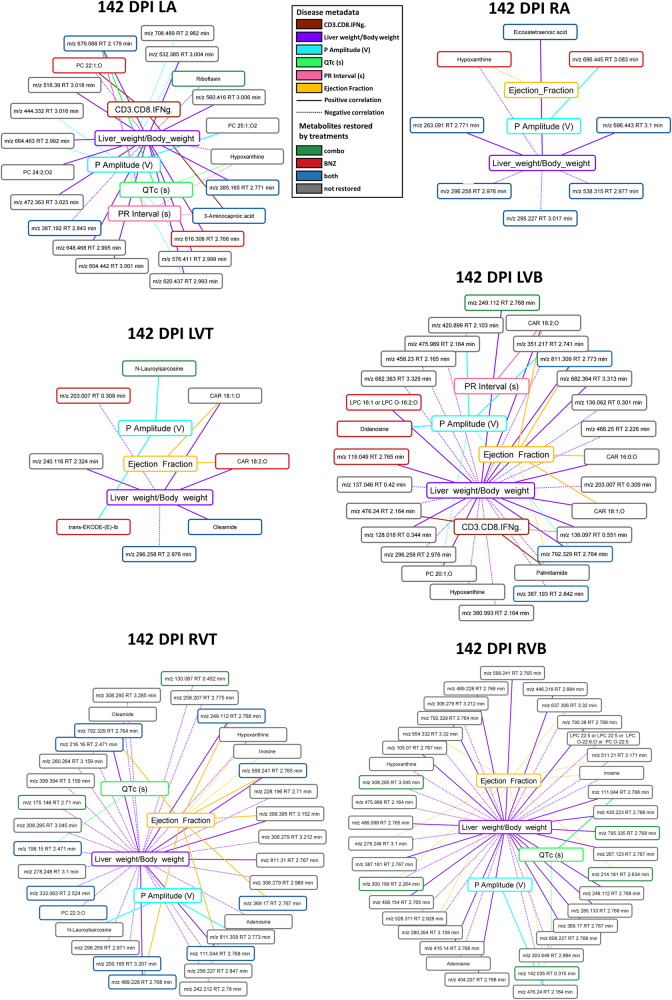
Post-infectious conditions present major health burdens but remain poorly understood. In Chagas disease (CD), caused by Trypanosoma cruzi parasites, antiparasitic agents that successfully clear T. cruzi do not always improve clinical outcomes. In this study, we reveal differential small molecule trajectories between cardiac regions during chronic T. cruzi infection, matching with characteristic CD apical aneurysm sites. Incomplete, region-specific, cardiac small molecule restoration is observed in animals treated with the antiparasitic benznidazole. In contrast, superior restoration of the cardiac small molecule profile is observed for a combination treatment of reduced-dose benznidazole plus an immunotherapy, even with less parasite burden reduction. Overall, these results reveal molecular mechanisms of CD treatment based on simultaneous effects on the pathogen and on host small molecule responses, and expand our understanding of clinical treatment failure in CD. This link between infection and subsequent persistent small molecule perturbation broadens our understanding of infectious disease sequelae.
感染后疾病带来重大健康负担,但仍知之甚少。在恰加斯病(Chagas disease,CD)中,寄生虫 Trypanosoma cruzi 会导致这种疾病,成功清除 T. cruzi 的驱虫剂并不总是能改善临床结果。在这项研究中,我们揭示了慢性 T. cruzi 感染期间心脏区域之间的差异小分子轨迹,与特征性 CD 顶端动脉瘤部位相匹配。用驱虫剂苯唑硝唑治疗的动物中观察到不完全的、区域特异性的心脏小分子恢复。相比之下,对于减少剂量的苯唑硝唑加免疫疗法的联合治疗,观察到心脏小分子谱的更好恢复,即使寄生虫负担减少较少。总的来说,这些结果揭示了基于对病原体和宿主小分子反应的同时作用的 CD 治疗的分子机制,并扩展了我们对 CD 临床治疗失败的理解。这种感染与随后持续的小分子扰动之间的联系拓宽了我们对传染病后遗症的理解。