Department of Nuclear Medicine, Samsung Medical Center, Sungkyunkwan University School of Medicine, 81 Irwon-ro, Gangnam-gu, Seoul, 06351, Republic of Korea.
Department of Public Health Science, Graduate School of Public Health, Seoul National University, Gwanak_1 Gwanak-ro, Gwanak-gu, Seoul, 08826, Republic of Korea.
Sci Rep. 2023 Oct 25;13(1):18247. doi: 10.1038/s41598-023-45296-9.
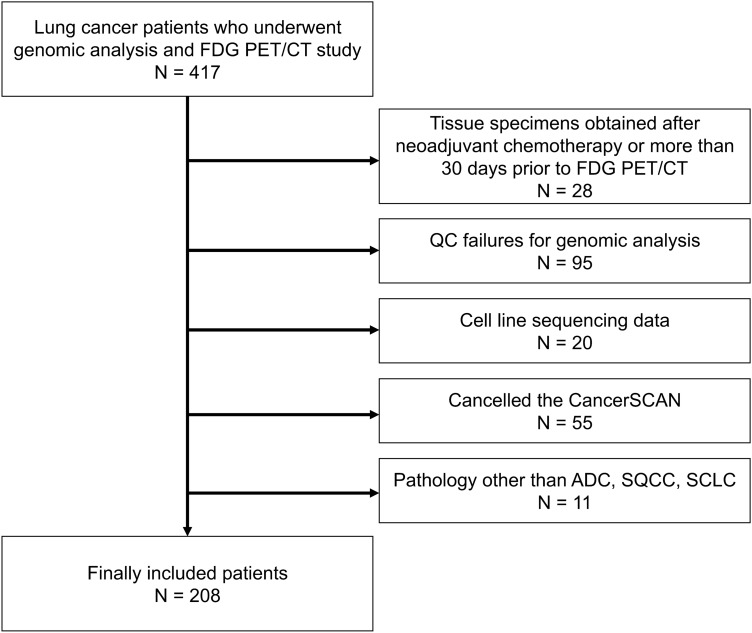
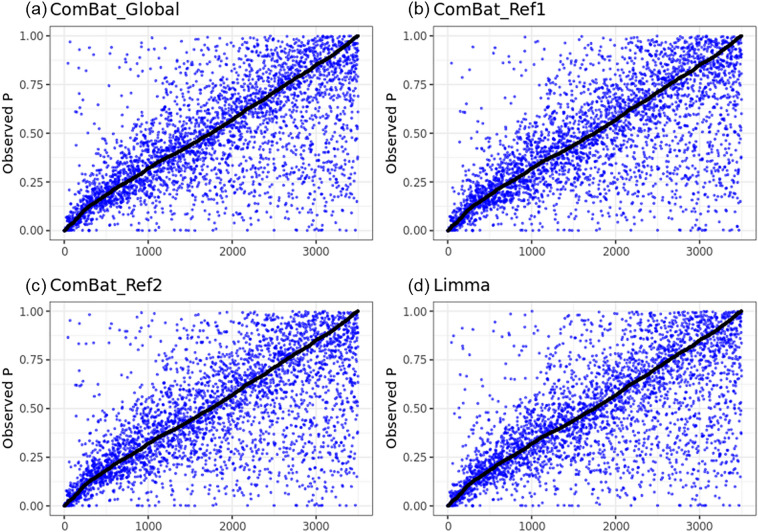
In radiomics research, the issue of different instruments being used is significant. In this study, we compared three correction methods to reduce the batch effects in radiogenomic data from fluorodeoxyglucose (FDG) PET/CT images of lung cancer patients. Texture features of the FDG PET/CT images and genomic data were retrospectively obtained. The features were corrected with different methods: phantom correction, ComBat method, and Limma method. Batch effects were estimated using three analytic tools: principal component analysis (PCA), the k-nearest neighbor batch effect test (kBET), and the silhouette score. Finally, the associations of features and gene mutations were compared between each correction method. Although the kBET rejection rate and silhouette score were lower in the phantom-corrected data than in the uncorrected data, a PCA plot showed a similar variance. ComBat and Limma methods provided correction with low batch effects, and there was no significant difference in the results of the two methods. In ComBat- and Limma-corrected data, more texture features exhibited a significant association with the TP53 mutation than in those in the phantom-corrected data. This study suggests that correction with ComBat or Limma methods can be more effective or equally as effective as the phantom method in reducing batch effects.
在放射组学研究中,使用不同仪器的问题很重要。在这项研究中,我们比较了三种校正方法,以减少肺癌患者氟脱氧葡萄糖(FDG)PET/CT 图像的放射基因组数据中的批次效应。回顾性地获得了 FDG PET/CT 图像和基因组数据的纹理特征。使用不同的方法对特征进行校正:幻影校正、ComBat 方法和 Limma 方法。使用三种分析工具估计批次效应:主成分分析(PCA)、k-最近邻批次效应测试(kBET)和轮廓得分。最后,比较了每种校正方法中特征与基因突变的相关性。虽然幻影校正数据中的 kBET 拒绝率和轮廓得分低于未校正数据,但 PCA 图显示出相似的方差。ComBat 和 Limma 方法提供了具有低批次效应的校正,两种方法的结果没有显著差异。在 ComBat 和 Limma 校正数据中,与幻影校正数据相比,更多的纹理特征与 TP53 突变呈显著相关性。这项研究表明,ComBat 或 Limma 方法的校正可以比幻影方法更有效地或等效地减少批次效应。