Division of Chronic Disease Epidemiology, Epidemiology, Biostatistics and Prevention Institute, University of Zurich, Hirschengraben 84, CH-8001 Zurich, Switzerland.
Institute of Computational Life Sciences, ZHAW School of Life Sciences and Facility Management, Schloss 1, CH-8820 Wädenswil, Switzerland.
Nutrients. 2023 Oct 13;15(20):4359. doi: 10.3390/nu15204359.
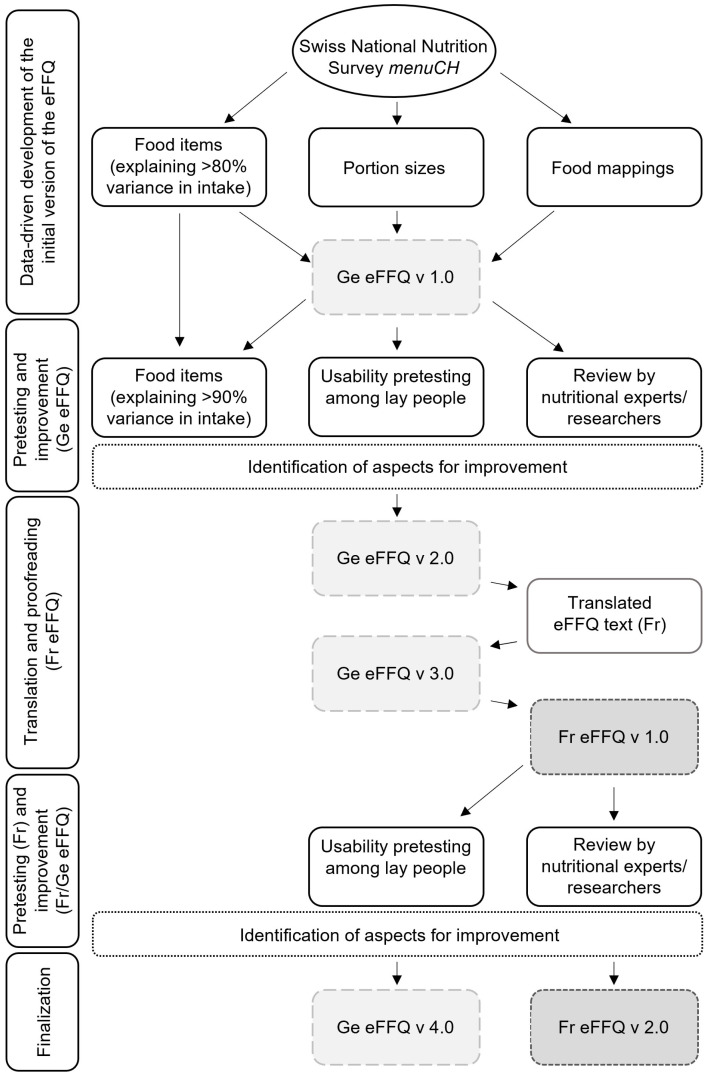
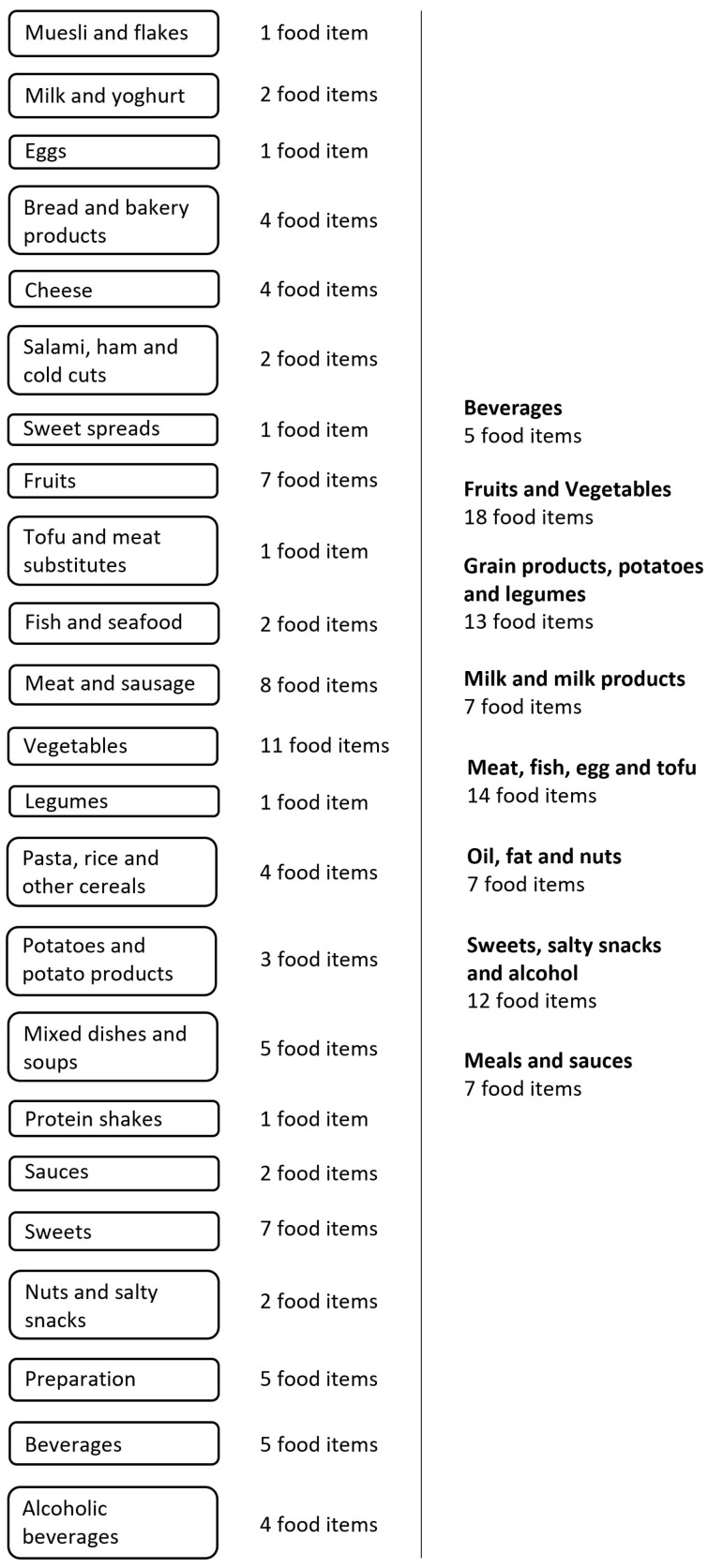
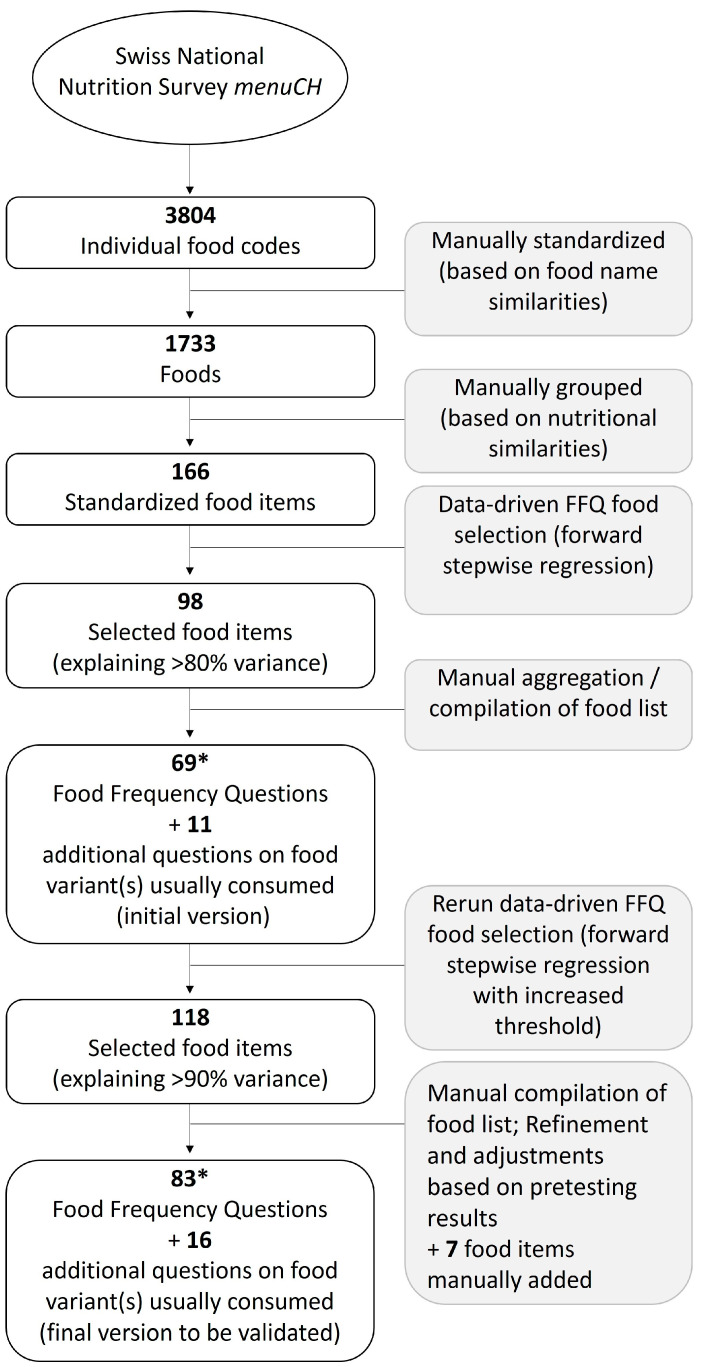
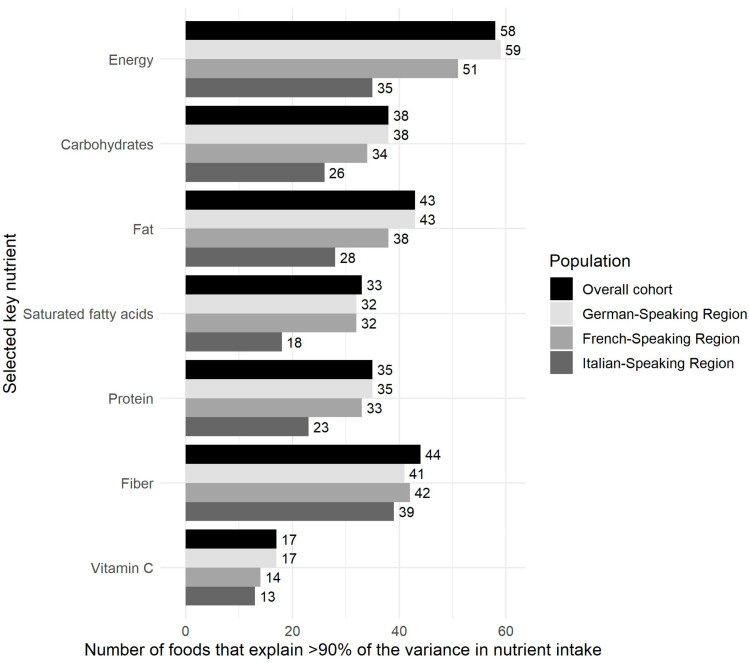
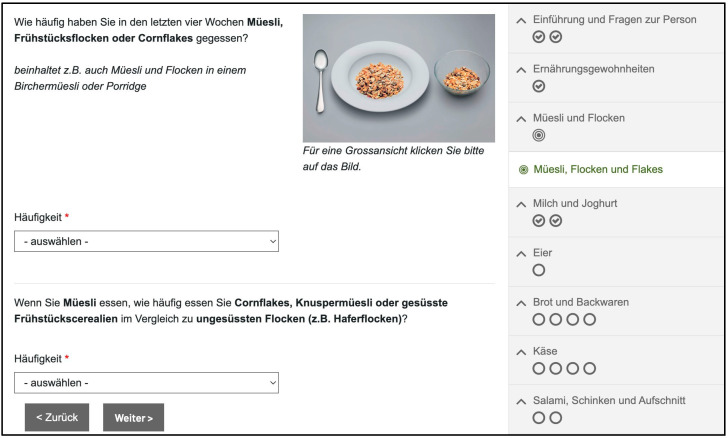
Dietary assessment is a major challenge in epidemiological research and is associated with a high time and financial burden. Automated food frequency questionnaires (FFQs) have the potential to rapidly collect dietary intake data in large studies while reducing human error risk during data processing. We developed a semiquantitative, multilingual, electronic FFQ for real-time dietary intake assessment in the Swiss adult population, called "Swiss eFFQ". The iterative development process involved stages of content identification, construction, pretesting, translation, and adaptation of the FFQ. Using 24 h dietary recalls from 2085 participants aged 18-75 years from a nationally representative survey, we conducted a stepwise regression analysis to identify foods contributing to >90% of the variance in intakes of energy and six nutrients. All 118 foods identified in the overall cohort or in any of the Swiss linguistic regions were selected and standardized to define the comprehensive 83-item food list, covering >90% of the intake of key nutrients in the entire study population. Once validated, the Swiss eFFQ can be used to classify individuals based on their habitual diets. The methodology described in this paper enhances the transparency of the Swiss eFFQ and may help researchers to develop multilingual dietary assessment tools for other populations.
膳食评估是流行病学研究中的一个主要挑战,其与高时间和经济负担相关联。自动化食物频率问卷(FFQ)在大型研究中具有快速收集膳食摄入量数据的潜力,同时降低数据处理过程中的人为错误风险。我们开发了一种半定量、多语言、电子 FFQ,用于实时评估瑞士成年人群的膳食摄入情况,称为“瑞士 eFFQ”。迭代开发过程涉及内容识别、构建、预测试、FFQ 的翻译和改编阶段。使用来自全国代表性调查的 2085 名 18-75 岁参与者的 24 小时膳食回忆,我们进行了逐步回归分析,以确定对能量和六种营养素摄入量差异贡献>90%的食物。在整个队列或任何瑞士语言区域中确定的所有 118 种食物都被选择并标准化,以定义全面的 83 项食物清单,涵盖整个研究人群中关键营养素摄入的>90%。一旦验证,瑞士 eFFQ 可用于根据个体的习惯性饮食进行分类。本文描述的方法提高了瑞士 eFFQ 的透明度,并可能有助于研究人员为其他人群开发多语言膳食评估工具。