Wróblewski Robert, Koszela Kamil, Mańczak Małgorzata, Sudoł-Szopińska Iwona, Gasik Robert
Department of Neuroorthopedics and Neurology Clinic and Polyclinic, National Institute of Geriatrics, Rheumatology and Rehabilitation in Warsaw, 1 Spartanska Street, 02-637 Warsaw, Poland.
Department of Gerontology, Public Health and Didactics, National Institute of Geriatrics, Rheumatology and Rehabilitation in Warsaw, 1 Spartanska Street, 02-637 Warsaw, Poland.
J Clin Med. 2023 Oct 13;12(20):6507. doi: 10.3390/jcm12206507.
The aim of the study is to search for a relationship between cervical instability in the course of rheumatoid arthritis (RA) and pelvic parameters of sagittal balance and lumbar lordosis (LL).
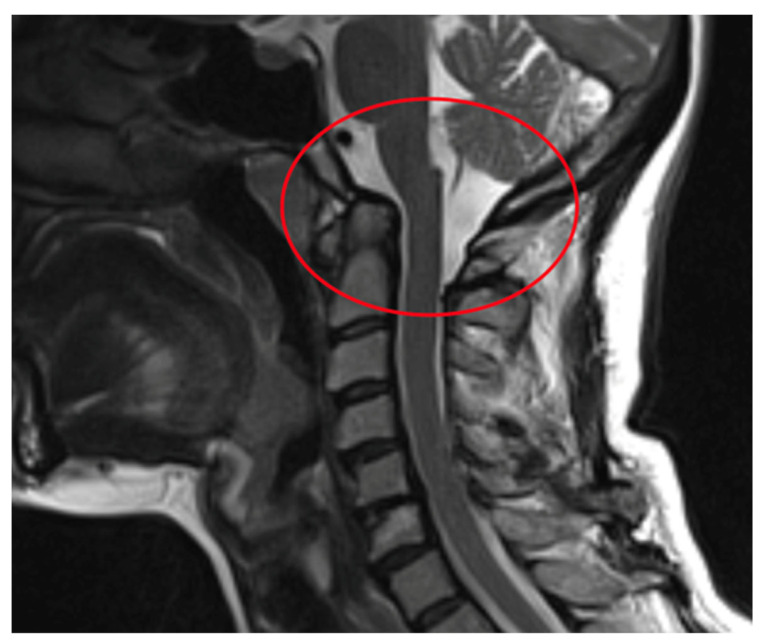
The study included 47 patients with rheumatoid arthritis with instability of the cervical segment, who were referred for a consultation to assess indications for surgical treatment. The patients underwent a radiological functional examination of the cervical region and postural examination of the entire spine. The basic parameters of the lumbar section and pelvis of these patients were compared with the population values. Then, using statistical methods, the correlation between radiological parameters of various types of instability and lumbar lordosis (LL), pelvic parameters (PI, SS, PT), as well as the patient's age and duration of the disease was assessed.
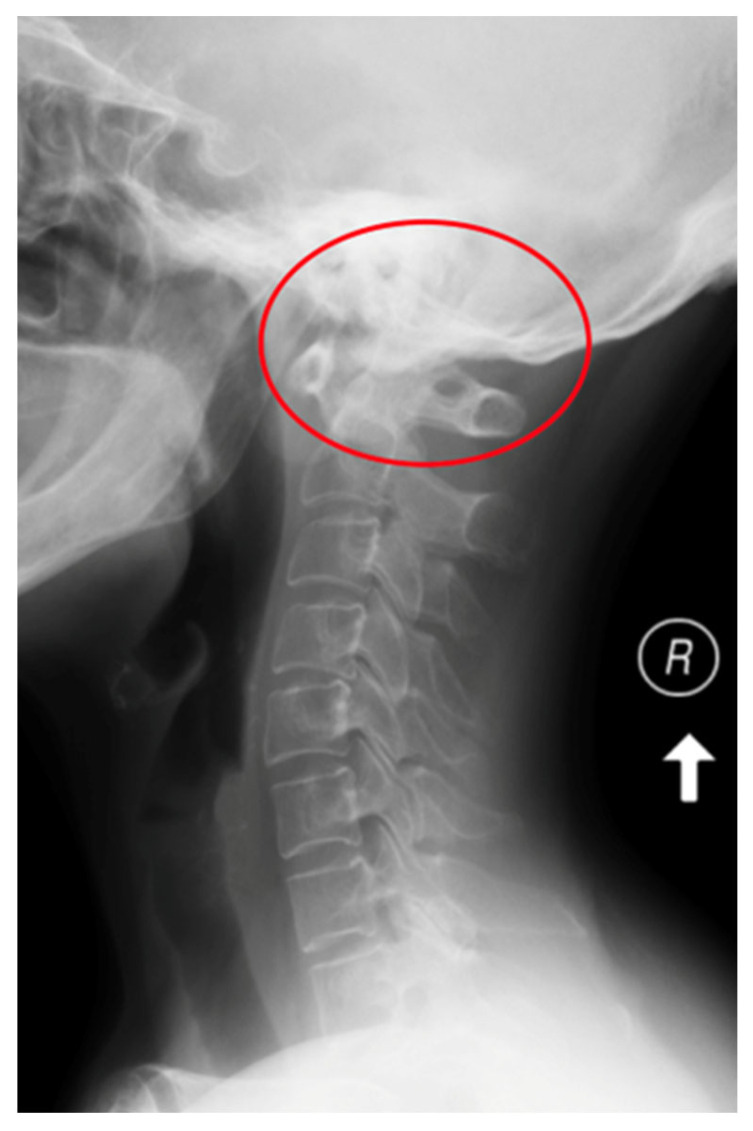
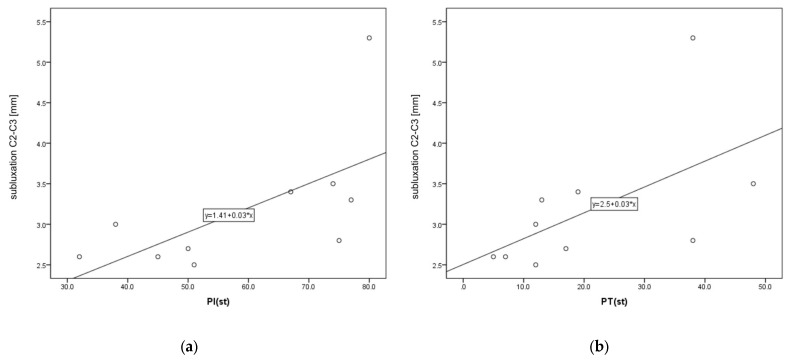
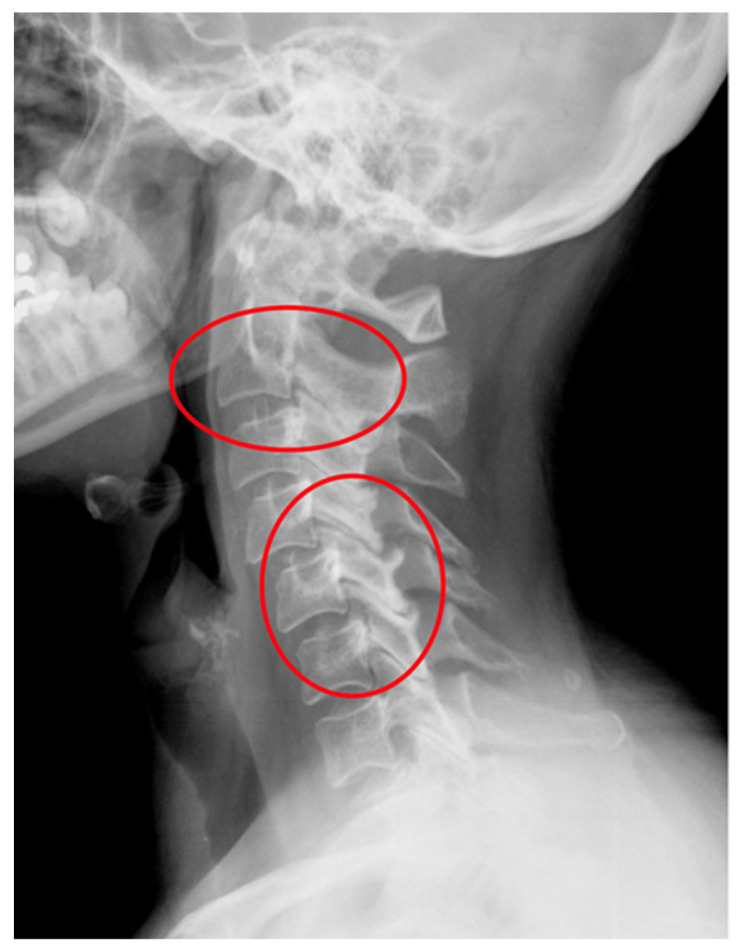
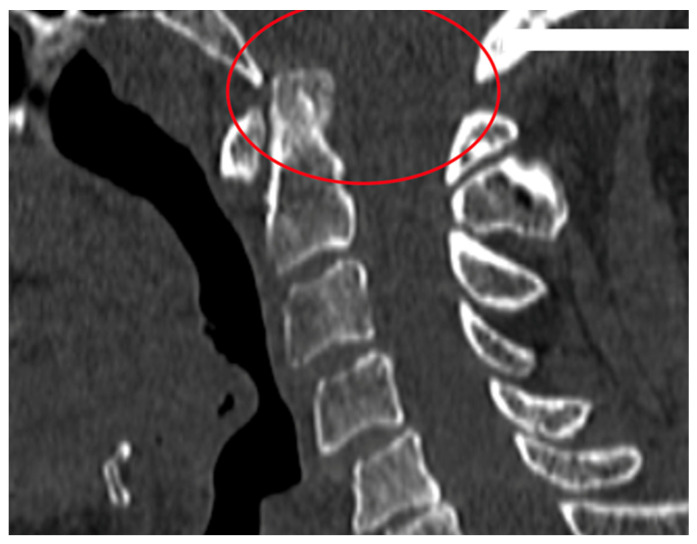
A statistical correlation was found between the instability in the cervical spine C2-C3 level and the value of the PT and PI angles. A statistically significant correlation was discovered between C1-C2 instability and younger patient age. There was no significant difference in the values of the pelvic parameters and lumbar lordosis in patients with rheumatoid arthritis compared to the population values.
Preliminary results suggest that there is a relationship between selected pelvic parameters and the development of instability in patients with rheumatoid arthritis. This may be important in planning treatment and assessing disease progression. Further studies on a larger group of patients are needed, as well as studies evaluating the correlation between other sagittal balance parameters and cervical instability in patients with RA.
本研究的目的是探寻类风湿关节炎(RA)病程中颈椎不稳与矢状面平衡及腰椎前凸(LL)的骨盆参数之间的关系。
本研究纳入了47例颈椎节段不稳的类风湿关节炎患者,这些患者被转诊以评估手术治疗指征。患者接受了颈椎区域的放射学功能检查及整个脊柱的姿势检查。将这些患者腰椎段和骨盆的基本参数与总体人群值进行比较。然后,运用统计学方法评估各种类型不稳的放射学参数与腰椎前凸(LL)、骨盆参数(PI、SS、PT)以及患者年龄和病程之间的相关性。
发现颈椎C2 - C3节段不稳与PT和PI角的值之间存在统计学相关性。发现C1 - C2不稳与患者年龄较轻之间存在统计学显著相关性。与总体人群值相比,类风湿关节炎患者的骨盆参数和腰椎前凸值无显著差异。
初步结果表明,类风湿关节炎患者中选定的骨盆参数与不稳的发生之间存在关联。这在治疗规划和评估疾病进展方面可能具有重要意义。需要对更大规模的患者群体进行进一步研究,以及评估类风湿关节炎患者其他矢状面平衡参数与颈椎不稳之间相关性的研究。