Somu Prathap, Basavegowda Nagaraj, Gomez Levin Anbu, Jayaprakash Hulikunte Veeranna, Puneetha Gangadahosahalli Krishnegowda, Yadav Akhilesh Kumar, Paul Subhankar, Baek Kwang-Hyun
Department of Biotechnology and Chemical Engineering, School of Civil & Chemical Engineering, Manipal University Jaipur, Dehmi Kalan, Jaipur 303007, India.
Department of Biotechnology, Yeungnam University, Gyeongsan 38451, Republic of Korea.
Biomedicines. 2023 Sep 26;11(10):2639. doi: 10.3390/biomedicines11102639.
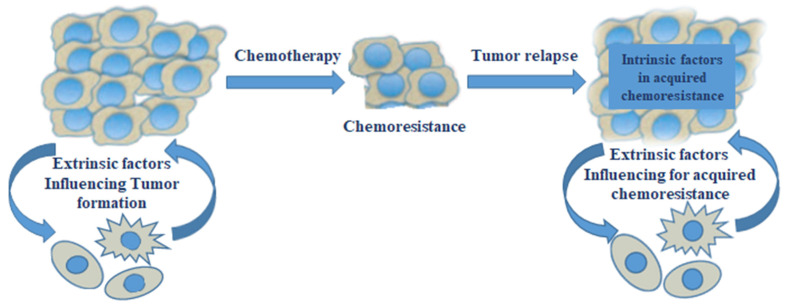
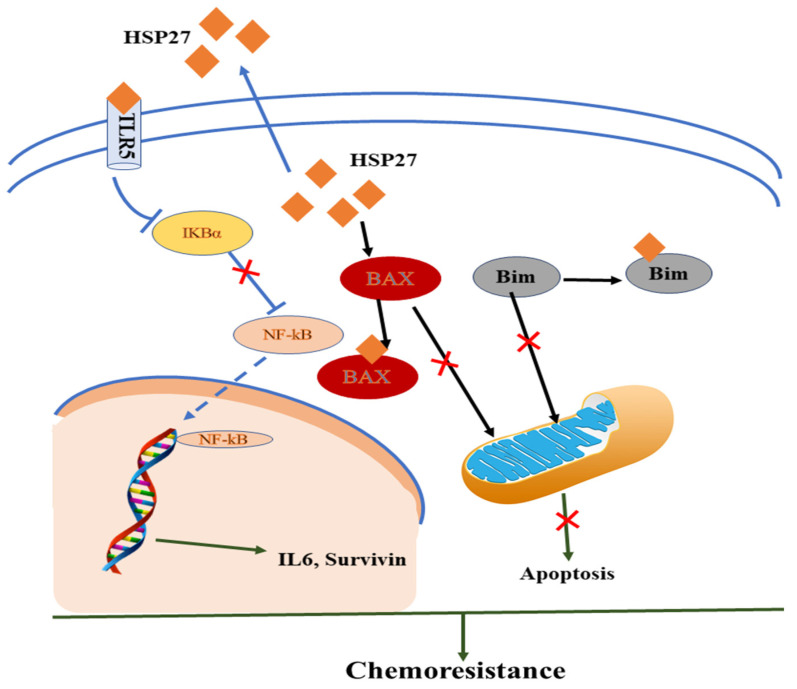
The development of multidrug resistance (MDR) against chemotherapeutic agents has become a major impediment in cancer therapy. Understanding the underlying mechanism behind MDR can guide future treatment for cancer with better therapeutic outcomes. Recent studies evidenced that crossroads interaction between the heat shock proteins (HSP) and inflammatory responses under the tumor microenvironment plays a pivotal role in modulating drug responsiveness and drug resistance through a complex cytological process. This review aims to investigate the interrelationship between inflammation and HSP in acquiring multiple drug resistance and investigate strategies to overcome the drug resistance to improve the efficacy of cancer treatment. HSP plays a dual regulatory effect as an immunosuppressive and immunostimulatory agent, involving the simultaneous blockade of multiple signaling pathways in acquiring MDR. For example, HSP27 shows biological effects on monocytes by causing IL10 and TNFα secretion and blocking monocyte differentiation to normal dendritic cells and tumor-associated macrophages to promote cancer progression and chemoresistance. Thus, the HSP function and immune-checkpoint release modalities provide a therapeutic target for a therapeutically beneficial approach for enhancing anti-tumor immune responses. The interconnection between inflammation and HSP, along with the tumor microenvironment in acquiring drug resistance, has become crucial for rationalizing the effect of HSP immunomodulatory activity with immune checkpoint blockade. This relationship can overcome drug resistance and assist in the development of novel combinatorial cancer immunotherapy in fighting cancer with decreasing mortality rates.
对化疗药物产生多药耐药性(MDR)已成为癌症治疗的主要障碍。了解MDR背后的潜在机制可为未来癌症治疗提供指导,以获得更好的治疗效果。最近的研究表明,肿瘤微环境下热休克蛋白(HSP)与炎症反应之间的交叉相互作用,通过复杂的细胞学过程,在调节药物反应性和耐药性方面起着关键作用。本综述旨在研究炎症与HSP在获得多药耐药性方面的相互关系,并探讨克服耐药性以提高癌症治疗疗效的策略。HSP作为一种免疫抑制剂和免疫刺激剂发挥双重调节作用,在获得MDR过程中涉及多个信号通路的同时阻断。例如,HSP27通过引起IL10和TNFα分泌以及阻断单核细胞向正常树突状细胞和肿瘤相关巨噬细胞的分化,对单核细胞产生生物学效应,从而促进癌症进展和化疗耐药性。因此,HSP功能和免疫检查点释放方式为增强抗肿瘤免疫反应的有益治疗方法提供了治疗靶点。炎症与HSP之间的相互联系,以及肿瘤微环境在获得耐药性方面的作用,对于合理利用HSP免疫调节活性与免疫检查点阻断的效果至关重要。这种关系可以克服耐药性,并有助于开发新型联合癌症免疫疗法来对抗癌症,降低死亡率。