
超声驱动的愈合:释放软骨细胞衍生的细胞外囊泡在脂肪来源干细胞软骨生成中的潜力。
Ultrasound-Driven Healing: Unleashing the Potential of Chondrocyte-Derived Extracellular Vesicles for Chondrogenesis in Adipose-Derived Stem Cells.
作者信息
Wang Yikai, Liu Zibo, Pan Chuqiao, Zheng Yi, Chen Yahong, Lian Xiang, Jiang Yu, Chen Chuhsin, Xue Ke, Zhang Yuanyuan, Xu Peng, Liu Kai
机构信息
Shanghai Key Laboratory of Tissue Engineering, Department of Plastic and Reconstructive Surgery, Shanghai Ninth People's Hospital, Shanghai Jiao Tong University School of Medicine, Shanghai 200011, China.
Wake Forest Institute for Regenerative Medicine, Wake Forest University Health Sciences, Winston-Salem, NC 27101, USA.
出版信息
Biomedicines. 2023 Oct 19;11(10):2836. doi: 10.3390/biomedicines11102836.
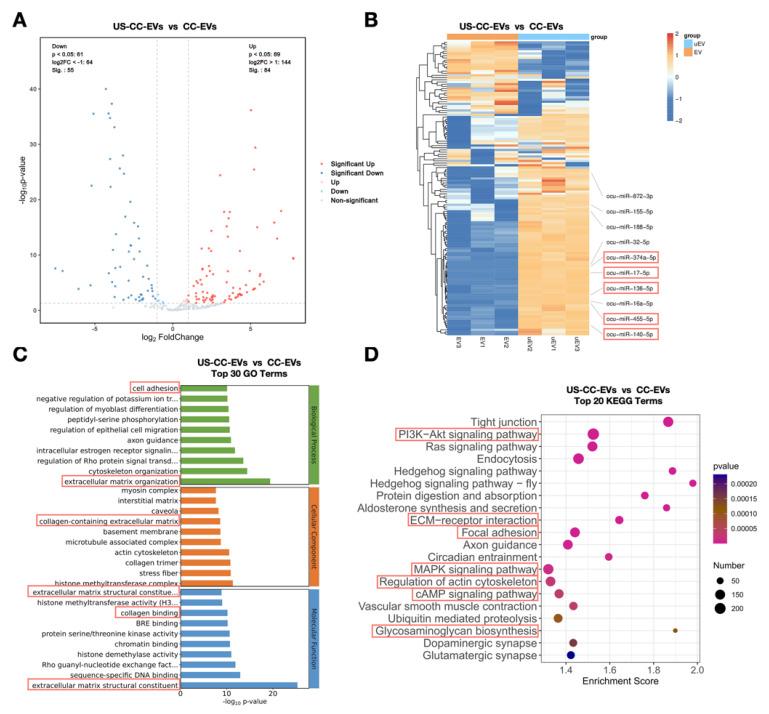
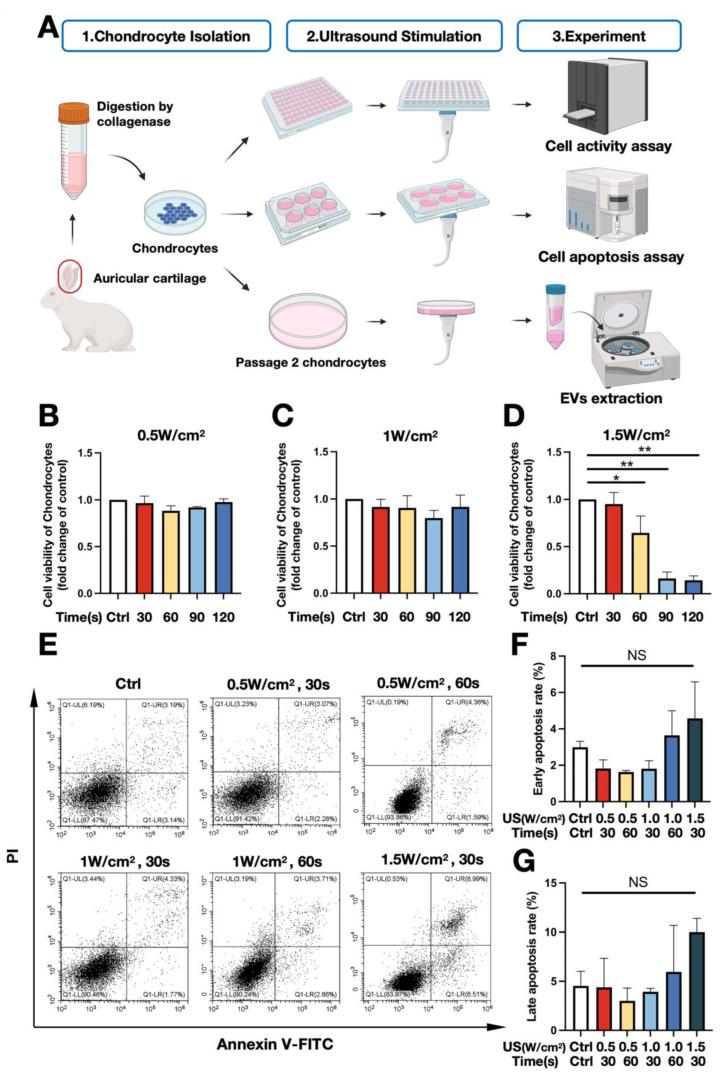
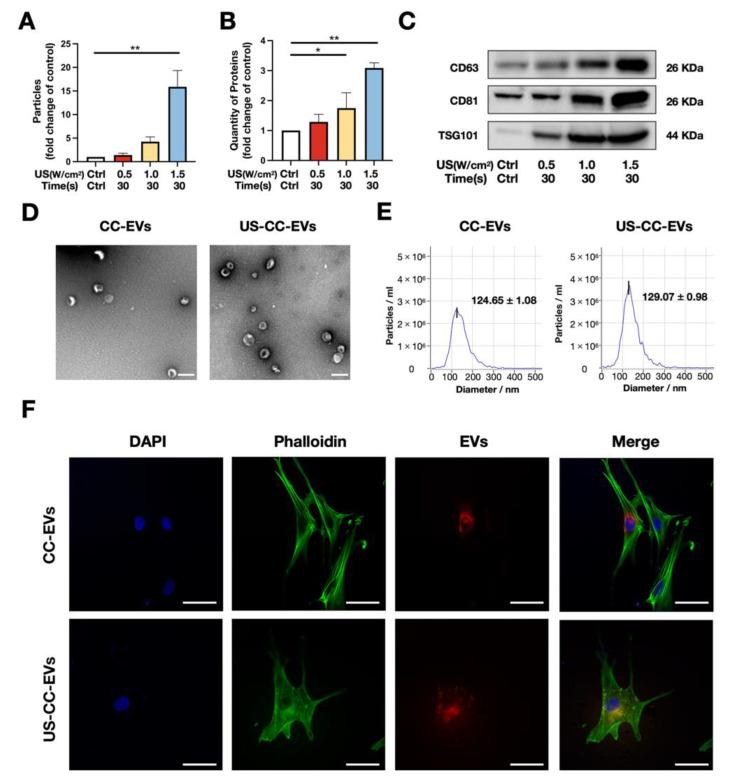
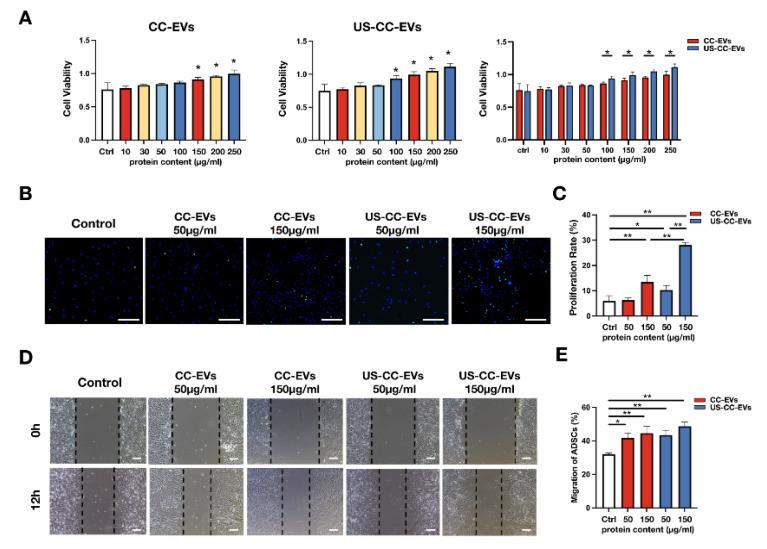
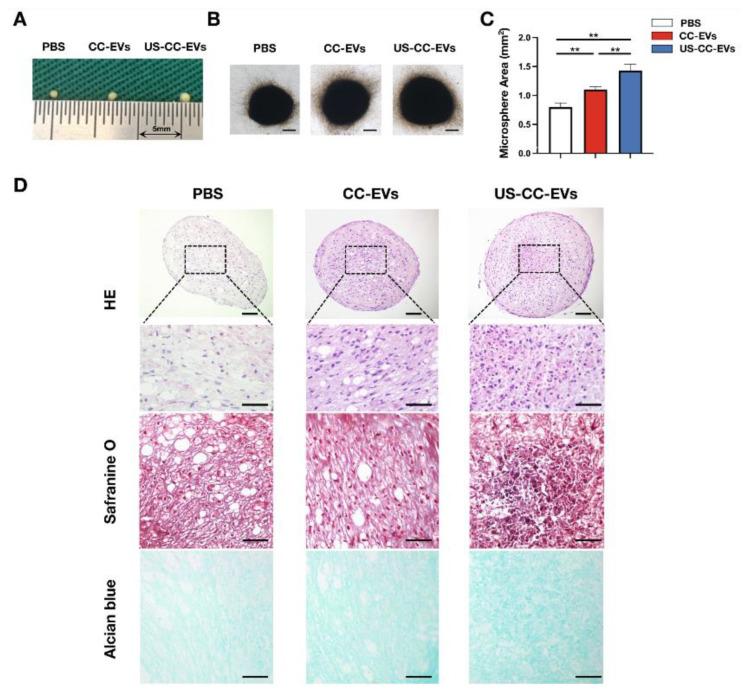
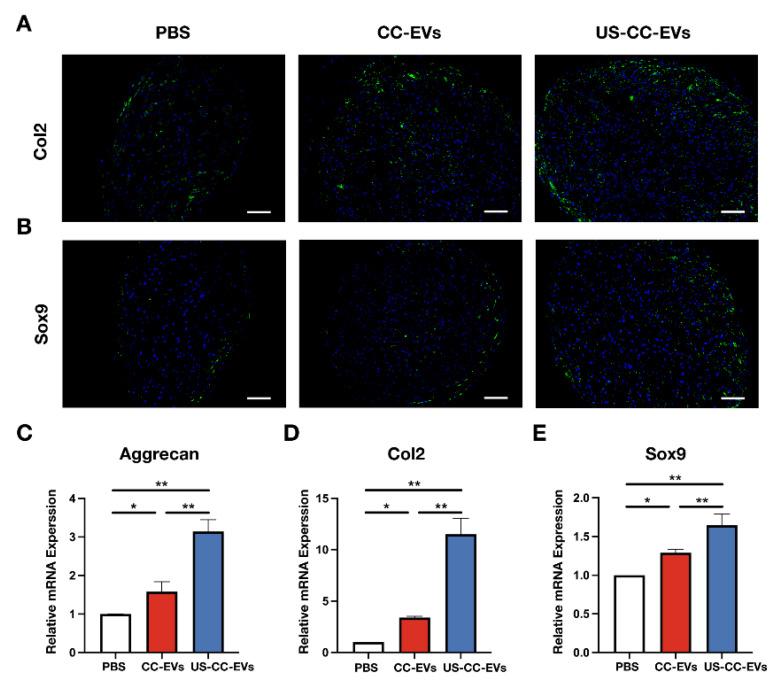
Repairing cartilage defects represents a significant clinical challenge. While adipose-derived stem cell (ADSC)-based strategies hold promise for cartilage regeneration, their inherent chondrogenic potential is limited. Extracellular vesicles (EVs) derived from chondrocytes (CC-EVs) have shown potential in enhancing chondrogenesis, but their role in promoting chondrogenic differentiation of ADSCs remains poorly understood. Moreover, the clinical application of EVs faces limitations due to insufficient quantities for in vivo use, necessitating the development of effective methods for extracting significant amounts of CC-EVs. Our previous study demonstrated that low-intensity ultrasound (LIUS) stimulation enhances EV secretion from mesenchymal stem cells. Here, we identified a specific LIUS parameter for chondrocytes that increased EV secretion by 16-fold. CC-EVs were found to enhance cell activity, proliferation, migration, and 21-day chondrogenic differentiation of ADSCs in vitro, while EVs secreted by chondrocytes following LIUS stimulation (US-CC-EVs) exhibited superior efficacy. miRNA-seq revealed that US-CC-EVs were enriched in cartilage-regeneration-related miRNAs, contributing to chondrogenesis in various biological processes. In conclusion, we found that CC-EVs can enhance the chondrogenesis of ADSCs in vitro. In addition, our study introduces ultrasound-driven healing as an innovative method to enhance the quantity and quality of CC-EVs, meeting clinical demand and addressing the limited chondrogenic potential of ADSCs. The ultrasound-driven healing unleashes the potential of CC-EVs for chondrogenesis possibly through the enrichment of cartilage-regeneration-associated miRNAs in EVs, suggesting their potential role in cartilage reconstruction. These findings hold promise for advancing cartilage regeneration strategies and may pave the way for novel therapeutic interventions in regenerative medicine.
修复软骨缺损是一项重大的临床挑战。虽然基于脂肪来源干细胞(ADSC)的策略在软骨再生方面具有潜力,但其固有的软骨生成能力有限。源自软骨细胞的细胞外囊泡(CC-EV)在增强软骨生成方面已显示出潜力,但其在促进ADSC软骨分化中的作用仍知之甚少。此外,由于用于体内使用的数量不足,EV的临床应用面临限制,因此需要开发有效的方法来提取大量的CC-EV。我们之前的研究表明,低强度超声(LIUS)刺激可增强间充质干细胞的EV分泌。在此,我们确定了一种针对软骨细胞的特定LIUS参数,该参数可使EV分泌增加16倍。发现CC-EV可增强体外ADSC的细胞活性、增殖、迁移和21天软骨分化,而LIUS刺激后软骨细胞分泌的EV(US-CC-EV)表现出更高的功效。miRNA测序显示,US-CC-EV富含与软骨再生相关的miRNA,在各种生物学过程中促进软骨生成。总之,我们发现CC-EV可在体外增强ADSC的软骨生成。此外,我们的研究引入了超声驱动愈合作为一种创新方法,以提高CC-EV的数量和质量,满足临床需求并解决ADSC软骨生成潜力有限的问题。超声驱动愈合可能通过在EV中富集与软骨再生相关的miRNA来释放CC-EV的软骨生成潜力,表明它们在软骨重建中的潜在作用。这些发现为推进软骨再生策略带来了希望,并可能为再生医学中的新型治疗干预铺平道路。
 Zotero 插件