Ye Qian-Yun, Cui Yan, Wang Hao-Yu, Li Ling-Yu, Chen Jian-Bing, Zhu Xiao-Feng, Xue Zhi-Jian, Zhang Rong-Hua
Department of Traditional Chinese Medicine, First Affiliated Hospital of Jinan University, Guangzhou, China.
College of Traditional Chinese Medicine, Jinan University, Guangzhou, China.
Front Pharmacol. 2024 Dec 23;15:1516125. doi: 10.3389/fphar.2024.1516125. eCollection 2024.
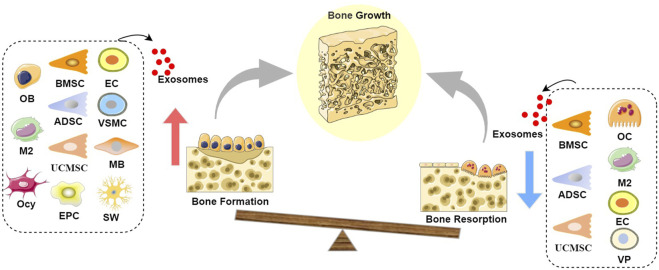
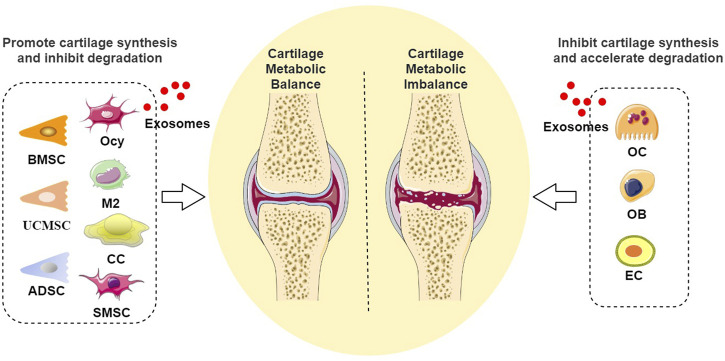
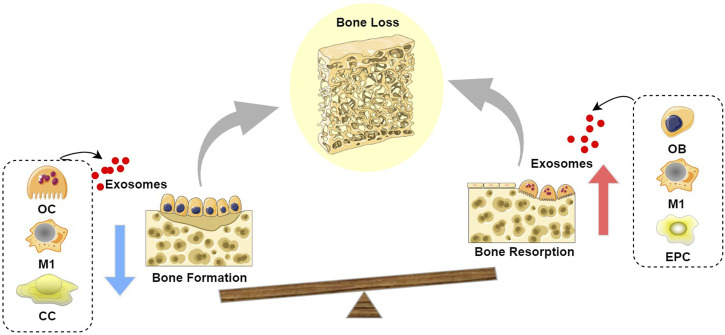
Bone homeostasis encompasses two interrelated aspects: bone remodeling and cartilage metabolism. Disruption of bone homeostasis can lead to the development of metabolic bone diseases such as osteoporosis and osteoarthritis. The maintenance of bone homeostasis is a complex process that does not solely rely on the functions of the bone tissue itself. In fact, bone tissue is not an isolated entity; it is closely connected to other tissues in the body via exosomes. Within this interconnectivity, exosomes derived from both bone and non-bone cells interfere with each other, forming a complex regulatory network. Therefore, with cell origin as the guiding principle, we have delineated the bone regulatory network of exosomes, elaborated on the specific roles and regulatory mechanisms of exosomes derived from common cell types (cells within the skeletal microenvironment, stem cells from extra-osseous tissues, vascular-derived cells, muscle-derived cells, and neurogenic cells) in bone formation, bone resorption, and cartilage metabolism. We have also discussed the challenges faced in the field of exosome research related to bone homeostasis, unveiled the critical role of exosomes in maintaining bone homeostasis, and proposed that exosomes could serve as highly valuable therapeutic targets for metabolic bone diseases.
骨重塑和软骨代谢。骨稳态的破坏会导致代谢性骨病的发生,如骨质疏松症和骨关节炎。骨稳态的维持是一个复杂的过程,并不完全依赖于骨组织自身的功能。事实上,骨组织并非孤立的实体;它通过外泌体与体内其他组织紧密相连。在这种相互联系中,来自骨细胞和非骨细胞的外泌体相互干扰,形成一个复杂的调控网络。因此,以细胞来源为指导原则,我们描绘了外泌体的骨调控网络,阐述了常见细胞类型(骨骼微环境中的细胞、骨外组织干细胞、血管衍生细胞、肌肉衍生细胞和神经源性细胞)来源的外泌体在骨形成、骨吸收和软骨代谢中的具体作用及调控机制。我们还讨论了骨稳态相关外泌体研究领域面临的挑战,揭示了外泌体在维持骨稳态中的关键作用,并提出外泌体可作为代谢性骨病极具价值的治疗靶点。