Biological Science Department, College of Science, King Faisal University, P.O. Box 400, Al-Ahsa 31982, Saudi Arabia.
Botany and Microbiology Department, Faculty of Science, Beni-Suef University, Beni-Suef 62511, Egypt.
Medicina (Kaunas). 2023 Sep 27;59(10):1731. doi: 10.3390/medicina59101731.
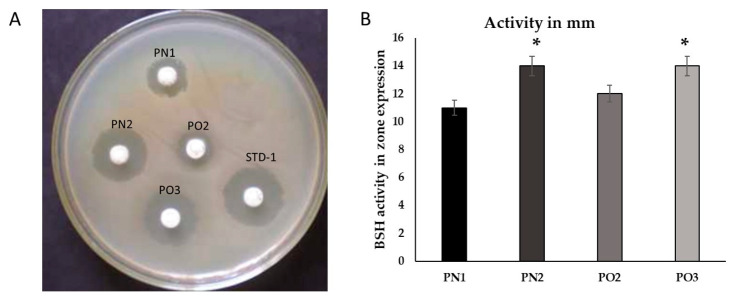
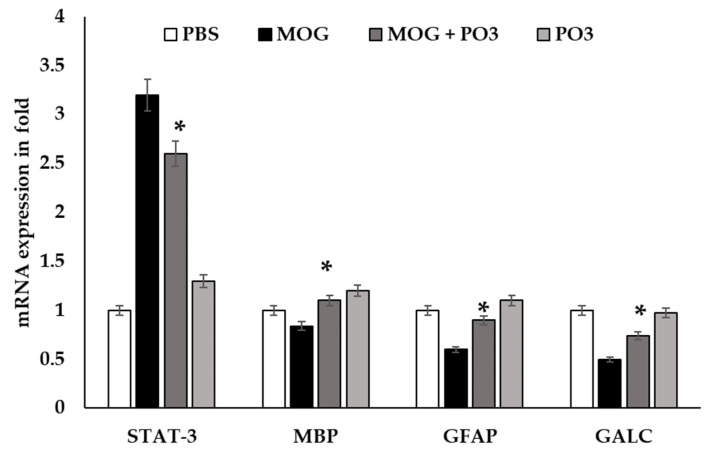
: Milk is healthy and includes several vital nutrients and microbiomes. Probiotics in milk and their derivatives modulate the immune system, fight inflammation, and protect against numerous diseases. The present study aimed to isolate novel bacterial species with probiotic potential for neuroinflammation. : Six milk samples were collected from lactating dairy cows. Bacterial isolates were obtained using standard methods and were evaluated based on probiotic characteristics such as the catalase test, hemolysis, acid/bile tolerance, cell adhesion, and hydrophobicity, as well as in vitro screening. : Nine morphologically diverse bacterial isolates were found in six different types of cow's milk. Among the isolates, PO3 displayed probiotic characteristics. PO3 was a Gram-positive rod cell that grew in an acidic (pH-2) salty medium containing bile salt and salinity (8% NaCl). PO3 also exhibited substantial hydrophobicity and cell adhesion. The sequencing comparison of the 16S rRNA genes revealed that PO3 was with a similarity score of 99.3%. Furthermore, PO3 was assessed for its neuroanti-inflammatory activity on human oligodendrocyte (HOG) cell lines using four different neuroimmune markers: signal transducer and activator of transcription (STAT-3), myelin basic protein (MBP), glial fibrillary acidic protein (GFAP), and GLAC in HOG cell lines induced by MOG. Unlike the rest of the evaluated neuroimmune markers, STAT-3 levels were elevated in the MOG-treated HOG cell lines compared to the untreated ones. The expression level of STAT-3 was attenuated in both PO3-MOG-treated and only PO3-treated cell lines. On the contrary, in PO3-treated cell lines, MBP, GFAP, and GLAC were significantly expressed at higher levels when compared with the MOG-treated cell lines. : The findings reported in this article are to be used as a foundation for further in vivo research in order to pave the way for the possible use of probiotics in the treatment of neuroinflammatory diseases, including multiple sclerosis.
牛奶是健康的,含有多种重要的营养物质和微生物群。牛奶中的益生菌及其衍生物可以调节免疫系统、对抗炎症、预防多种疾病。本研究旨在分离具有神经炎症潜在益生特性的新型细菌物种。
从哺乳期奶牛中采集了 6 份牛奶样本。采用标准方法获得细菌分离物,并根据益生菌特性进行评估,如过氧化氢酶试验、溶血、酸/胆汁耐受性、细胞黏附和疏水性,以及体外筛选。
在 6 种不同类型的牛奶中发现了 9 种形态多样的细菌分离物。在这些分离物中,PO3 表现出益生菌特性。PO3 是一种革兰氏阳性杆状细胞,能够在酸性(pH-2)含盐培养基中生长,该培养基含有胆盐和盐度(8%NaCl)。PO3 还表现出较大的疏水性和细胞黏附性。16S rRNA 基因的测序比较表明,PO3 与相似度为 99.3%。此外,还在人少突胶质细胞(HOG)细胞系上评估了 PO3 对神经免疫标志物的神经抗炎活性,包括四个不同的神经免疫标志物:信号转导和转录激活因子(STAT-3)、髓鞘碱性蛋白(MBP)、胶质纤维酸性蛋白(GFAP)和 HOG 细胞系中的 GLAC,这些标志物在 MOG 诱导的 HOG 细胞系中表达。与未处理的细胞系相比,在 MOG 处理的 HOG 细胞系中,STAT-3 水平升高,而在 PO3-MOG 处理和仅 PO3 处理的细胞系中,STAT-3 表达水平减弱。相反,在 PO3 处理的细胞系中,与 MOG 处理的细胞系相比,MBP、GFAP 和 GLAC 的表达水平显著升高。
本文报道的发现将作为进一步体内研究的基础,为益生菌在治疗神经炎症性疾病(包括多发性硬化症)中的应用铺平道路。