Faculty of Medicine, "Carol Davila" University of Medicine and Pharmacy, 020021 Bucharest, Romania.
Department of Radiation Oncology, Sanador Oncology Centre, 010991 Bucharest, Romania.
Medicina (Kaunas). 2023 Sep 27;59(10):1735. doi: 10.3390/medicina59101735.
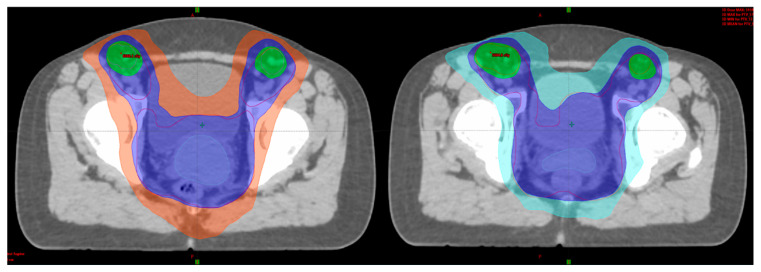
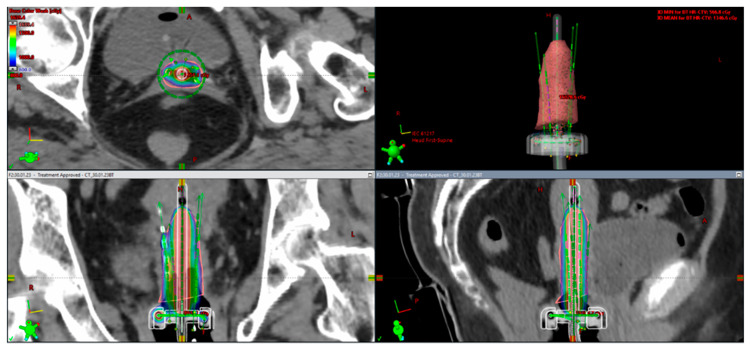
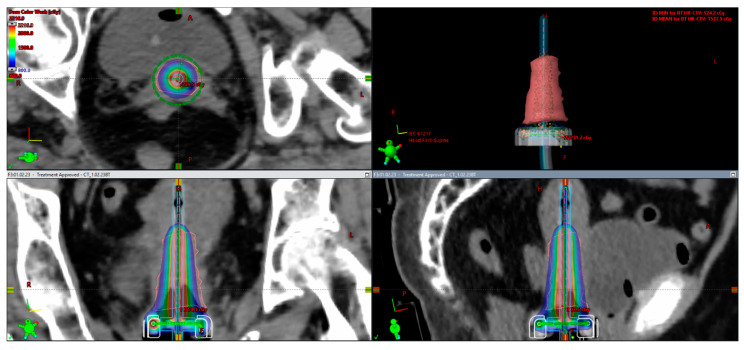
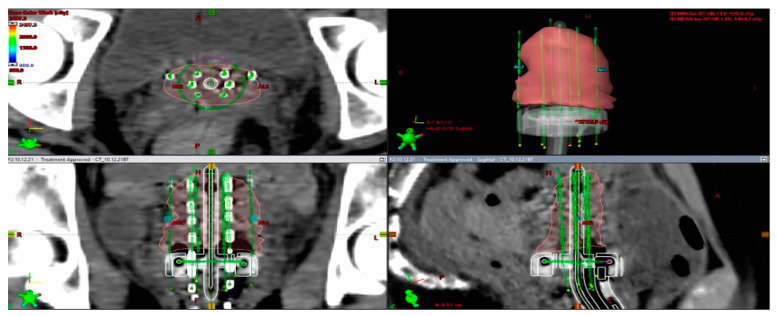
The standard of care for locally advanced cervical cancer is external beam radiotherapy (EBRT) with simultaneous chemotherapy followed by an internal radiation boost. New imaging methods such as positron-emission tomography and magnetic resonance imaging have been implemented into daily practice for better tumor delineation in radiotherapy planning. The method of delivering radiation has changed with technical advances in qualitative imaging and treatment delivery. Image-guided radiotherapy (IGRT) plays an important role in minimizing treatment toxicity of pelvic radiation and provides a superior conformality for sparing the organs at risk (OARs) such as bone marrow, bowel, rectum, and bladder. Similarly, three-dimensional image-guided adaptive brachytherapy (3D-IGABT) with computed tomography (CT) or magnetic resonance imaging (MRI) has been reported to improve target coverage and reduce the dose to normal tissues. Brachytherapy is a complementary part of radiotherapy treatment for cervical cancer and, over the past 20 years, 3D-image-based brachytherapy has rapidly evolved and established itself as the gold standard. With new techniques and adaptive treatment in cervical cancer, the concept of personalized medicine is introduced with an enhanced comprehension of the therapeutic index not only in terms of volume (three-dimensional) but during treatment too (four-dimensional). Current data show promising results with integrated IGRT and IGABT in clinical practice and, therefore, better local control and overall survival while reducing treatment-related morbidity. This review gives an overview of the substantial impact that occurred in the progress of image-guided adaptive external beam radiotherapy and brachytherapy.
局部晚期宫颈癌的标准治疗方法是外照射放疗(EBRT)联合同期化疗,然后进行内部放射增敏。正电子发射断层扫描和磁共振成像等新的成像方法已被纳入放射治疗计划中,以更好地进行肿瘤勾画。随着定性成像和治疗输送技术的进步,放射治疗的方法也发生了变化。图像引导放疗(IGRT)在最小化盆腔放射治疗毒性方面发挥着重要作用,并为保护骨髓、肠道、直肠和膀胱等危险器官(OARs)提供了更好的适形性。同样,基于 CT 或 MRI 的三维图像引导自适应近距离治疗(3D-IGABT)已被报道可提高靶区覆盖率并降低正常组织剂量。近距离治疗是宫颈癌放射治疗的补充部分,在过去 20 年中,基于三维图像的近距离治疗迅速发展并成为金标准。随着宫颈癌新技术和自适应治疗的出现,个性化医疗的概念得到了引入,不仅在体积(三维)方面,而且在治疗过程中(四维)也增强了对治疗指数的理解。目前的数据显示,在临床实践中,整合 IGRT 和 IGABT 具有很有前途的结果,可提高局部控制率和总生存率,同时降低治疗相关的发病率。本文综述了图像引导自适应外照射放疗和近距离治疗进展中所产生的重大影响。