Laboratory of Oncobiology and Hematology (LOH), University Clinics of Hematology and Oncology, Faculty of Medicine (FMUC), University of Coimbra, 3000-548 Coimbra, Portugal.
Coimbra Institute for Clinical and Biomedical Research (iCBR), Group of Environmental Genetics of Oncobiology (CIMAGO), Faculty of Medicine (FMUC), University of Coimbra, 3000-548 Coimbra, Portugal.
Int J Mol Sci. 2023 Oct 18;24(20):15331. doi: 10.3390/ijms242015331.
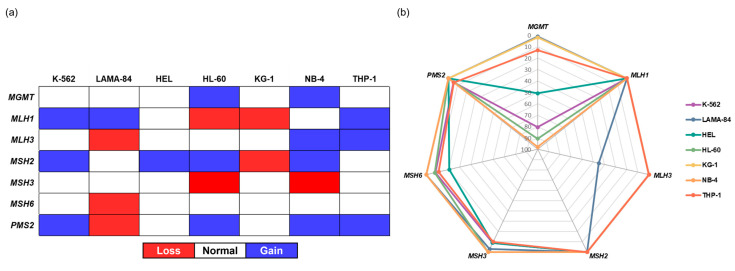
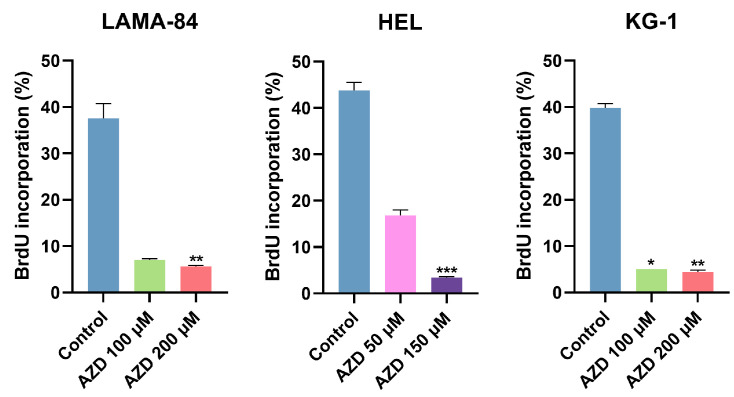
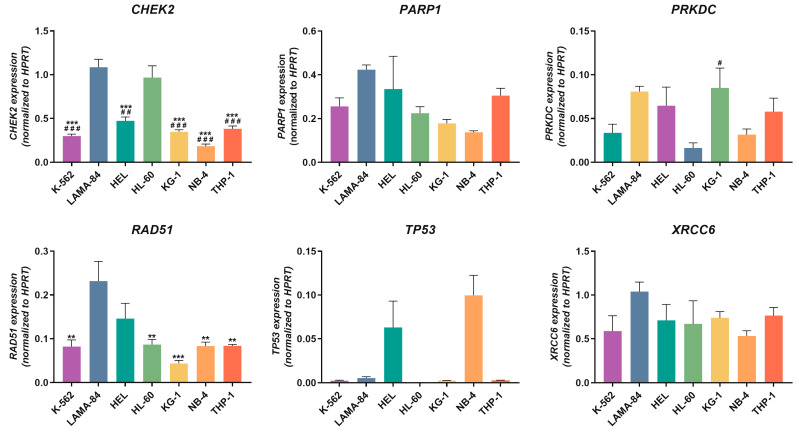
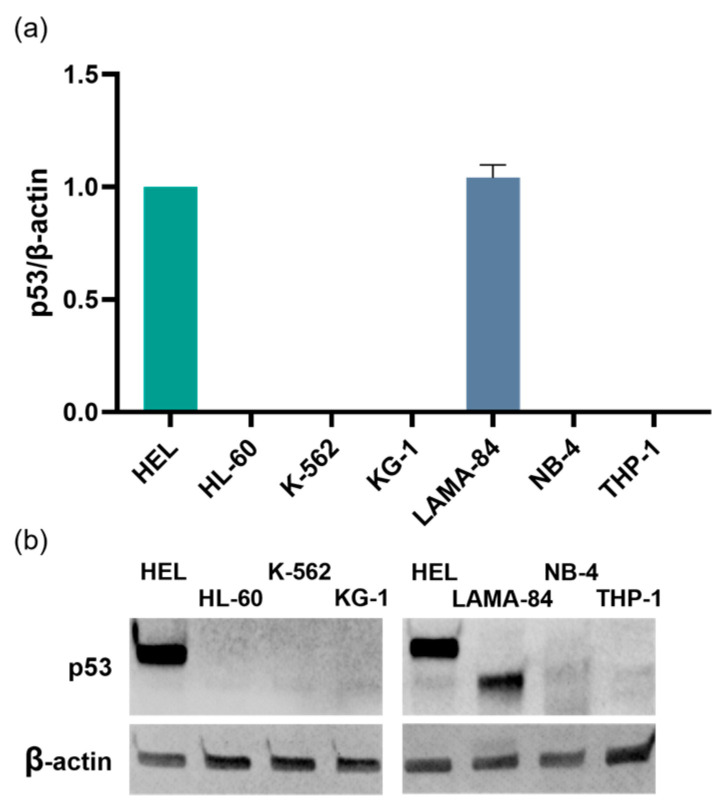
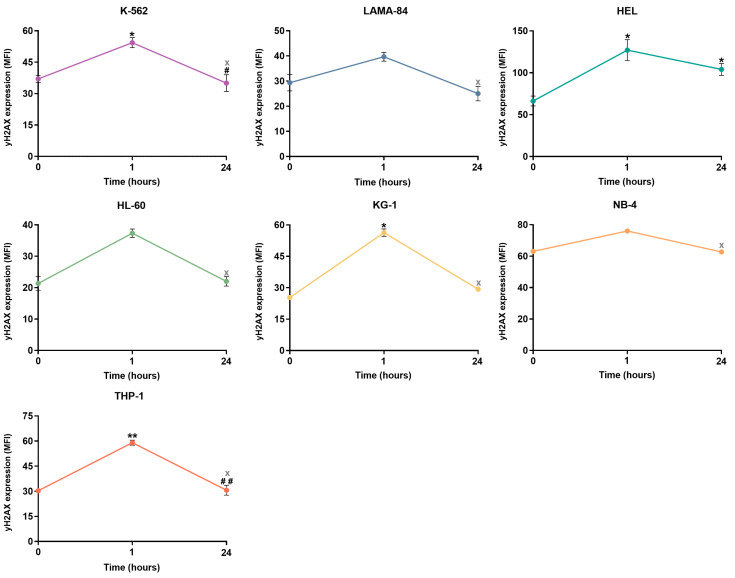
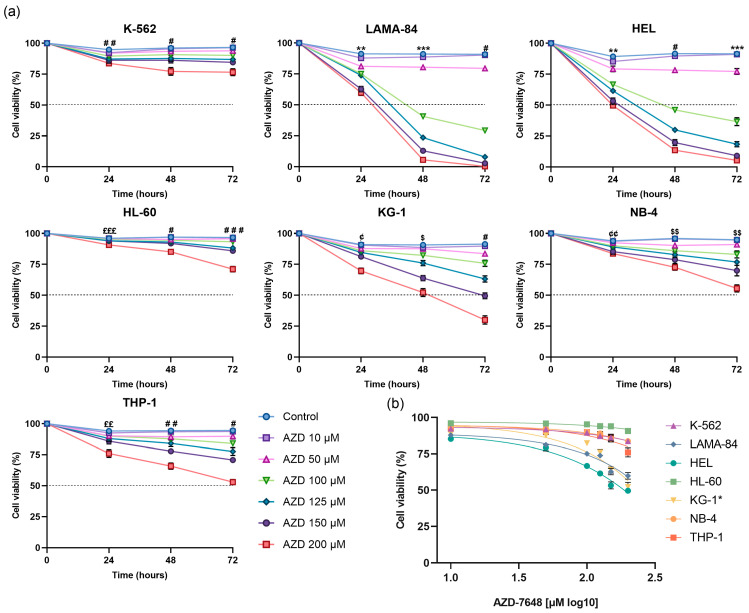
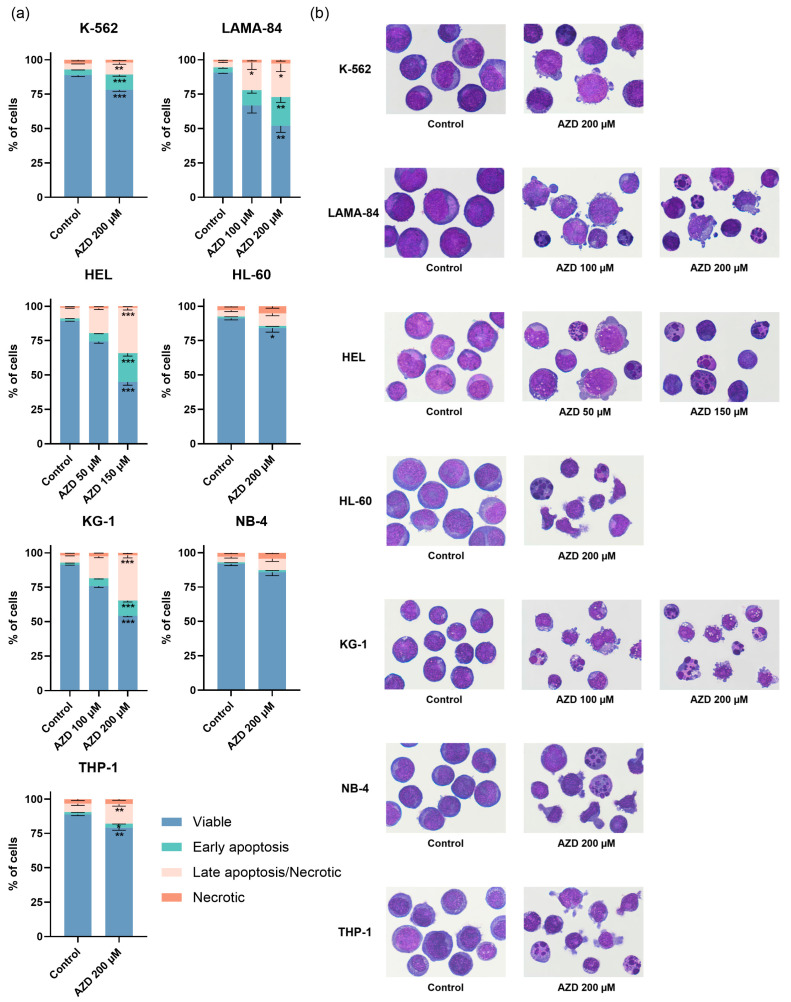
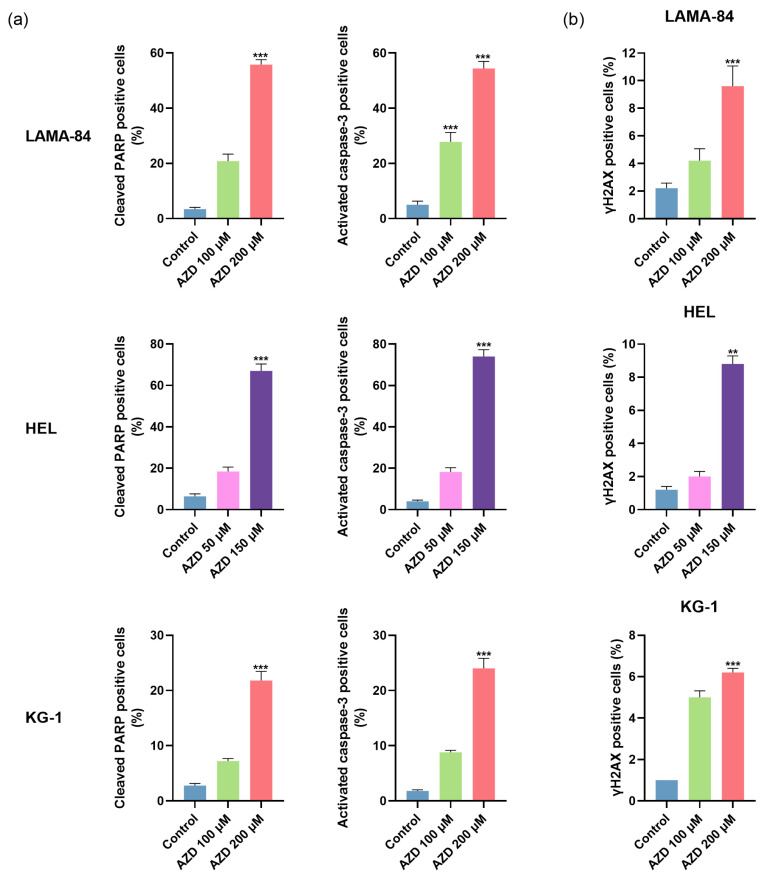
The non-homologous end joining pathway is vital for repairing DNA double-strand breaks (DSB), with DNA-dependent protein kinase (DNA-PK) playing a critical role. Altered DNA damage response (DDR) in chronic (CML) and acute myeloid leukemia (AML) offers potential therapeutic opportunities. We studied the therapeutic potential of AZD-7648 (DNA-PK inhibitor) in CML and AML cell lines. This study used two CML (K-562 and LAMA-84) and five AML (HEL, HL-60, KG-1, NB-4, and THP-1) cell lines. DDR gene mutations were obtained from the COSMIC database. The copy number and methylation profile were evaluated using MS-MLPA and DDR genes, and telomere length using qPCR. p53 protein expression was assessed using Western Blot, chromosomal damage through cytokinesis-block micronucleus assay, and γH2AX levels and DSB repair kinetics using flow cytometry. Cell density and viability were analyzed using trypan blue assay after treatment with AZD-7648 in concentrations ranging from 10 to 200 µM. Cell death, cell cycle distribution, and cell proliferation rate were assessed using flow cytometry. The cells displayed different DNA baseline damage, DDR gene expressions, mutations, genetic/epigenetic changes, and p53 expression. Only HEL cells displayed inefficient DSB repair. The LAMA-84, HEL, and KG-1 cells were the most sensitive to AZD-7648, whereas HL-60 and K-562 showed a lower effect on density and viability. Besides the reduction in cell proliferation, AZD-7648 induced apoptosis, cell cycle arrest, and DNA damage. In conclusion, these results suggest that AZD-7648 holds promise as a potential therapy for myeloid leukemias, however, with variations in drug sensitivity among tested cell lines, thus supporting further investigation to identify the specific factors influencing sensitivity to this DNA-PK inhibitor.
非同源末端连接途径对于修复 DNA 双链断裂(DSB)至关重要,其中 DNA 依赖性蛋白激酶(DNA-PK)起着关键作用。慢性髓细胞白血病(CML)和急性髓细胞白血病(AML)中 DNA 损伤反应(DDR)的改变为潜在的治疗提供了机会。我们研究了 DNA-PK 抑制剂 AZD-7648 在 CML 和 AML 细胞系中的治疗潜力。本研究使用了两种 CML(K-562 和 LAMA-84)和五种 AML(HEL、HL-60、KG-1、NB-4 和 THP-1)细胞系。DDR 基因突变从 COSMIC 数据库中获得。使用 MS-MLPA 评估拷贝数和甲基化谱,使用 qPCR 评估端粒长度。使用 Western Blot 评估 p53 蛋白表达,通过胞质分裂阻断微核试验评估染色体损伤,通过流式细胞术评估 γH2AX 水平和 DSB 修复动力学。用 AZD-7648 处理细胞后,用台盼蓝法分析细胞密度和活力,浓度范围为 10 至 200μM。用流式细胞术评估细胞死亡、细胞周期分布和细胞增殖率。细胞显示出不同的 DNA 基线损伤、DDR 基因表达、突变、遗传/表观遗传变化和 p53 表达。只有 HEL 细胞显示出 DSB 修复效率低下。LAMA-84、HEL 和 KG-1 细胞对 AZD-7648 最敏感,而 HL-60 和 K-562 对密度和活力的影响较低。除了细胞增殖减少外,AZD-7648 还诱导细胞凋亡、细胞周期停滞和 DNA 损伤。综上所述,这些结果表明 AZD-7648 有望成为治疗髓系白血病的潜在疗法,然而,在测试的细胞系中,药物敏感性存在差异,因此需要进一步研究以确定影响这种 DNA-PK 抑制剂敏感性的具体因素。