Department of Microbiology, School of Basic Medical Science, Cheeloo College of Medicine, Shandong University, Jinan 250012, China.
Int J Mol Sci. 2023 Oct 23;24(20):15469. doi: 10.3390/ijms242015469.
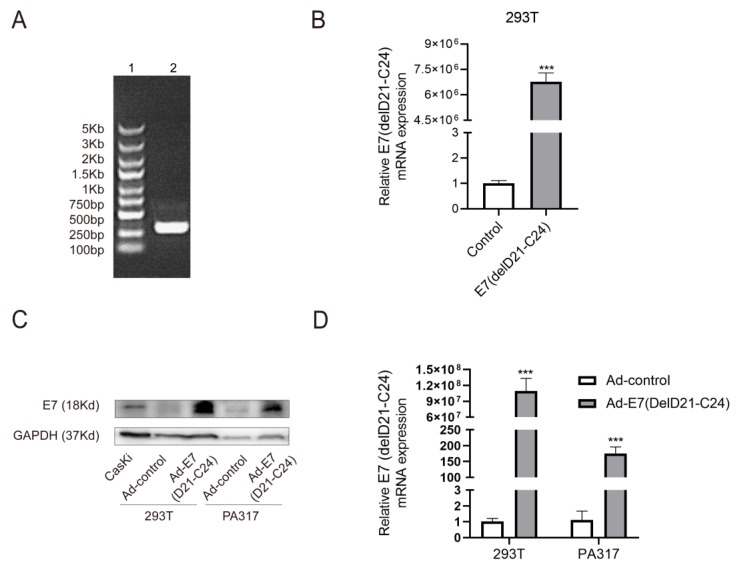
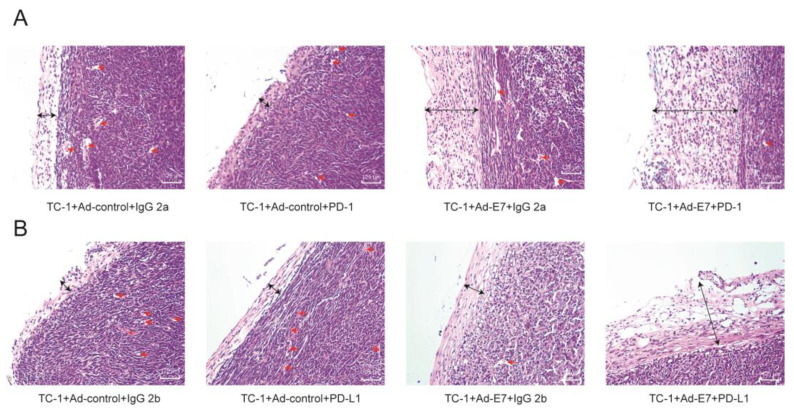
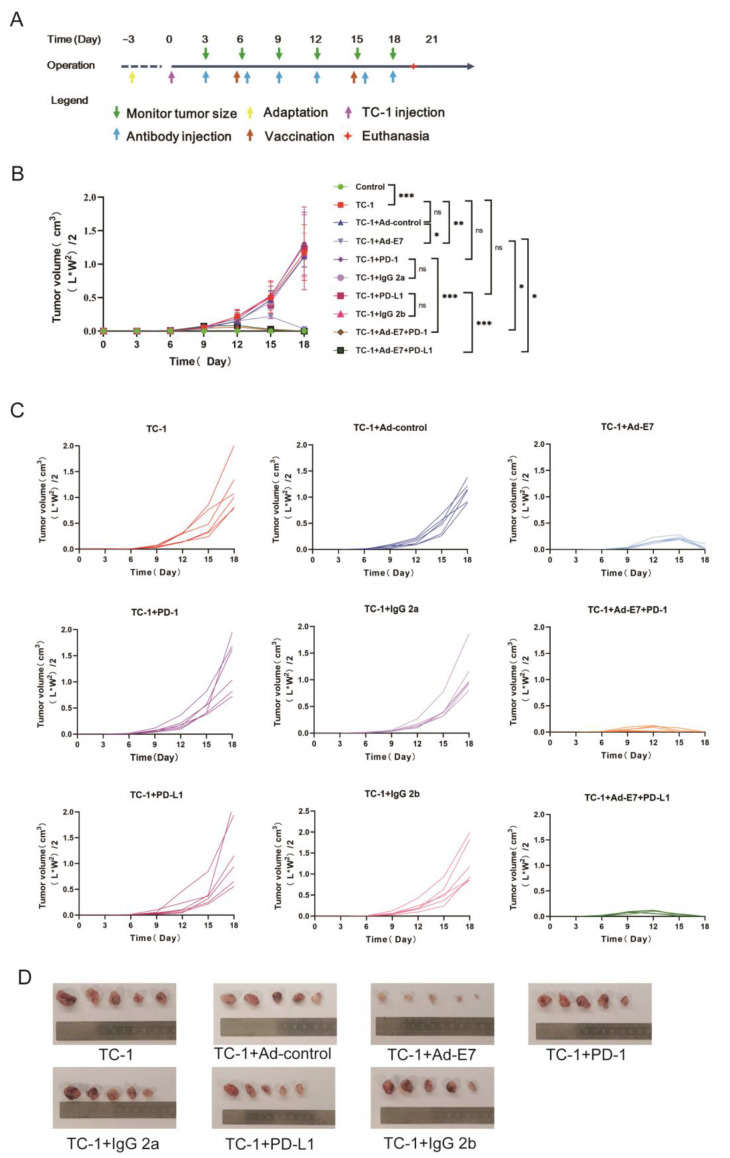
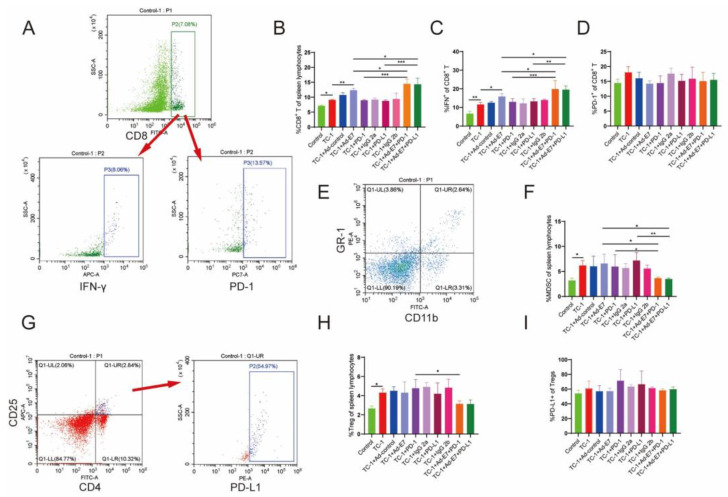
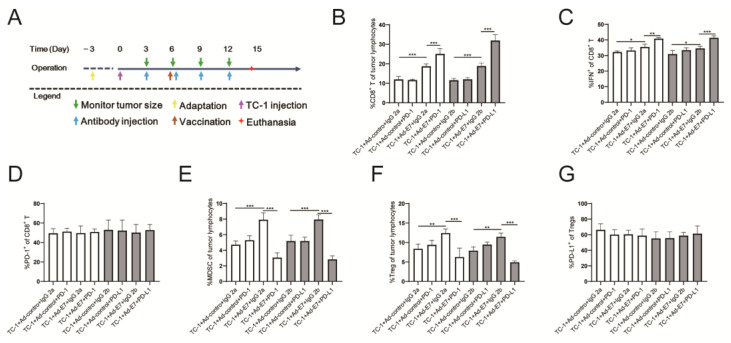
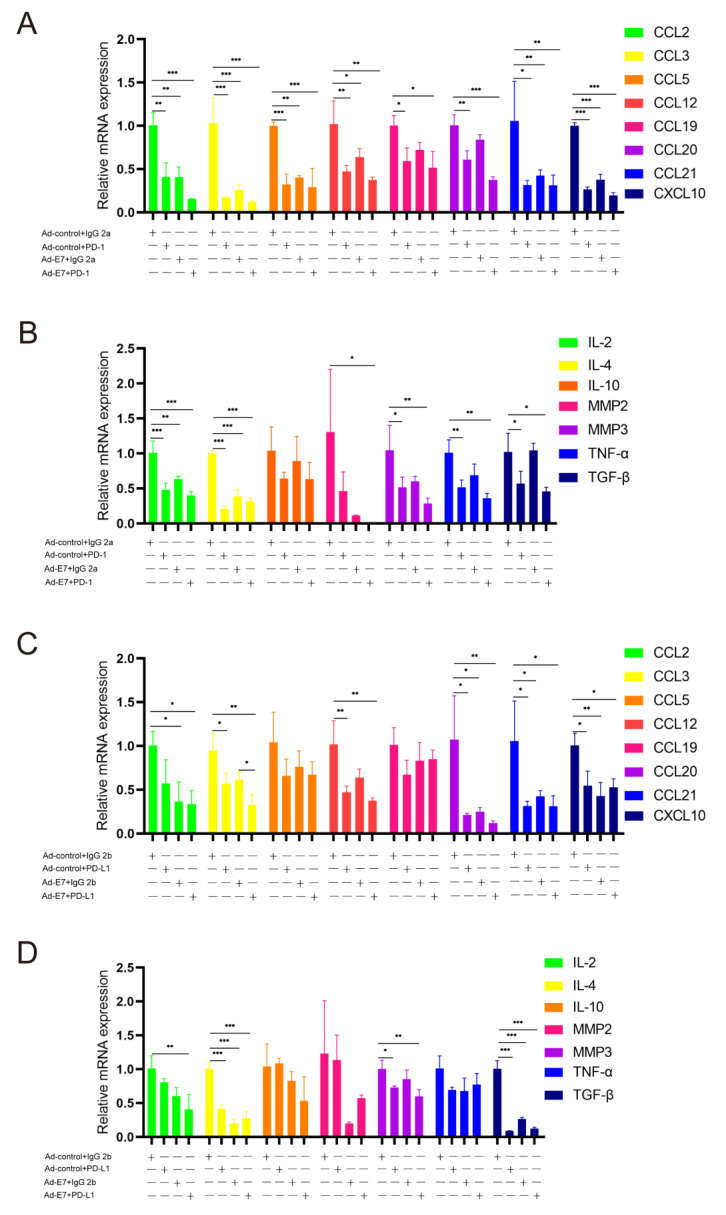
Persistent infection of high-risk human papillomavirus (HPV) and the expression of E6 and E7 oncoproteins are the main causes of cervical cancer. Several prophylactic HPV vaccines are used in the clinic, but these vaccines have limited efficacy in patients already infected with HPV. Since HPV E7 is vital for tumor-specific immunity, developing a vaccine against HPV E7 is an attractive strategy for cervical cancer treatment. Here, we constructed an HPV16 E7 mutant that loses the ability to bind pRb while still eliciting a robust immune response. In order to build a therapeutic DNA vaccine, the E7 mutant was packaged in an adenovirus vector (Ad-E7) for efficient expression and enhanced immunogenicity of the vaccine. Our results showed that the Ad-E7 vaccine effectively inhibited tumor growth and increased the proportion of interferon-gamma (IFN-γ)-secreting CD8 T cells in the spleen, and tumor-infiltrating lymphocytes in a mouse cervical cancer model was achieved by injecting with HPV16-E6/E7-expressing TC-1 cells subcutaneously. Combining the Ad-E7 vaccine with the PD-1/PD-L1 antibody blockade significantly improved the control of TC-1 tumors. Combination therapy elicited stronger cytotoxic T lymphocyte (CTL) responses, and IFN-γ secretion downregulated the proportion of Tregs and MDSCs significantly. The expressions of cancer-promoting factors, such as TNF-α, were also significantly down-regulated in the case of combination therapy. In addition, combination therapy inhibited the number of capillaries in tumor tissues and increased the thickness of the tumor capsule. Thus, Ad-E7 vaccination, in combination with an immune checkpoint blockade, may benefit patients with HPV16-associated cervical cancer.
高危型人乳头瘤病毒(HPV)的持续感染和 E6 和 E7 癌蛋白的表达是宫颈癌的主要原因。临床上使用了几种预防性 HPV 疫苗,但这些疫苗在已经感染 HPV 的患者中的疗效有限。由于 HPV E7 对肿瘤特异性免疫至关重要,因此开发针对 HPV E7 的疫苗是治疗宫颈癌的一种有吸引力的策略。在这里,我们构建了一种 HPV16 E7 突变体,该突变体失去了与 pRb 结合的能力,同时仍能引发强烈的免疫反应。为了构建治疗性 DNA 疫苗,将 E7 突变体包装在腺病毒载体(Ad-E7)中,以实现疫苗的高效表达和增强免疫原性。我们的结果表明,Ad-E7 疫苗有效地抑制了肿瘤生长,并增加了干扰素-γ(IFN-γ)分泌的 CD8 T 细胞在脾脏中的比例,并且通过皮下注射表达 HPV16-E6/E7 的 TC-1 细胞在小鼠宫颈癌模型中实现了肿瘤浸润淋巴细胞。将 Ad-E7 疫苗与 PD-1/PD-L1 抗体阻断联合使用,显著改善了 TC-1 肿瘤的控制。联合治疗引发了更强的细胞毒性 T 淋巴细胞(CTL)反应,IFN-γ 分泌显著下调了 Tregs 和 MDSCs 的比例。在联合治疗的情况下,促进癌症的因素,如 TNF-α 的表达也显著下调。此外,联合治疗抑制了肿瘤组织中毛细血管的数量,并增加了肿瘤包膜的厚度。因此,Ad-E7 疫苗接种联合免疫检查点阻断可能有益于 HPV16 相关宫颈癌患者。