Department of Global Health, University of Washington, Seattle, Washington, USA
Kilimanjaro Clinical Research Institute (KCRI), Moshi, Tanzania, United Republic of.
BMJ Open. 2023 Oct 28;13(10):e071540. doi: 10.1136/bmjopen-2022-071540.
Rheumatic heart disease (RHD) affects over 39 million people worldwide, the majority in low-income and middle-income countries. Secondary antibiotic prophylaxis (SAP), given every 3-4 weeks can improve outcomes, provided more than 80% of doses are received. Poor adherence is strongly correlated with the distance travelled to receive prophylaxis. Decentralising RHD care has the potential to bridge these gaps and at least maintain or potentially increase RHD prophylaxis uptake. A package of implementation strategies was developed with the aim of reducing barriers to optimum SAP uptake.
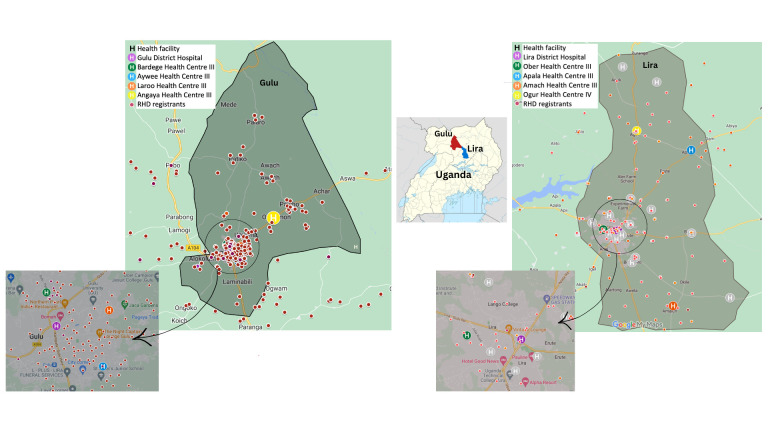
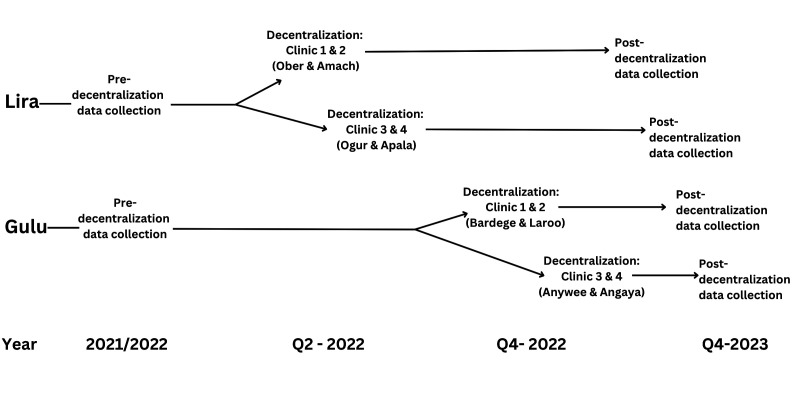
A hybrid implementation-effectiveness study type III was designed to evaluate the effectiveness of a package of implementation strategies including a digital, cloud-based application to support decentralised RHD care, integrated into the public healthcare system in Uganda. Our overarching hypothesis is that secondary prophylaxis adherence can be maintained or improved via a decentralisation strategy, compared with the centralised delivery strategy, by increasing retention in care. To evaluate this, eligible patients with RHD irrespective of their age enrolled at Lira and Gulu hospital registry sites will be consented for decentralised care at their nearest participating health centre. We estimated a sample size of 150-200 registrants. The primary outcome will be adherence to secondary prophylaxis while detailed implementation measures will be collected to understand barriers and facilitators to decentralisation, digital application tool adoption and ultimately its use and scale-up in the public healthcare system.
This study was approved by the Institutional Review Board (IRB) at Cincinnati Children's Hospital Medical Center (IRB 2021-0160) and Makerere University School of Medicine Research Ethics Committee (Mak-SOMREC-2021-61). Participation will be voluntary and informed consent or assent (>8 but <18) will be obtained prior to participation. At completion, study findings will be communicated to the public, key stakeholders and submitted for publication.
风湿性心脏病(RHD)影响全球超过 3900 万人,其中大多数在中低收入国家。每 3-4 周给予一次的二级抗生素预防治疗(SAP)可以改善预后,只要有超过 80%的剂量被接受。较差的依从性与接受预防治疗的距离密切相关。RHD 护理的去中心化有可能弥合这些差距,至少保持或可能增加 RHD 预防治疗的覆盖率。已经制定了一整套实施策略,旨在减少实现最佳 SAP 覆盖率的障碍。
设计了一种混合实施效果研究 III 型,以评估一整套实施策略的有效性,包括一个数字化、基于云的应用程序,以支持乌干达公共卫生系统中的 RHD 去中心化护理。我们的总体假设是,与集中式提供策略相比,通过增加护理保留率,去中心化策略可以维持或提高二级预防治疗的依从性。为了评估这一点,将在利拉和古卢医院登记处登记的符合条件的 RHD 患者(无论年龄大小)征得同意,以便在最近的参与性保健中心接受去中心化护理。我们估计登记人数为 150-200 人。主要结果将是二级预防治疗的依从性,同时还将收集详细的实施措施,以了解去中心化、数字应用工具采用的障碍和促进因素,以及最终在公共卫生系统中的使用和推广。
本研究已获得辛辛那提儿童医院医疗中心机构审查委员会(IRB)(IRB 2021-0160)和马凯雷雷大学医学院研究伦理委员会(Mak-SOMREC-2021-61)的批准。参与将是自愿的,在参与之前将获得知情同意或同意(>8 但<18)。在完成后,将向公众、主要利益攸关方和提交发表研究结果。