Department of Physical Education, Jiangsu Normal University.
Yancheng Xinyang Youth Development Service Center.
Environ Health Prev Med. 2023;28:64. doi: 10.1265/ehpm.23-00177.
The risk of low back pain (LBP) increases steeply during adolescence, and adolescents with LBP are more likely to have low back pain in their adult years. This study aimed to investigate the dose-response relationship between daily screen time and the risk of low back pain among children and adolescents.
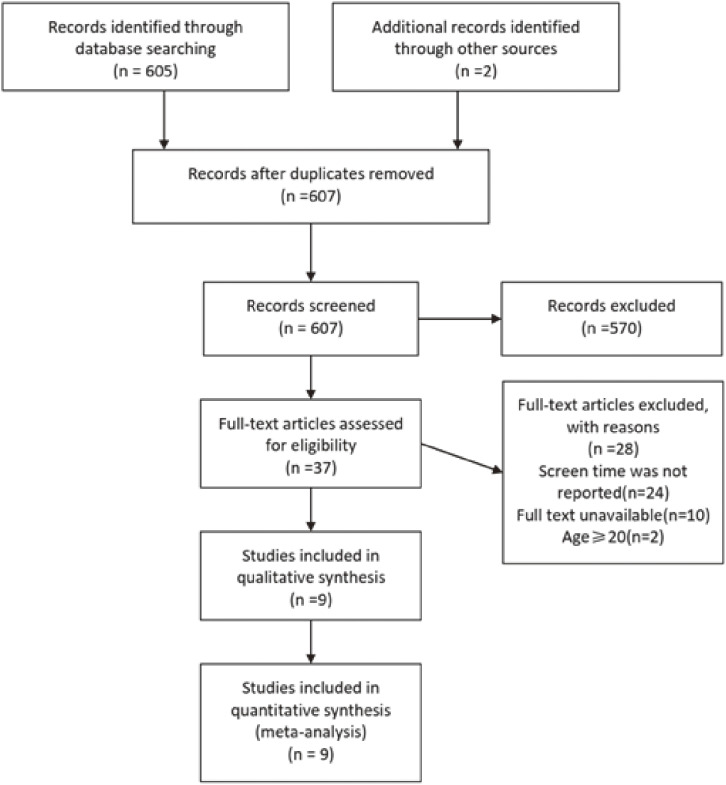
PubMed, the Cochrane Library, Embase, and Web of Science were searched to collect relevant studies on daily screen time and the risk of low back pain from the establishment of the database up to December 2022. Two investigators independently screened the literature, extracted data, and evaluated the risk of bias in the included studies. Stata16.0 was used to perform a dose-response meta-analysis and the methodological quality evaluation of the included studies.
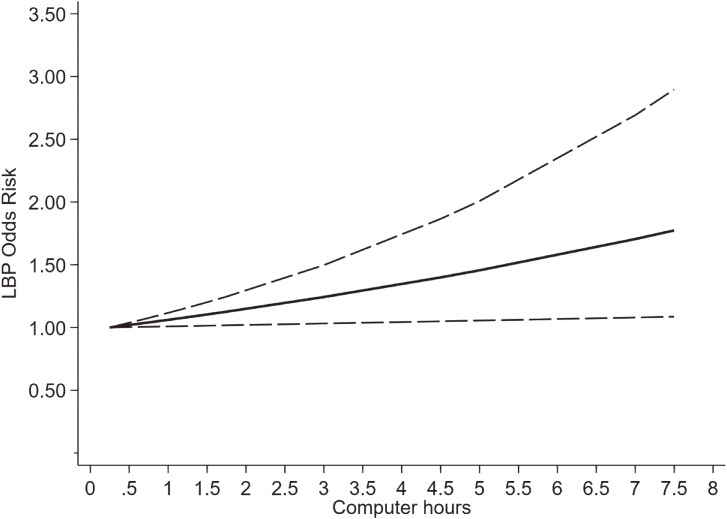
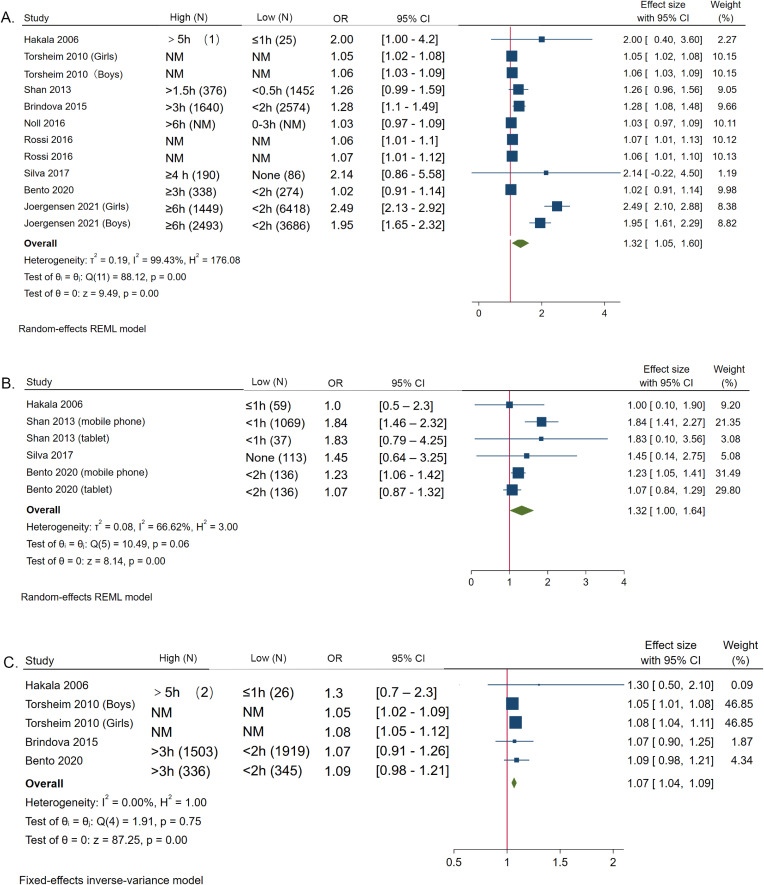
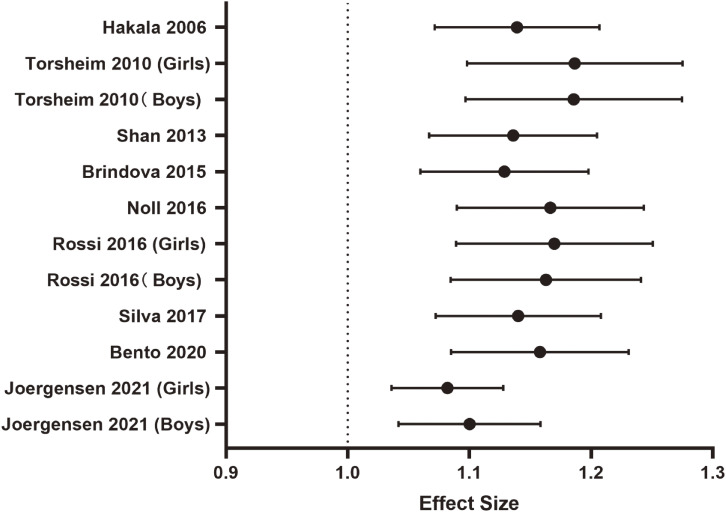
The results of the meta-analysis showed that there is a positive correlation between daily computer time (OR = 1.32, 1.05-1.60), daily mobile phone time (OR = 1.32, 1.00-1.64), daily TV watching (OR = 1.07, 1.04-1.09) and the risk of low back pain, separately. The dose-response meta-analysis showed that there is a linear relationship between daily computer use and low back pain. The risk of low back pain increased by 8.2% for each 1-hour of daily computer use.
Screen time is related to the risk of low back pain, and there is a linear relationship between daily computer use and the risk of low back pain. A number of strategic measures should be taken to prevent adolescents from developing severe low back pain.
腰痛(LBP)的风险在青少年时期急剧增加,患有 LBP 的青少年在成年后更有可能出现腰痛。本研究旨在探讨儿童和青少年每日屏幕时间与腰痛风险之间的剂量-反应关系。
从数据库建立到 2022 年 12 月,通过检索 PubMed、Cochrane 图书馆、Embase 和 Web of Science,收集有关每日屏幕时间与腰痛风险的相关研究。两名研究者独立筛选文献、提取数据,并评估纳入研究的偏倚风险。使用 Stata16.0 进行剂量-反应荟萃分析和纳入研究的方法学质量评估。
荟萃分析结果表明,每日使用电脑时间(OR=1.32,1.05-1.60)、每日使用手机时间(OR=1.32,1.00-1.64)、每日看电视时间(OR=1.07,1.04-1.09)与腰痛风险呈正相关。剂量-反应荟萃分析显示,每日使用电脑时间与腰痛之间存在线性关系。每日使用电脑时间增加 1 小时,腰痛风险增加 8.2%。
屏幕时间与腰痛风险有关,且每日使用电脑时间与腰痛风险之间存在线性关系。应采取多项战略措施,防止青少年出现严重腰痛。