Meissner Sarah Nadine, Bächinger Marc, Kikkert Sanne, Imhof Jenny, Missura Silvia, Carro Dominguez Manuel, Wenderoth Nicole
Neural Control of Movement Laboratory, Department of Health Sciences and Technology, ETH Zurich, Zurich, Switzerland.
Neuroscience Center Zurich, University and ETH Zurich, Zurich, Switzerland.
Nat Hum Behav. 2024 Jan;8(1):43-62. doi: 10.1038/s41562-023-01729-z. Epub 2023 Oct 30.
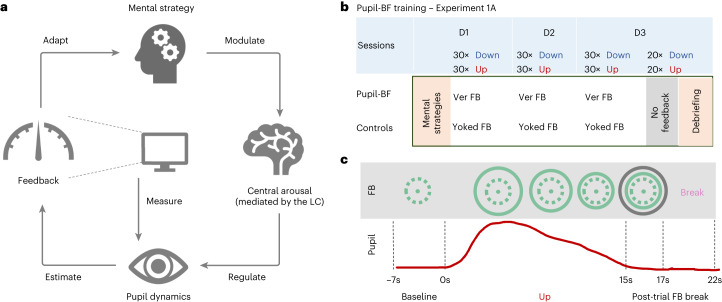
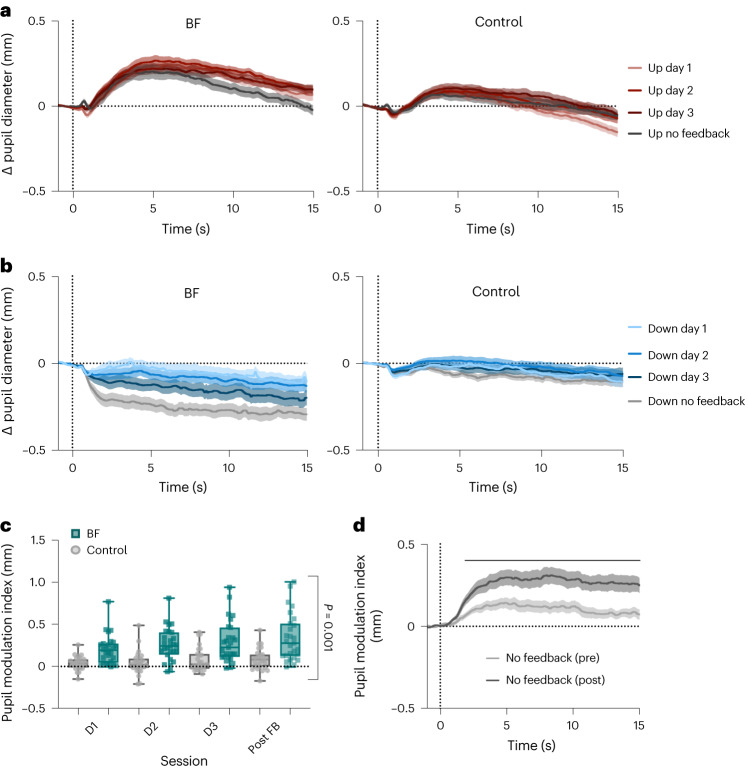
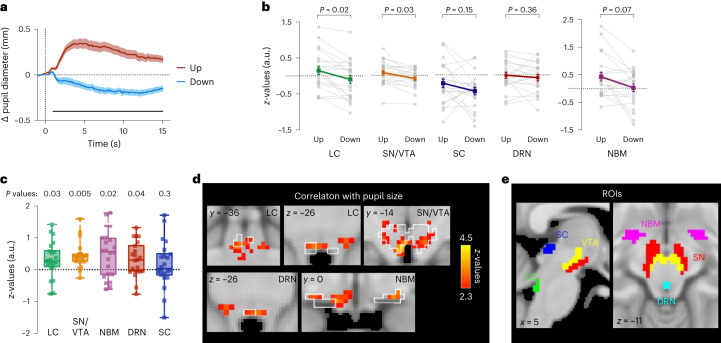
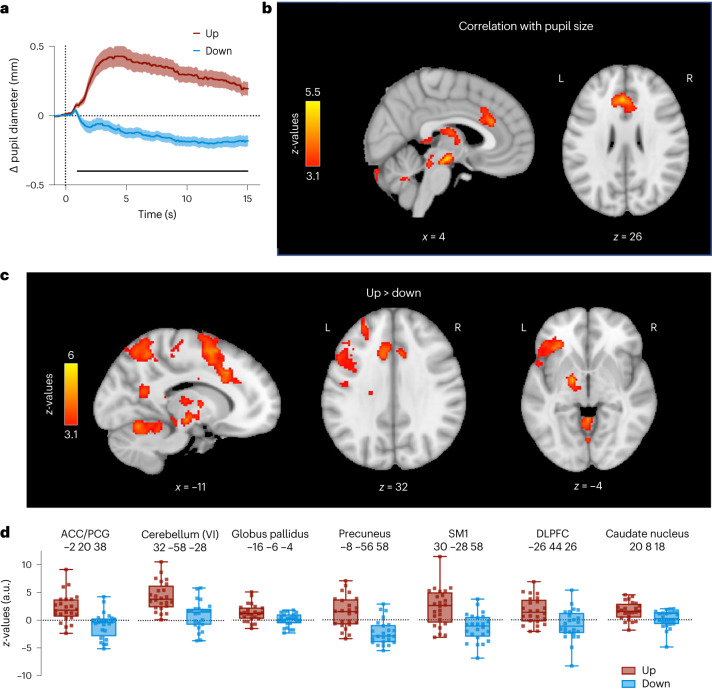
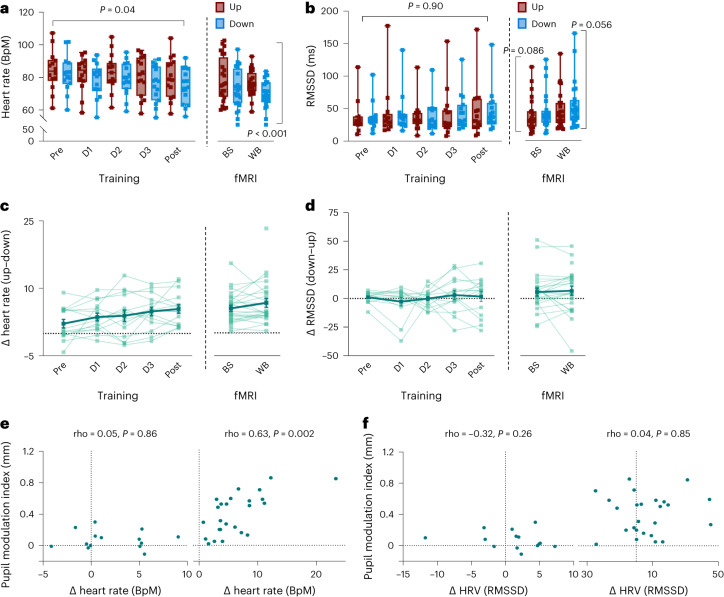
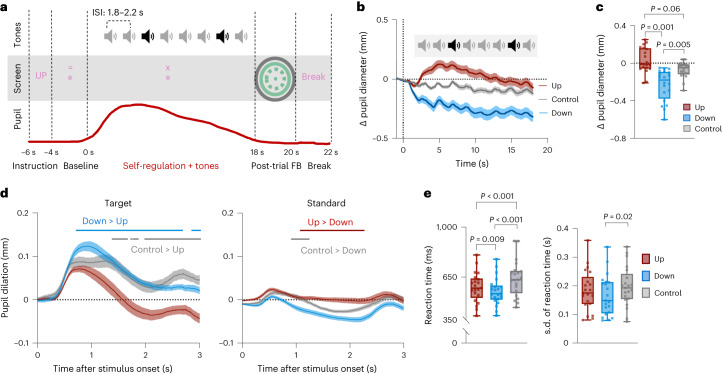
The brain's arousal state is controlled by several neuromodulatory nuclei known to substantially influence cognition and mental well-being. Here we investigate whether human participants can gain volitional control of their arousal state using a pupil-based biofeedback approach. Our approach inverts a mechanism suggested by previous literature that links activity of the locus coeruleus, one of the key regulators of central arousal and pupil dynamics. We show that pupil-based biofeedback enables participants to acquire volitional control of pupil size. Applying pupil self-regulation systematically modulates activity of the locus coeruleus and other brainstem structures involved in arousal control. Furthermore, it modulates cardiovascular measures such as heart rate, and behavioural and psychophysiological responses during an oddball task. We provide evidence that pupil-based biofeedback makes the brain's arousal system accessible to volitional control, a finding that has tremendous potential for translation to behavioural and clinical applications across various domains, including stress-related and anxiety disorders.
大脑的唤醒状态由几个已知对认知和心理健康有重大影响的神经调节核控制。在这里,我们研究人类参与者是否可以使用基于瞳孔的生物反馈方法对其唤醒状态进行意志控制。我们的方法颠覆了先前文献提出的一种机制,该机制将蓝斑核的活动联系起来,蓝斑核是中枢唤醒和瞳孔动态的关键调节因子之一。我们表明,基于瞳孔的生物反馈使参与者能够获得对瞳孔大小的意志控制。应用瞳孔自我调节系统地调节蓝斑核和其他参与唤醒控制的脑干结构的活动。此外,它还调节心血管指标,如心率,以及在Oddball任务期间的行为和心理生理反应。我们提供的证据表明,基于瞳孔的生物反馈使大脑的唤醒系统能够进行意志控制,这一发现具有巨大的潜力,可转化为跨各个领域的行为和临床应用,包括与压力相关的和焦虑症。