Department of Biology, Keio University, Yokohama, Japan.
Urban Entomology Laboratory, Vector Control Research Unit, School of Biological Sciences, Universiti Sains Malaysia, Gelugor, Penang, Malaysia.
PLoS One. 2023 Nov 2;18(11):e0293701. doi: 10.1371/journal.pone.0293701. eCollection 2023.
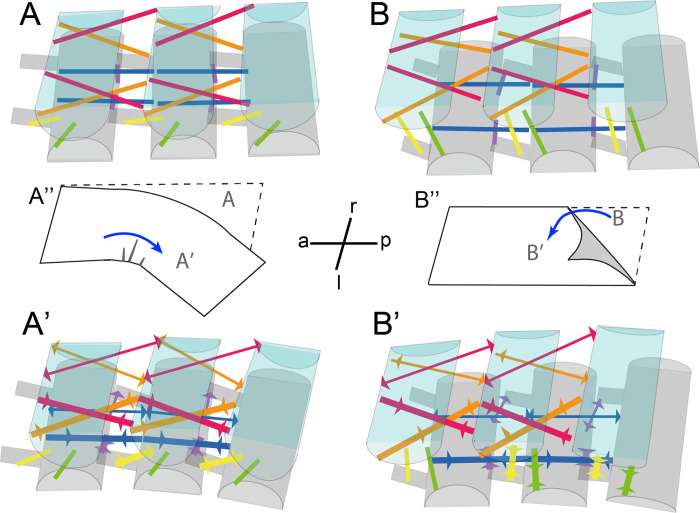
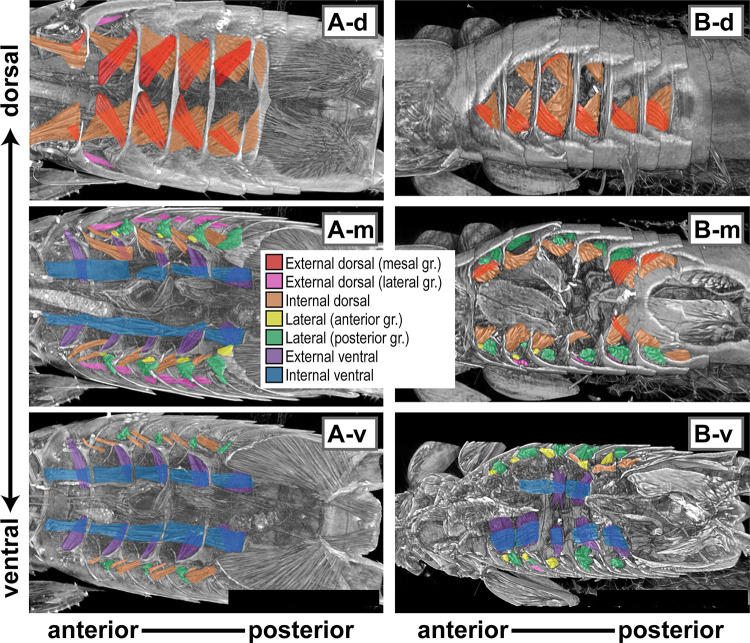
Many animals take advantage of the shaded, humid, and protected environments in subcortical spaces, i.e., thin spaces under the loosened bark of dead trees. Permanent inhabitants of subcortical spaces often show specialized morphologies, such as a miniaturized or dorsoventrally flattened body. However, the evolutionary consequences of these specialized morphologies on behavioral, ecological, and life-history traits have been little studied. We studied the mating biology and anatomy of Platylabia major (usually placed in the family Anisolabididae), which is an obligate inhabitant of subcortical spaces with a paper-like flattened body, and compared them with those of two thicker, spongiphorid earwigs, Nesogaster amoenus and Paralabellula curvicauda. Mating trials in various settings showed that Pl. major requires thin spaces sandwiched by two planes to accomplish genital coupling and insemination. In contrast, the thicker species, although also frequently found in subcortical spaces, could mate on a single horizontal plane due to the ability of the male to twist its abdomen through approximately 180°. Examination by micro-computed tomography and a reagent-based clearing technique revealed no substantive differences in the configuration of mid-abdominal musculature between the species. The dorsal and lateral muscles of Pl. major, which are almost parallel to the antero-posterior body axis for accommodation within the thin abdomen, seemed incapable of producing the power to twist the abdomen. The abdominal musculature conforms to a simple pattern in both male and female earwigs, which is repeated in each of the pregenital segments. We conclude that small differences in the range of motion of each abdominal segment can result in large differences in possible mating postures and positions. Surgical experiments also demonstrated that both right and left penises of Pl. major are competent and used for insemination with no lateral bias, as in most other earwigs with twin penises studied to date.
许多动物利用皮层下的遮荫、潮湿和受保护的环境,即在枯树松动的树皮下的薄空间。皮层下空间的永久居民通常表现出特化的形态,例如体型缩小或背腹扁平。然而,这些特化形态对行为、生态和生活史特征的进化后果还很少研究。我们研究了 Platylabia major(通常归入 Anisolabididae 科)的交配生物学和解剖结构,它是皮层下空间的专性居民,具有纸状扁平的身体,并将其与两种较厚的海绵角蝉耳虱(Nesogaster amoenus 和 Paralabellula curvicauda)进行了比较。在各种环境下进行的交配试验表明,Pl. major 需要由两个平面夹着的薄空间来完成生殖器对接和授精。相比之下,体型较厚的物种虽然也经常在皮层下空间中发现,但由于雄性能够将腹部扭曲约 180°,因此可以在单个水平面上交配。通过微计算机断层扫描和基于试剂的透明技术检查,发现这些物种的中腹部肌肉结构没有实质性差异。Pl. major 的背侧和外侧肌肉几乎与前后身体轴平行,以适应薄腹部,似乎没有能力产生扭曲腹部的力量。雌雄耳虱的腹部肌肉结构都很简单,在每个生殖器前节中都重复出现。我们得出的结论是,每个腹部节段的运动范围的微小差异可能导致可能的交配姿势和位置的巨大差异。手术实验还表明,Pl. major 的左右阴茎都有能力进行授精,没有侧向偏差,这与迄今为止研究的大多数具有双阴茎的其他耳虱一样。