GSK, Rue de l'Institut, Rixensart, Belgium.
Sanofi, Lyon, France.
Front Immunol. 2023 Oct 13;14:1260146. doi: 10.3389/fimmu.2023.1260146. eCollection 2023.
The immune mechanisms supporting partial protection from reinfection and disease by the respiratory syncytial virus (RSV) have not been fully characterized. In older adults, symptoms are typically mild but can be serious in patients with comorbidities when the infection extends to the lower respiratory tract.
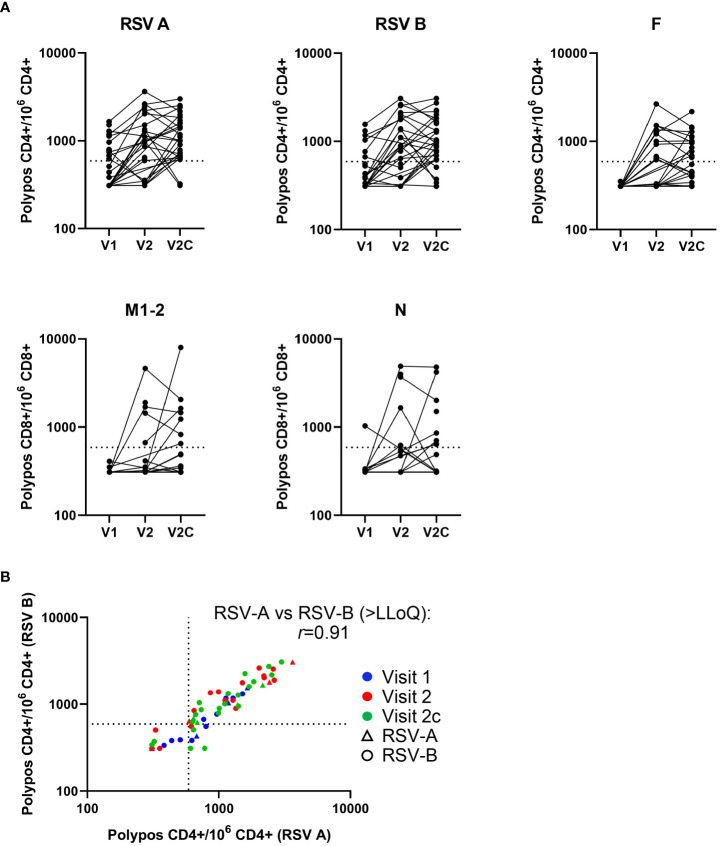
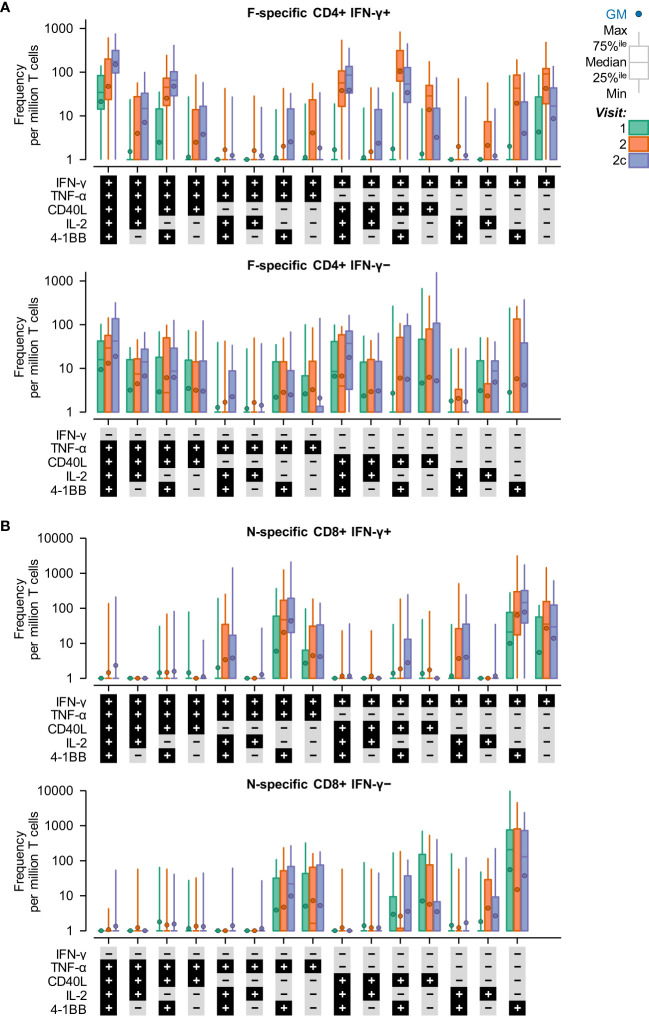
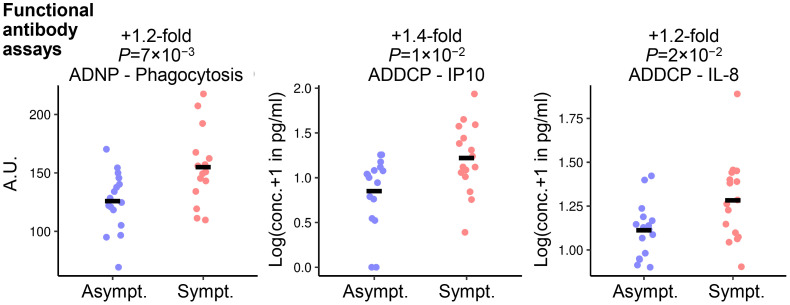
This study formed part of the RESCEU older-adults prospective-cohort study in Northern Europe (2017-2019; NCT03621930) in which a thousand participants were followed over an RSV season. Peripheral-blood samples (taken pre-season, post-season, during illness and convalescence) were analyzed from participants who (i) had a symptomatic acute respiratory tract infection by RSV (RSV-ARTI; N=35) or (ii) asymptomatic RSV infection (RSV-Asymptomatic; N=16). These analyses included evaluations of antibody (Fc-mediated-) functional features and cell-mediated immunity, in which univariate and machine-learning (ML) models were used to explore differences between groups.
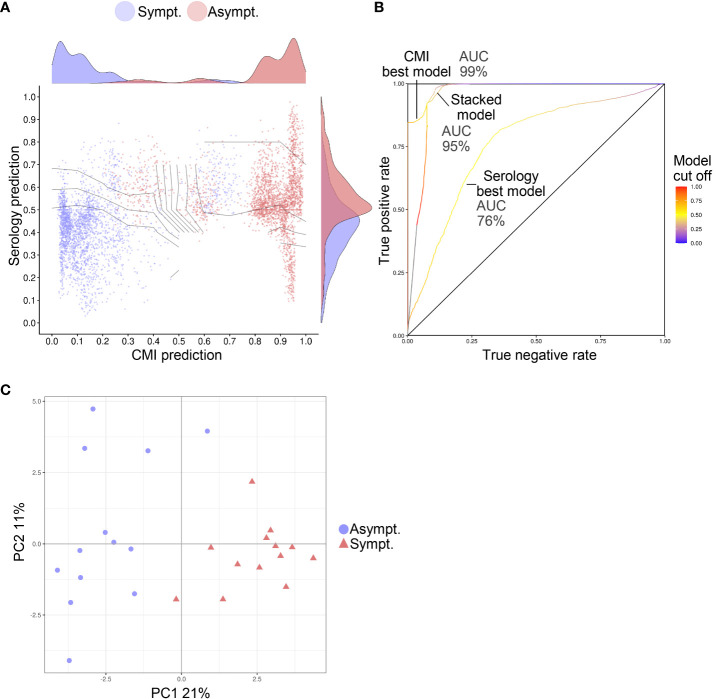
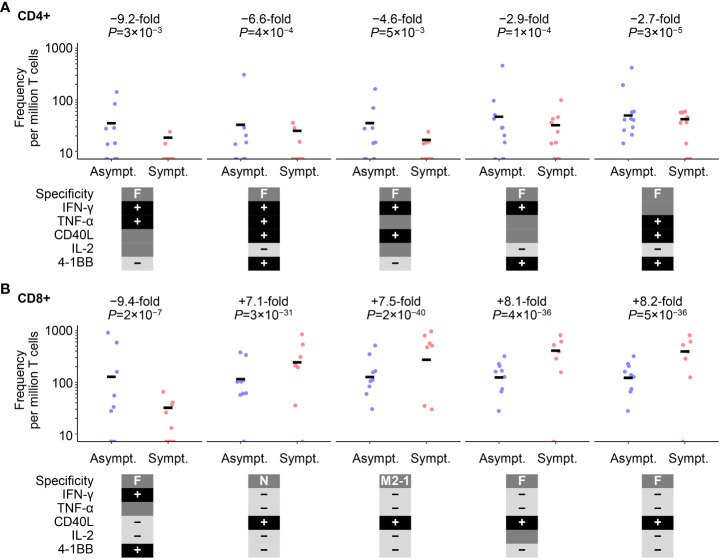
Pre-RSV-season peripheral-blood biomarkers were predictive of symptomatic RSV infection. T-cell data were more predictive than functional antibody data (area under receiver operating characteristic curve [AUROC] for the models were 99% and 76%, respectively). The pre-RSV season T-cell phenotypes which were selected by the ML modelling and which were more frequent in RSV-Asymptomatic group than in the RSV-ARTI group, coincided with prominent phenotypes identified during convalescence from RSV-ARTI (e.g., IFN-γ+, TNF-α+ and CD40L+ for CD4+, and IFN-γ+ and 4-1BB+ for CD8+).
The evaluation and statistical modelling of numerous immunological parameters over the RSV season suggests a primary role of cellular immunity in preventing symptomatic RSV infections in older adults.
呼吸道合胞病毒(RSV)引起的再感染和疾病的部分保护的免疫机制尚未完全阐明。在老年人中,症状通常较轻,但在感染延伸至下呼吸道时,患有合并症的患者可能会出现严重症状。
本研究是北欧 RESCEU 老年前瞻性队列研究的一部分(2017-2019 年;NCT03621930),其中对 1000 名参与者进行了一个 RSV 季节的随访。对(i)患有 RSV 引起的有症状急性呼吸道感染(RSV-ARTI;N=35)或(ii)无症状 RSV 感染(RSV-无症状;N=16)的参与者进行了外周血样本(在季节前、季节后、患病期间和恢复期采集)分析。这些分析包括对抗体(Fc 介导)功能特征和细胞介导免疫的评估,其中使用单变量和机器学习(ML)模型来探索组间差异。
RSV 季节前的外周血生物标志物可预测有症状的 RSV 感染。T 细胞数据比功能抗体数据更具预测性(模型的接受者操作特征曲线下面积 [AUROC] 分别为 99%和 76%)。通过 ML 建模选择的 RSV 季节前 T 细胞表型在 RSV-无症状组中比在 RSV-ARTI 组中更为频繁,与 RSV-ARTI 恢复期确定的突出表型一致(例如,CD4+中 IFN-γ+、TNF-α+和 CD40L+,CD8+中 IFN-γ+和 4-1BB+)。
对 RSV 季节中大量免疫参数的评估和统计建模表明,细胞免疫在预防老年人有症状 RSV 感染中起主要作用。