Matusal Mesfin, Megaze Aberham
Department of Biology, Wolaita Sodo University, P.O. Box 138, Wolaita Sodo, Ethiopia.
BMC Zool. 2023 Nov 9;8(1):27. doi: 10.1186/s40850-023-00186-5.
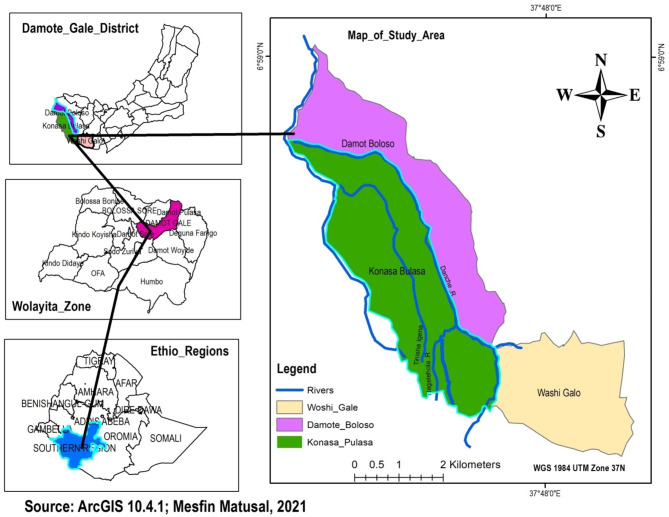
Livestock depredation by the black-backed jackal (Canis mesomelas) occurs widely across Africa. The study on human-jackal conflict is important for conservation efforts in Ethiopia. The aim of this study was to investigate the diet of black-backed jackals, to understand their predation effects on domestic livestock and perceptions of farmers' in the Konasa-Pulasa Community Conserved Forest, Omo Valley of Ethiopia. The study was conducted using scat analysis, questionnaire survey and Focus Group Discussion methods. Livestock depredation and the economic impact of farmers were assessed among 290 randomly selected households. A total of 90 scat samples were collected and analyzed during the dry and wet seasons to identify the diet of jackals.
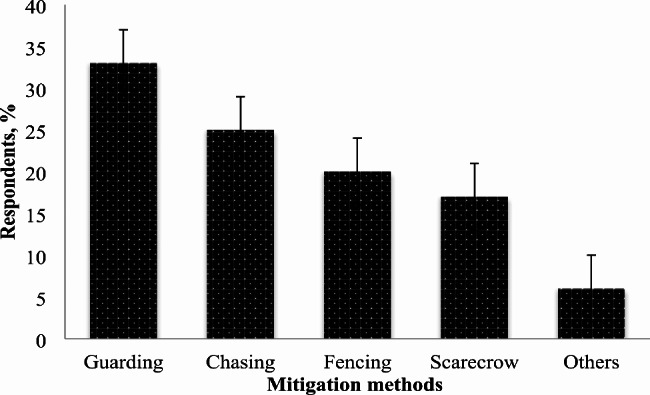
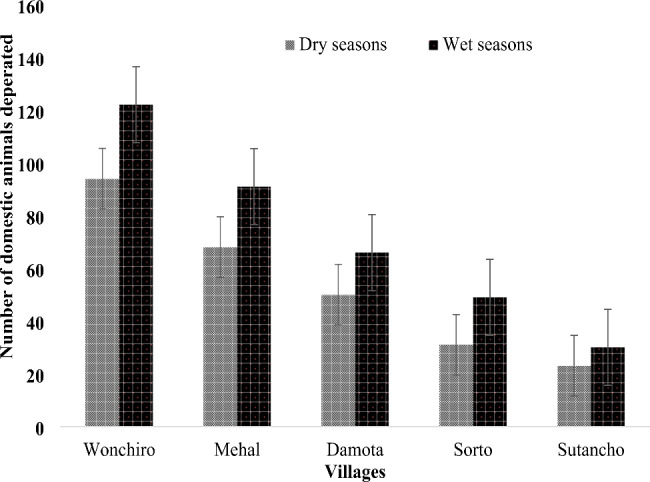
A total of 624 domestic animals have been lost in the last 5 years (2016-2020). The estimated economic cost of domestic animals lost due to predation by jackals was US $18,180.0 in the last five years, and US $12.5 per year per household. The major diet composition of jackals was of domestic animal origin (45.5%), followed by wild animals (30.8%) in both the dry and wet seasons. However, more prey diversity was recorded during the wet season. The respondents revealed that the causes of black-backed jackal conflict in the study area were higher due to increasing jackal population size (40%). The major traditional mitigation method was guarding (42%). Most of the respondents (48.2%) had negative perceptions towards the conservation of black-backed jackals.
Livestock depredations by black-backed jackals were the major issue of conflict in the study area. Scat analysis showed that large percentage of domestic animal species remain in the scat of jackals. Livestock losses caused by jackals represent an economic concern for livestock owners in the area. Local people close to the forest boundary were highly vulnerable to domestic animal loss due to predation by jackals. Therefore, improved livestock husbandry methods will be implemented by the local people for effective jackal conservation in Konasa-Pulasa Community Conserved Forest. Understanding the ecological and social dimensions of conflict situations in the area may have important ecological and management implications for the country.
黑背胡狼(Canis mesomelas)对牲畜的捕食行为在非洲广泛存在。关于人与胡狼冲突的研究对埃塞俄比亚的保护工作至关重要。本研究的目的是调查黑背胡狼的饮食,了解它们对家畜的捕食影响以及埃塞俄比亚奥莫河谷科纳萨 - 普拉萨社区保护森林中农民的看法。该研究采用粪便分析、问卷调查和焦点小组讨论的方法进行。在290个随机抽取的家庭中评估了家畜被捕食情况及农民的经济影响。在旱季和雨季共收集并分析了90份粪便样本,以确定胡狼的饮食。
在过去5年(2016 - 2020年)中,共有624只家畜丢失。过去五年中,因胡狼捕食导致家畜损失的估计经济成本为18,180.0美元,每户每年12.5美元。在旱季和雨季,胡狼的主要饮食组成均来自家畜(45.5%),其次是野生动物(30.8%)。然而,雨季记录到的猎物多样性更高。受访者表示,研究区域内黑背胡狼冲突的原因中,胡狼种群规模增加占比更高(40%)。主要的传统缓解方法是守护(42%)。大多数受访者(48.2%)对黑背胡狼的保护持负面看法。
黑背胡狼对家畜的捕食是研究区域冲突的主要问题。粪便分析表明,胡狼粪便中很大比例的成分来自家畜物种。胡狼造成的家畜损失对该地区的家畜所有者来说是一个经济问题。靠近森林边界的当地人因胡狼捕食而极易遭受家畜损失。因此,当地人将采用改进的畜牧方法,以在科纳萨 - 普拉萨社区保护森林中有效保护胡狼。了解该地区冲突情况的生态和社会层面可能对该国具有重要的生态和管理意义。