Eldridge Brinton King, Gomrok Saghar, Barr James W, Chaffin Elise Anne, Fielding Lauren, Sachs Christian, Stickels Katie, Williams Paiton, Wang Yongmei
Department of Chemistry, University of Memphis, Memphis, TN 38152, USA.
Department of Biological, Physical, and Human Sciences, Freed-Hardeman University, Henderson, TN 38340, USA.
Nanomaterials (Basel). 2023 Nov 1;13(21):2893. doi: 10.3390/nano13212893.
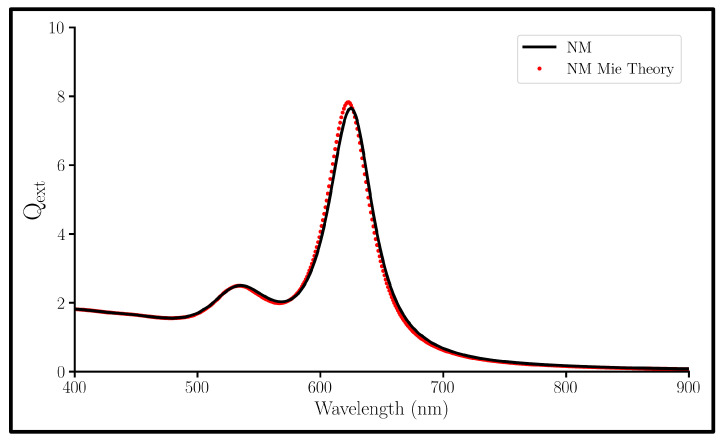
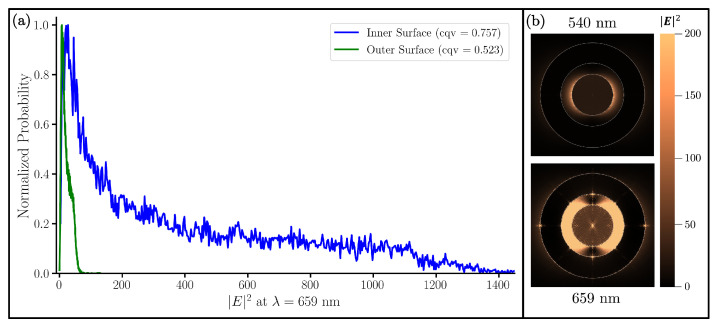
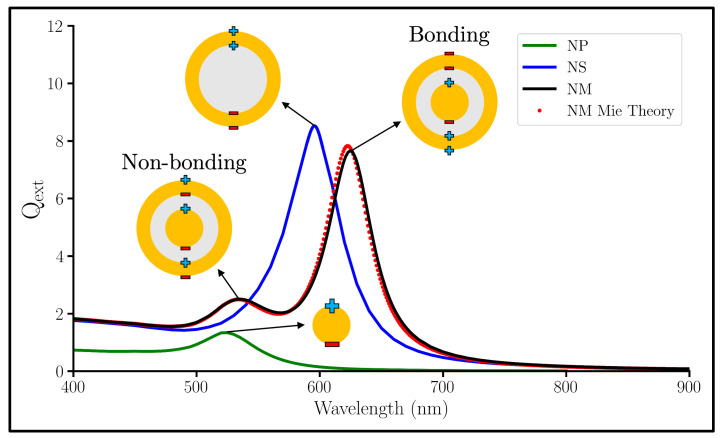
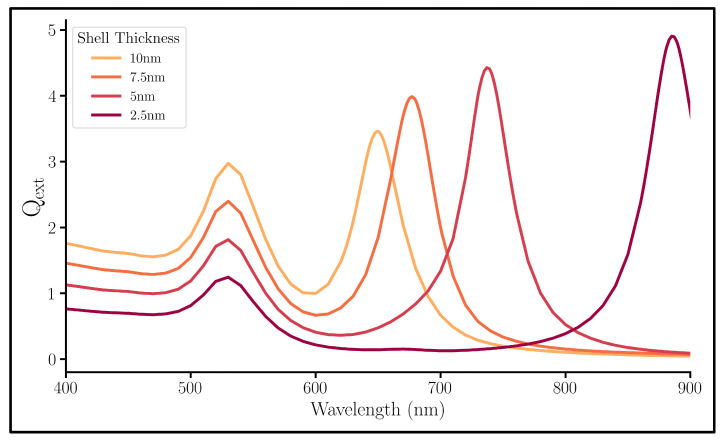
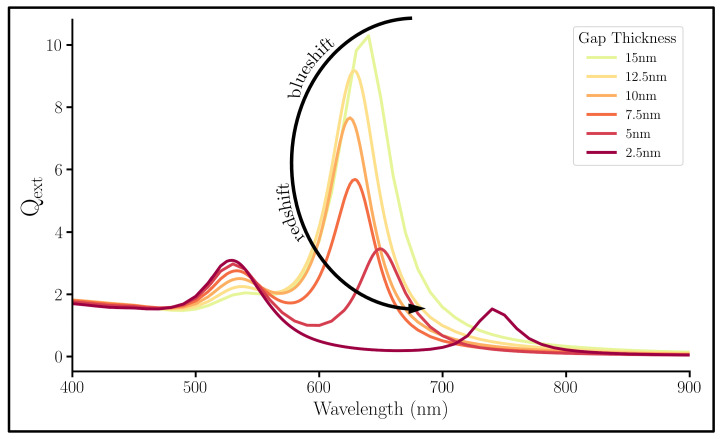
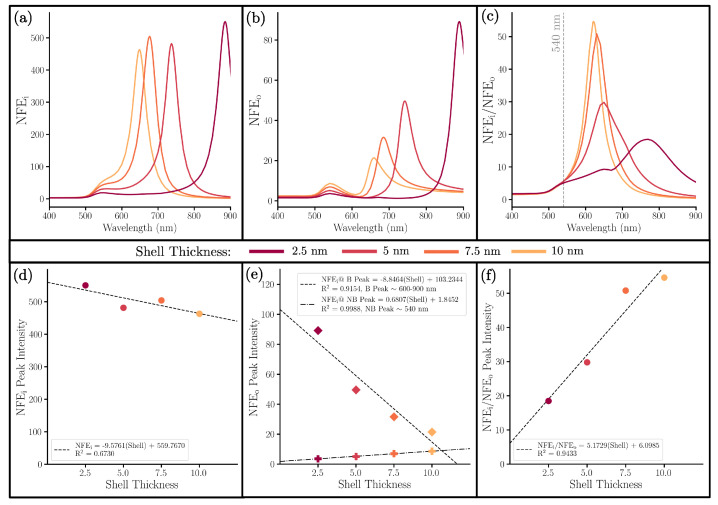
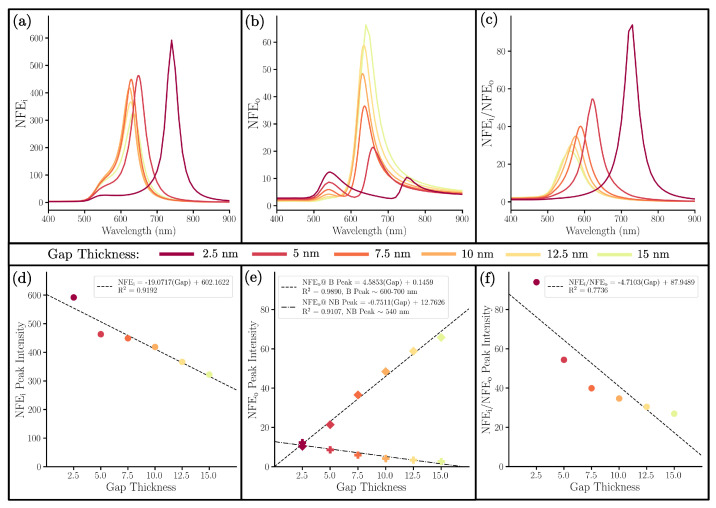
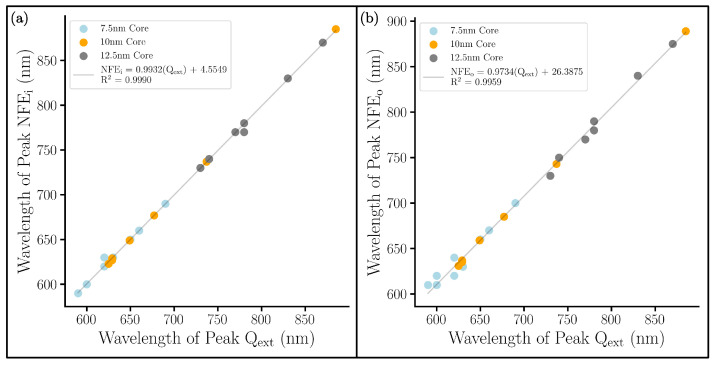
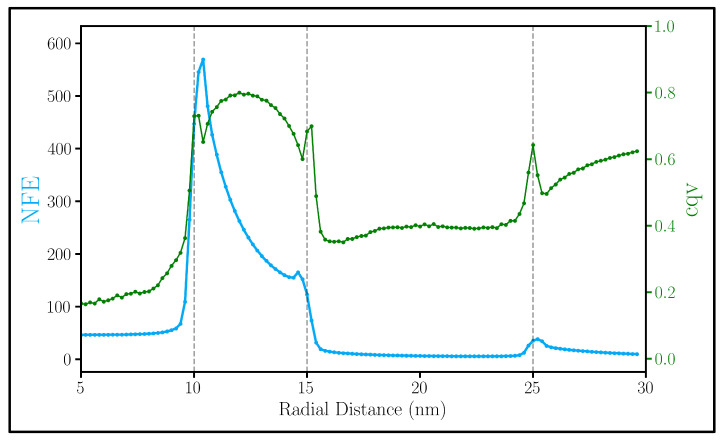
Gap-enhanced Raman tags are a new type of optical probe that have wide applications in sensing and detection. A gap-enhanced Raman tag is prepared by embedding Raman molecules inside a gap between two plasmonic metals such as an Au core and Au shell. Even though placing Raman molecules beneath an Au shell seems counter-intuitive, it has been shown that such systems produce a stronger surface-enhanced Raman scattering response due to the strong electric field inside the gap. While the theoretical support of the stronger electric field inside the gap was provided in the literature, a comprehensive understanding of how the electric field inside the gap compares with that of the outer surface of the particle was not readily available. We investigated Au@SiO2@Au nanoparticles with diameters ranging from 35 nm to 70 nm with varying shell (2.5-10 nm) and gap (2.5-15 nm) thicknesses and obtained both far-field and near-field spectra. The extinction spectra from these particles always have two peaks. The low-energy peak redshifts with the decreasing shell thickness. However, when the gap thickness decreases, the low-energy peaks first blueshift and then redshift, producing a C-shape in the peak position. For every system we investigated, the near-field enhancement spectra were stronger inside the gap than on the outer surface of the nanoparticle. We find that a thin shell combined with a thin gap will produce the greatest near-field enhancement inside the gap. Our work fills the knowledge gap between the exciting potential applications of gap-enhanced Raman tags and the fundamental knowledge of enhancement provided by the gap.
间隙增强拉曼标签是一种新型光学探针,在传感和检测领域有广泛应用。间隙增强拉曼标签是通过将拉曼分子嵌入两种等离激元金属(如金核和金壳)之间的间隙中制备而成。尽管将拉曼分子置于金壳之下似乎有违直觉,但研究表明,由于间隙内的强电场,此类系统会产生更强的表面增强拉曼散射响应。虽然文献中提供了间隙内存在更强电场的理论支持,但对于间隙内电场与粒子外表面电场如何比较,尚未有全面的认识。我们研究了直径在35纳米至70纳米之间、壳层(2.5 - 10纳米)和间隙(2.5 - 15纳米)厚度各异的Au@SiO2@Au纳米粒子,并获得了远场和近场光谱。这些粒子的消光光谱总是有两个峰。低能峰随着壳层厚度的减小而红移。然而,当间隙厚度减小时,低能峰先蓝移然后红移,在峰位置呈现出C形。对于我们研究的每个系统,间隙内的近场增强光谱比纳米粒子外表面的更强。我们发现,薄壳与薄间隙相结合会在间隙内产生最大的近场增强。我们的工作填补了间隙增强拉曼标签令人兴奋的潜在应用与间隙提供的增强基础知识之间的知识空白。