Duan Pengfei, Liu Xiaoyu, Niu Guoqing, Jia Nanyu, Wen Tao, Zeng JianGuo, Chen Qiaowei, Zhang Jian, Xue Chao, Shen Qirong, Yuan Jun
Collaborative Innovation Center of Water Security for Water Source Region of Mid-line of South-to-North Diversion Project of Henan Province, Nanyang Normal University, Nanyang 473061, China.
Key lab of organic-based fertilizers of China and Jiangsu provincial key lab for solid organic waste utilization, Jiangsu Collaborative Innovation Center for Solid Organic Wastes, Educational Ministry Engineering Center of Resource-saving fertilizers, Nanjing Agricultural University, Nanjing 210095, China.
Comput Struct Biotechnol J. 2023 Oct 23;21:5273-5284. doi: 10.1016/j.csbj.2023.10.043. eCollection 2023.
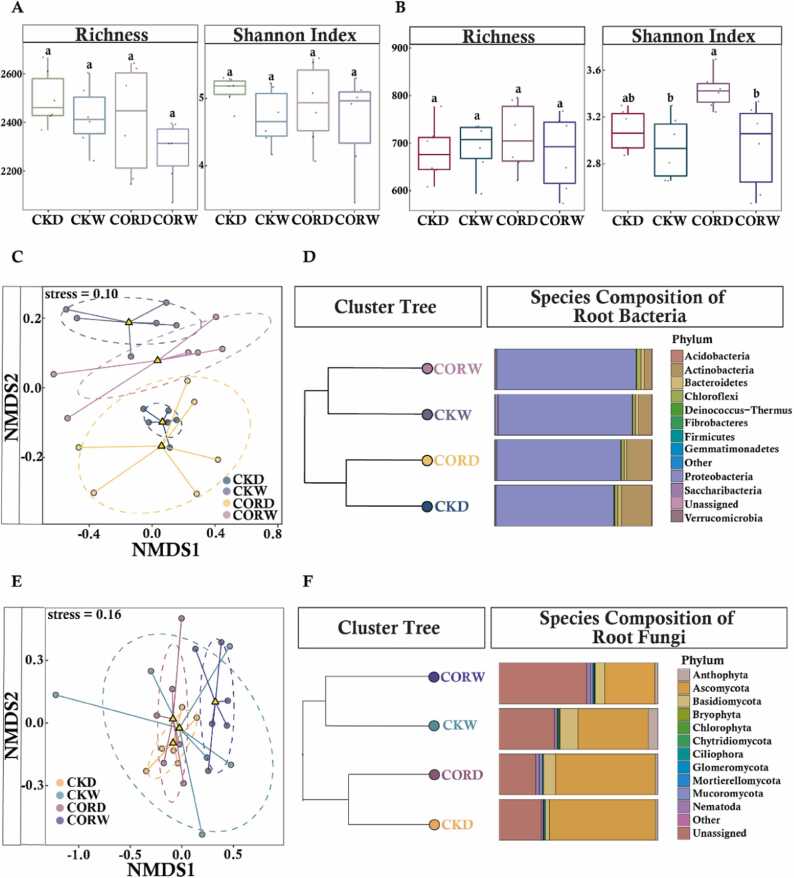
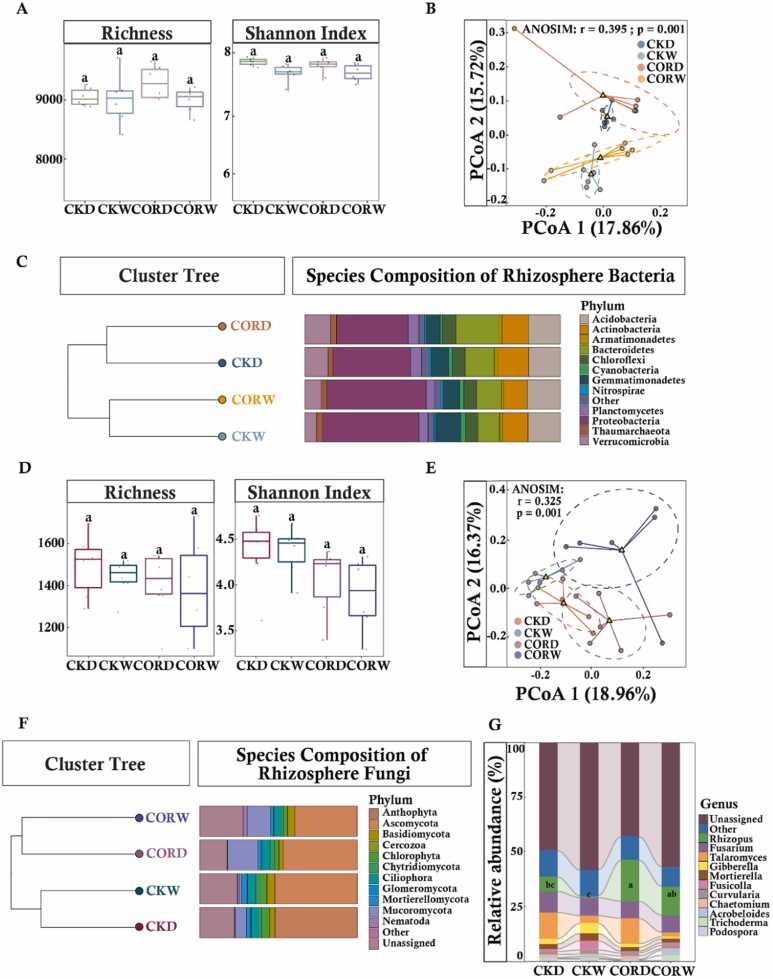
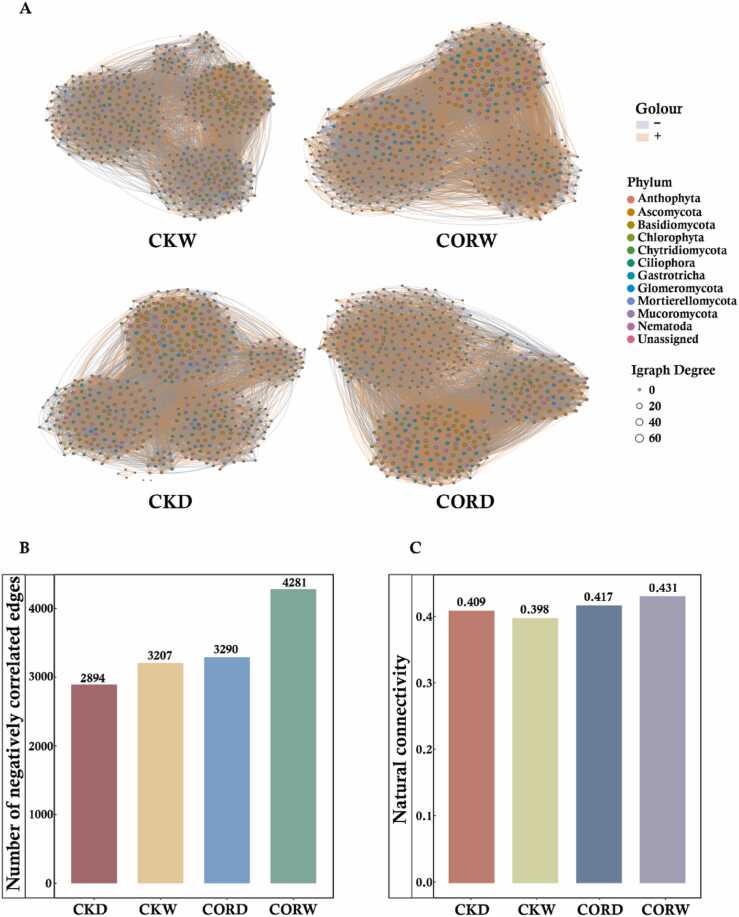
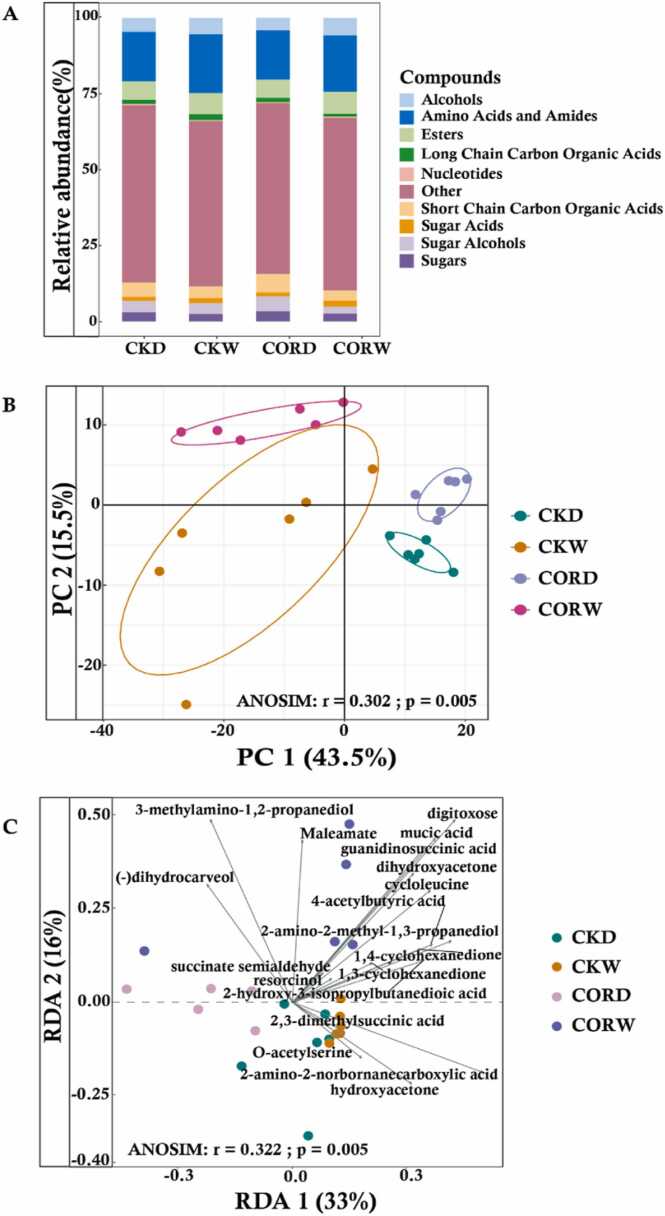
Coronarin (COR), an analog of jasmonic acid, has been shown to enhance the tolerance of plants to drought. However, the effects of COR on the interactions among microorganisms associated with plant roots and their implications for enhancing the drought tolerance of plants remain unclear. Here, we studied the effects of applying COR on the microorganisms associated with plant roots and the rhizosphere metabolome. Treatment with COR affected the fungal community of the rhizosphere by inducing changes in the rhizosphere metabolome, which enhanced the drought tolerance of plants. However, treatment with COR had no significant effect on root microorganisms or rhizosphere bacteria. Specifically, the application of COR resulted in a significant reduction in the relative abundance of metabolites, such as mucic acid, 1,4-cyclohexanedione, 4-acetylbutyric acid, Ribonic acid, palmitic acid, and stearic acid, in maize roots under drought conditions; COR application also led to increases in the abundance of drought-resistant fungal microorganisms, including , and the assembly of a highly drought-resistant rhizosphere fungal network, which enhanced the drought tolerance of plants. Overall, the results of our study indicate that COR application positively regulates interactions between plants and microbes and increases the drought tolerance of plants.
冠菌素(COR)是茉莉酸的类似物,已被证明能提高植物的耐旱性。然而,COR对与植物根系相关的微生物之间相互作用的影响及其对提高植物耐旱性的意义仍不清楚。在此,我们研究了施用COR对与植物根系相关的微生物和根际代谢组的影响。COR处理通过诱导根际代谢组的变化影响根际真菌群落,从而提高了植物的耐旱性。然而,COR处理对根系微生物或根际细菌没有显著影响。具体而言,在干旱条件下,施用COR导致玉米根系中粘酸、1,4-环己二酮、4-乙酰丁酸、核糖酸、棕榈酸和硬脂酸等代谢物的相对丰度显著降低;施用COR还导致包括[具体真菌名称缺失]在内的耐旱真菌微生物丰度增加,并形成了高度耐旱的根际真菌网络,从而提高了植物的耐旱性。总体而言,我们的研究结果表明,施用COR能积极调节植物与微生物之间的相互作用,并提高植物的耐旱性。