Programa de Recerca en Càncer, Hospital del Mar Research Institute (IMIM), Dr. Aiguader, 88, 08003, Barcelona, Spain.
Institute for Research in Biomedicine, Barcelona, Spain.
Breast Cancer Res. 2023 Nov 14;25(1):143. doi: 10.1186/s13058-023-01736-y.
As in most solid cancers, the emergence of cells with oncogenic mutations in the mammary epithelium alters the tissue homeostasis. Some soluble factors, such as TGFβ, potently modify the behavior of healthy stromal cells. A subpopulation of cancer-associated fibroblasts expressing a TGFβ target, the SNAIL1 transcription factor, display myofibroblastic abilities that rearrange the stromal architecture. Breast tumors with the presence of SNAIL1 in the stromal compartment, and with aligned extracellular fiber, are associated with poor survival prognoses.
We used deep RNA sequencing and biochemical techniques to study alternative splicing and human tumor databases to test for associations (correlation t-test) between SNAIL1 and fibronectin isoforms. Three-dimensional extracellular matrices generated from fibroblasts were used to study the mechanical properties and actions of the extracellular matrices on tumor cell and fibroblast behaviors. A metastatic mouse model of breast cancer was used to test the action of fibronectin isoforms on lung metastasis.
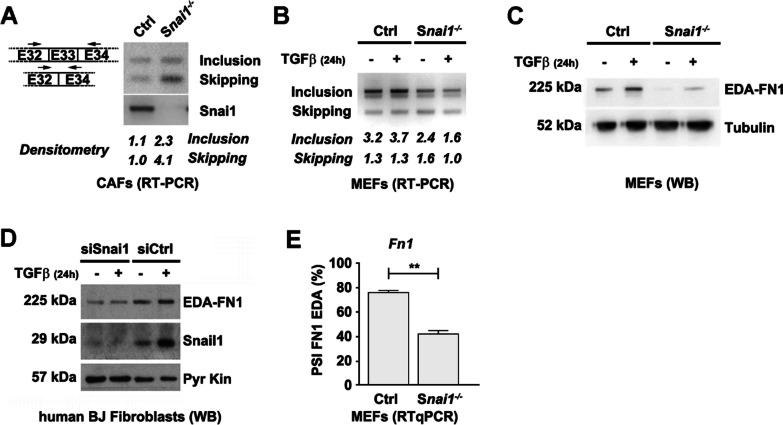
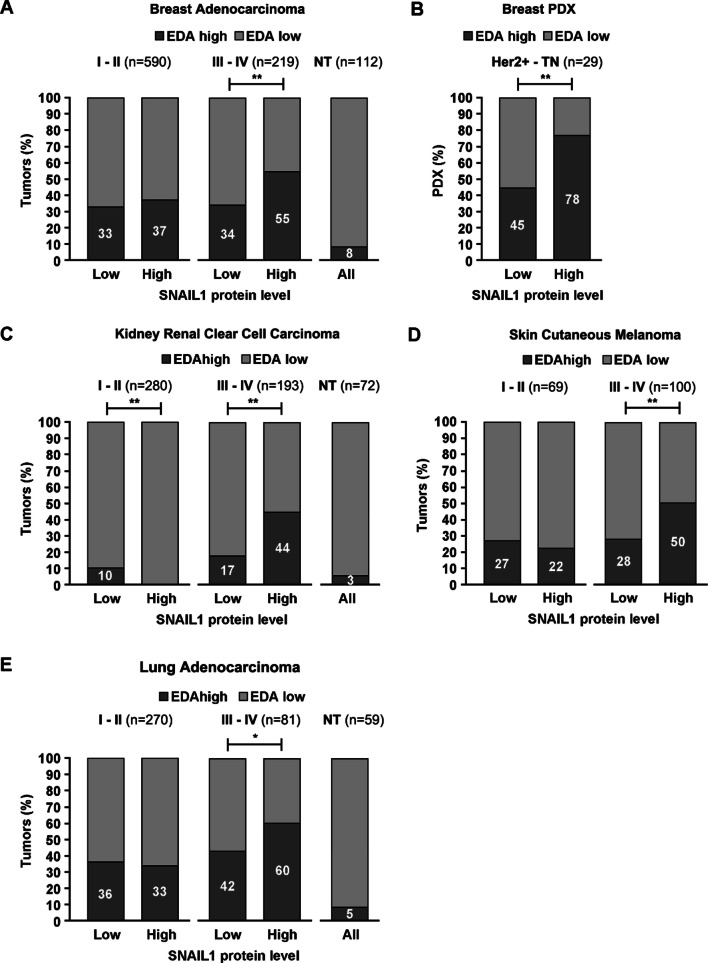
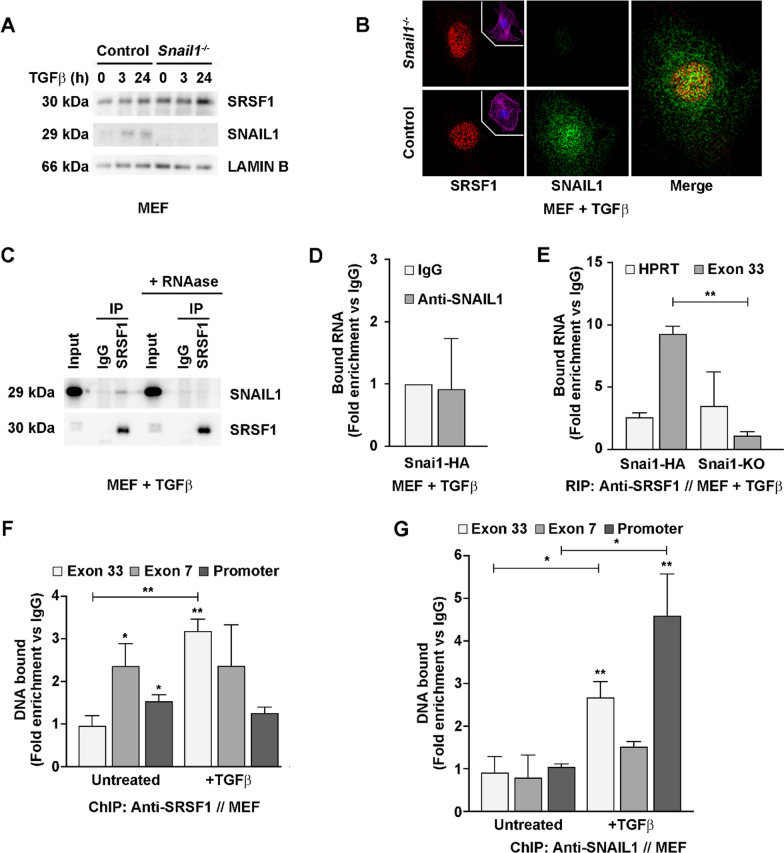
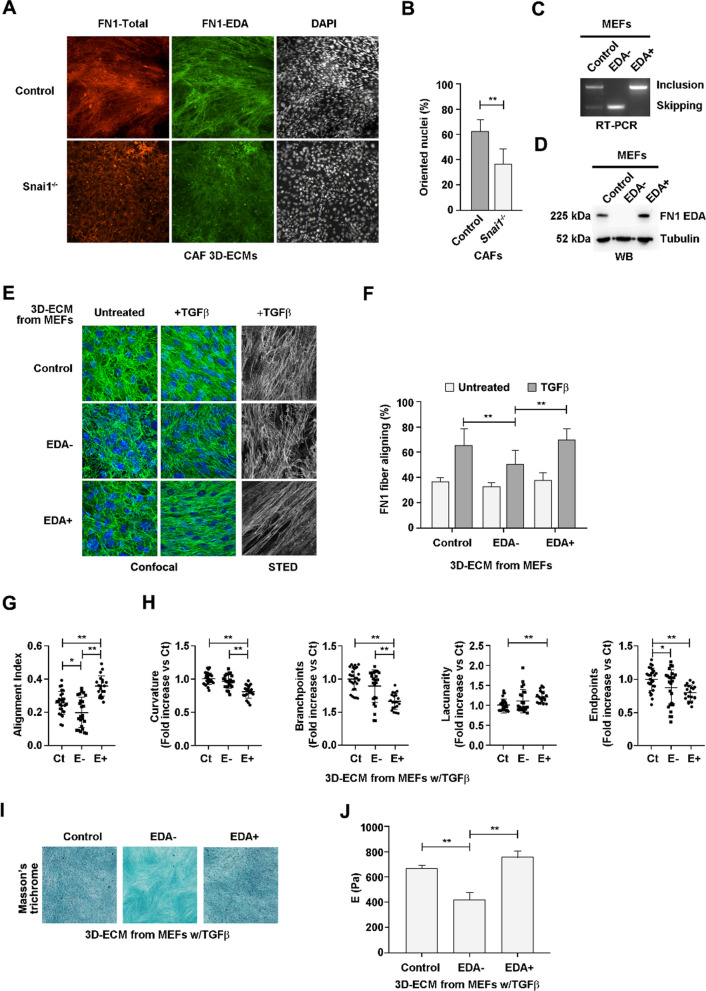
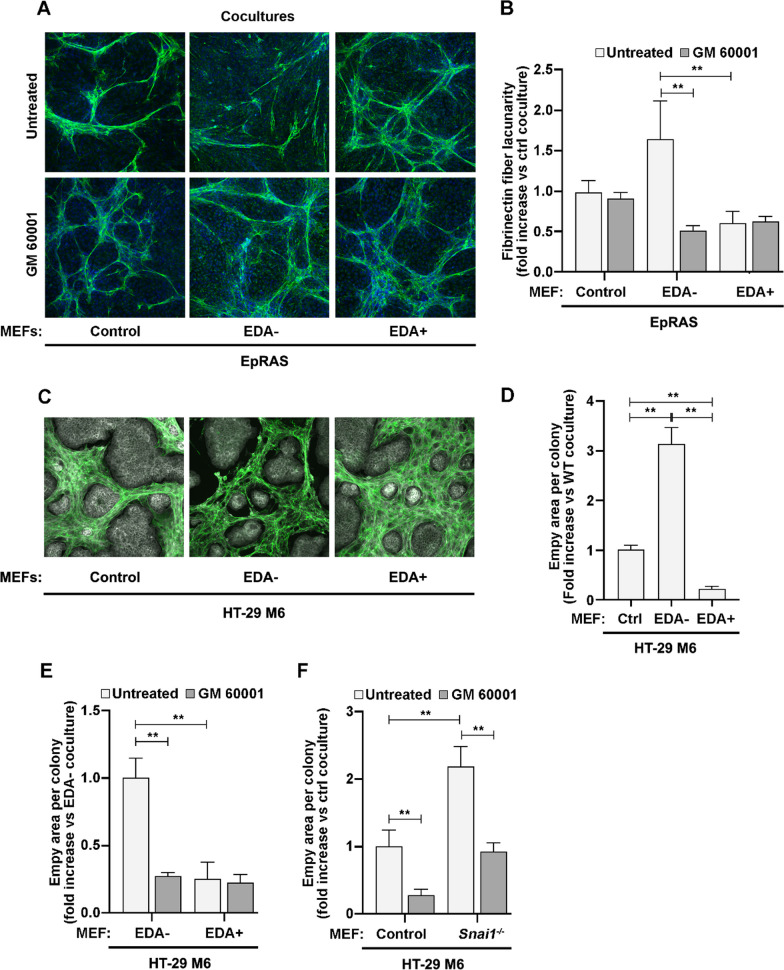
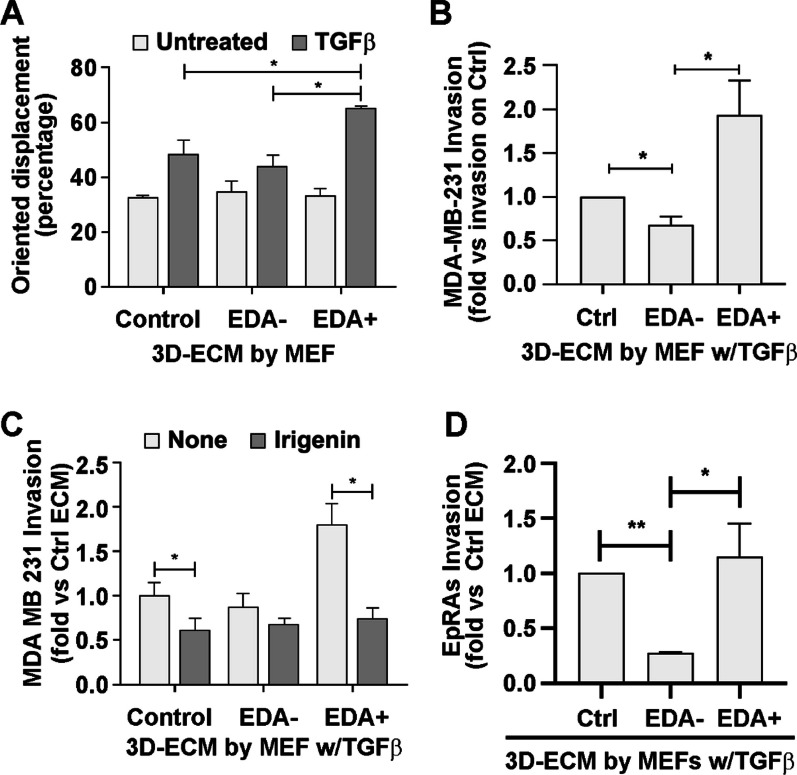
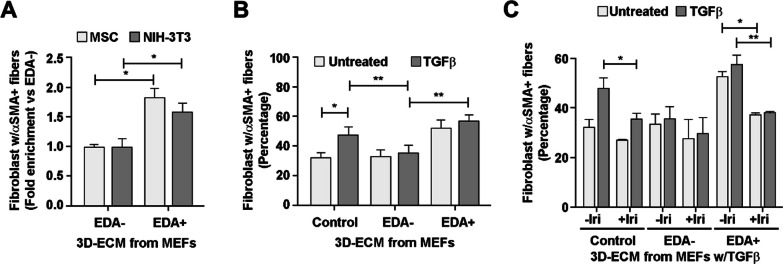
In silico studies showed that SNAIL1 correlates with the expression of the extra domain A (EDA)-containing (EDA+) fibronectin in advanced human breast cancer and other types of epithelial cancers. In TGFβ-activated fibroblasts, alternative splicing of fibronectin as well as of 500 other genes was modified by eliminating SNAIL1. Biochemical analyses demonstrated that SNAIL1 favors the inclusion of the EDA exon by modulating the activity of the SRSF1 splicing factor. Similar to Snai1 knockout fibroblasts, EDA- fibronectin fibroblasts produce an extracellular matrix that does not sustain TGFβ-induced fiber organization, rigidity, fibroblast activation, or tumor cell invasion. The presence of EDA+ fibronectin changes the action of metalloproteinases on fibronectin fibers. Critically, in an mouse orthotopic breast cancer model, the absence of the fibronectin EDA domain completely prevents lung metastasis.
Our results support the requirement of EDA+ fibronectin in the generation of a metastasis permissive stromal architecture in breast cancers and its molecular control by SNAIL1. From a pharmacological point of view, specifically blocking EDA+ fibronectin deposition could be included in studies to reduce the formation of a pro-metastatic environment.
在大多数实体瘤中,乳腺上皮细胞中致癌突变细胞的出现改变了组织的内稳态。一些可溶性因子,如 TGFβ,强烈改变健康基质细胞的行为。表达 TGFβ 靶基因 SNAIL1 的癌症相关成纤维细胞亚群表现出肌成纤维细胞的能力,重新排列基质结构。在基质区带有 SNAIL1 的乳腺肿瘤和具有定向细胞外纤维的肿瘤与不良预后相关。
我们使用深度 RNA 测序和生化技术研究可变剪接,并使用人类肿瘤数据库测试 SNAIL1 与纤连蛋白异构体之间的关联(相关性 t 检验)。从成纤维细胞生成的三维细胞外基质用于研究细胞外基质的机械特性和对肿瘤细胞和成纤维细胞行为的作用。使用乳腺癌转移小鼠模型测试纤连蛋白异构体对肺转移的作用。
计算机研究表明,SNAIL1 与晚期人乳腺癌和其他上皮癌中包含外显子 D(EDA)的纤连蛋白(EDA+)的表达相关。在 TGFβ 激活的成纤维细胞中,纤连蛋白以及 500 个其他基因的可变剪接通过消除 SNAIL1 而被改变。生化分析表明,SNAIL1 通过调节 SRSF1 剪接因子的活性,有利于 EDA 外显子的包含。与 Snai1 敲除成纤维细胞类似,EDA-纤连蛋白成纤维细胞产生的细胞外基质不能维持 TGFβ 诱导的纤维组织、刚性、成纤维细胞激活或肿瘤细胞侵袭。EDA+纤连蛋白的存在改变了金属蛋白酶对纤连蛋白纤维的作用。至关重要的是,在小鼠原位乳腺癌模型中,缺失纤连蛋白的 EDA 结构域完全阻止了肺转移。
我们的结果支持 EDA+纤连蛋白在乳腺癌中产生允许转移的基质结构的必要性及其受 SNAIL1 的分子控制。从药理学的角度来看,特别是阻断 EDA+纤连蛋白的沉积可以被纳入减少形成促转移环境的研究中。