Université Paris Cité, INSERM UMR-S1151, CNRS UMR-S8253, Institut Necker Enfants Malades, Team 5 and Ferostem group, F-75015, Paris, France.
Ferostem group, F-75015, Paris, France.
Cell Death Dis. 2023 Nov 15;14(11):744. doi: 10.1038/s41419-023-06262-5.
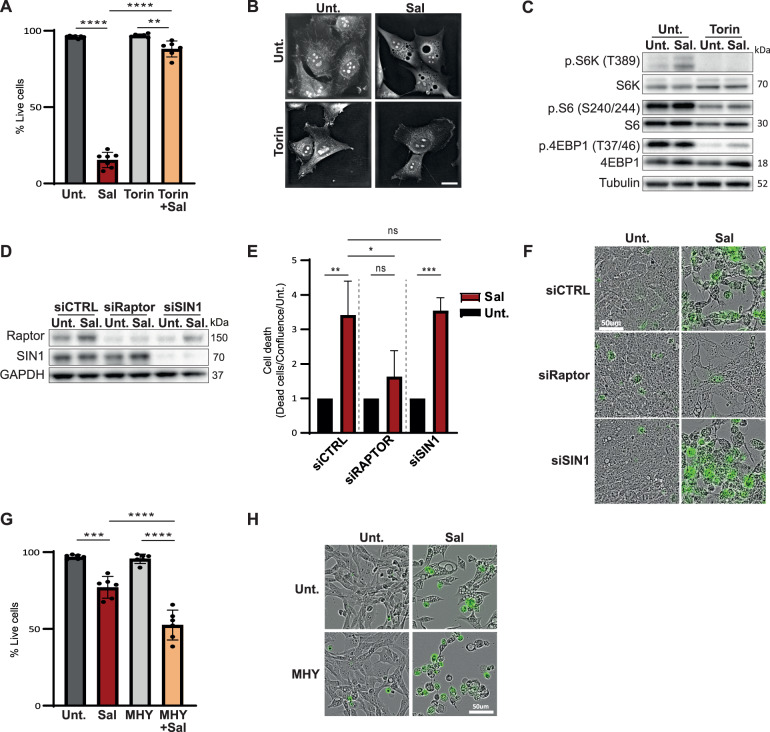
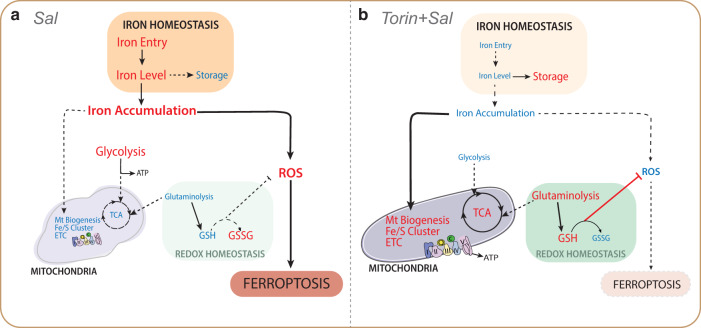
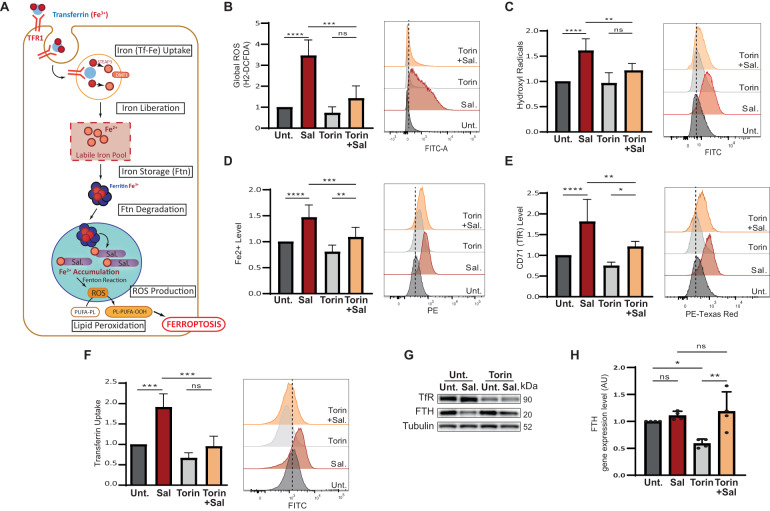
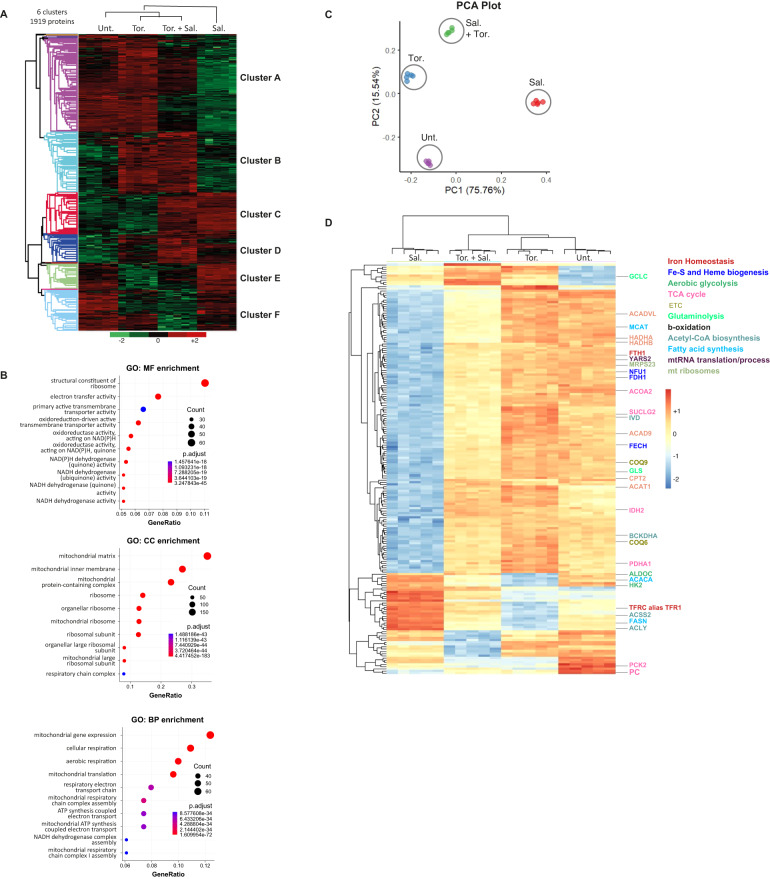
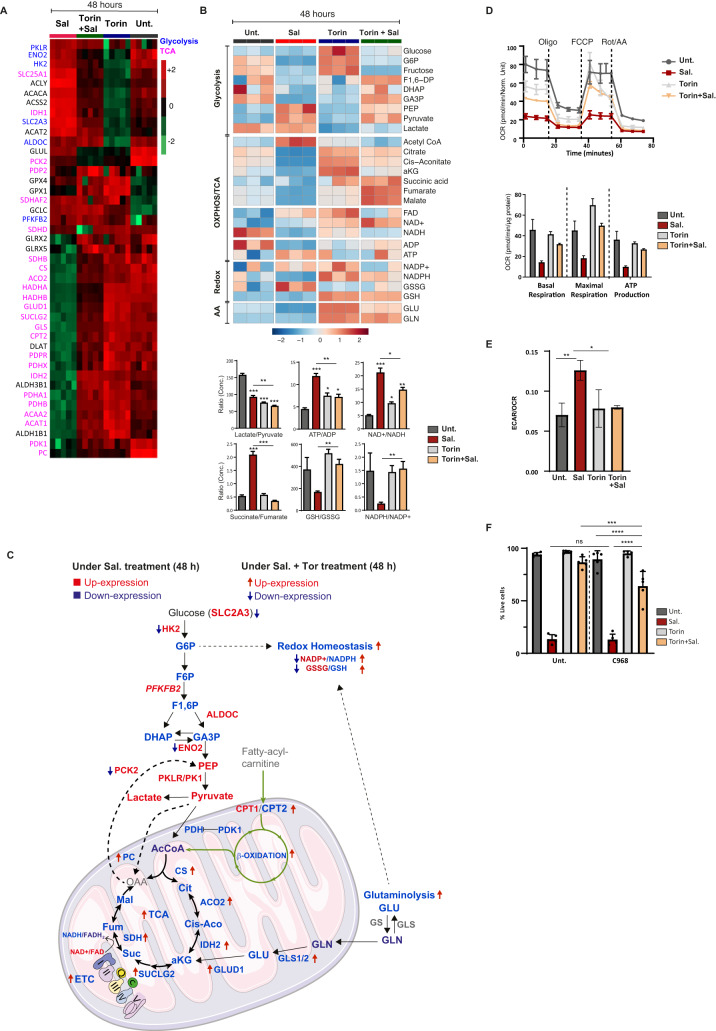
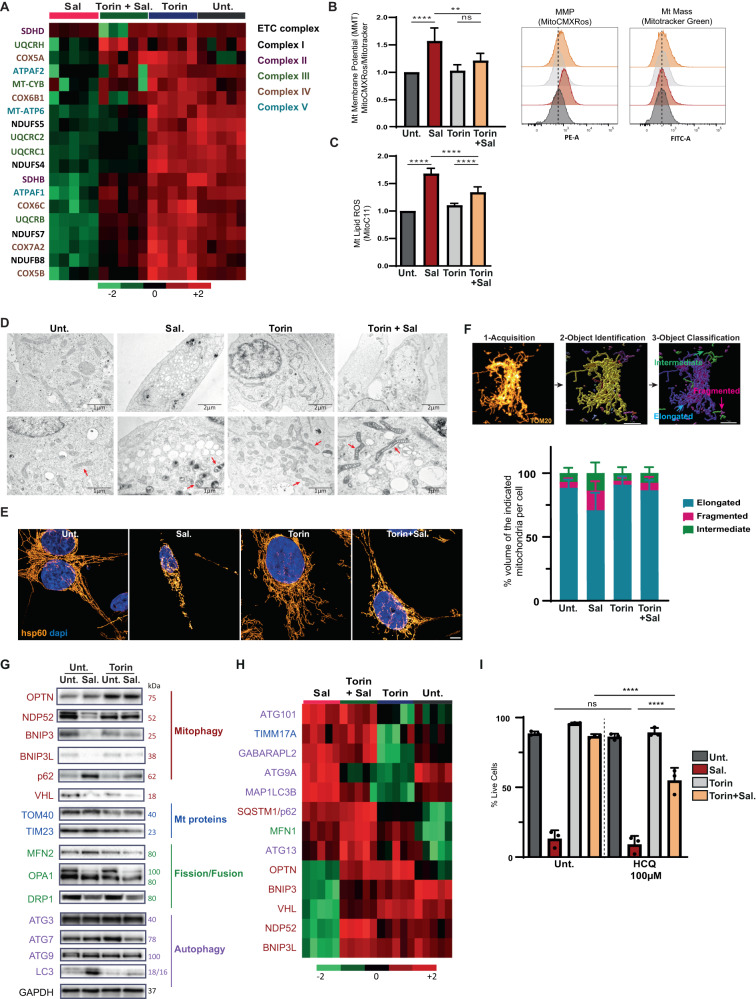
Ferroptosis constitutes a promising therapeutic strategy against cancer by efficiently targeting the highly tumorigenic and treatment-resistant cancer stem cells (CSCs). We previously showed that the lysosomal iron-targeting drug Salinomycin (Sal) was able to eliminate CSCs by triggering ferroptosis. Here, in a well-established breast CSCs model (human mammary epithelial HMLER CD24/CD44), we identified that pharmacological inhibition of the mechanistic target of rapamycin (mTOR), suppresses Sal-induced ferroptosis. Mechanistically, mTOR inhibition modulates iron cellular flux and thereby limits iron-mediated oxidative stress. Furthermore, integration of multi-omics data identified mitochondria as a key target of Sal action, leading to profound functional and structural alteration prevented by mTOR inhibition. On top of that, we found that Sal-induced metabolic plasticity is mainly dependent on the mTOR pathway. Overall, our findings provide experimental evidence for the mechanisms of mTOR as a crucial effector of Sal-induced ferroptosis pointing not only that metabolic reprogramming regulates ferroptosis, but also providing proof-of-concept that careful evaluation of such combination therapy (here mTOR and ferroptosis co-targeting) is required in the development of an effective treatment.
铁死亡作为一种有前途的治疗策略,能够有效地靶向高度致瘤性和治疗耐药性的癌症干细胞(CSC)。我们之前表明,溶酶体铁靶向药物萨利霉素(Sal)能够通过触发铁死亡来消除 CSC。在这里,在一个成熟的乳腺癌 CSC 模型(人乳腺上皮 HMLER CD24/CD44)中,我们发现,机械性靶标雷帕霉素(mTOR)的药理学抑制作用抑制了 Sal 诱导的铁死亡。从机制上讲,mTOR 抑制调节铁细胞内流,从而限制铁介导的氧化应激。此外,多组学数据的整合将线粒体确定为 Sal 作用的关键靶点,导致 mTOR 抑制阻止了线粒体的功能和结构的深刻改变。最重要的是,我们发现 Sal 诱导的代谢可塑性主要依赖于 mTOR 途径。总的来说,我们的发现为 mTOR 作为 Sal 诱导的铁死亡的关键效应因子的机制提供了实验证据,不仅表明代谢重编程调节铁死亡,而且还提供了概念验证,即需要仔细评估这种联合治疗(此处 mTOR 和铁死亡的共同靶向),以开发有效的治疗方法。