Shen Peiliang, Jia Yuanyuan, Zhou Weijia, Zheng Weiwei, Wu Yueyao, Qu Suchen, Du Shiyu, Wang Siliang, Shi Huilian, Sun Jia, Han Xin
Jiangsu Key Laboratory for Pharmacology and Safety Evaluation of Chinese Materia Medica, School of Medicine & Holistic Integrative Medicine, Jiangsu Joint International Research Laboratory of Chinese Medicine and Regenerative Medicine, Nanjing University of Chinese Medicine, Nanjing 210023, China.
Department of Pharmacy, Nanjing Drum Tower Hospital, The Affiliated Hospital of Nanjing University Medical School, Nanjing 210008, China.
Acta Pharm Sin B. 2023 Nov;13(11):4621-4637. doi: 10.1016/j.apsb.2023.04.010. Epub 2023 May 4.
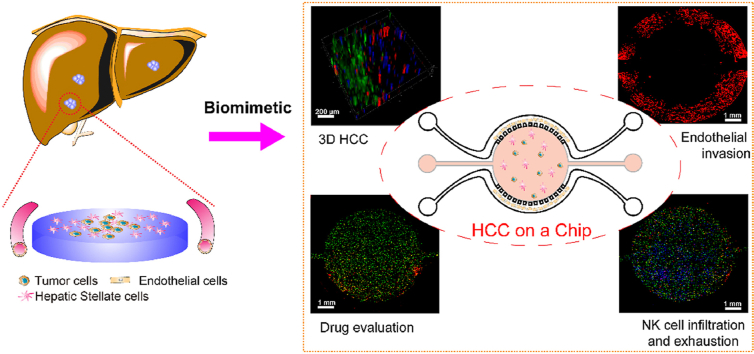
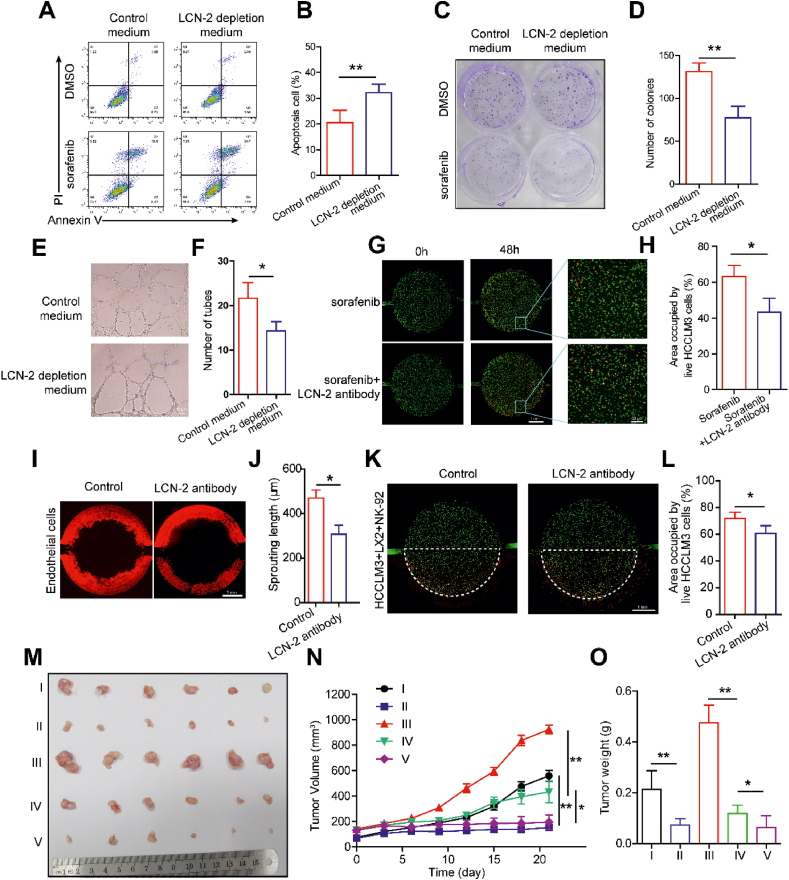
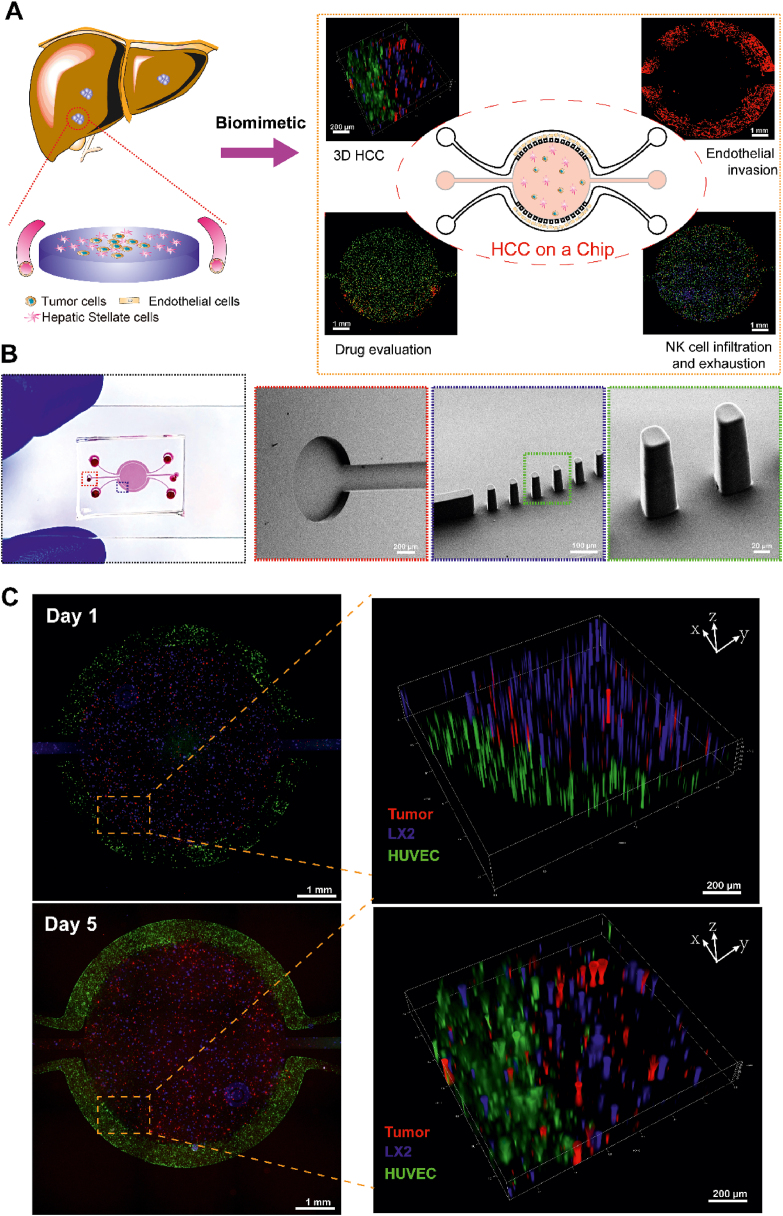
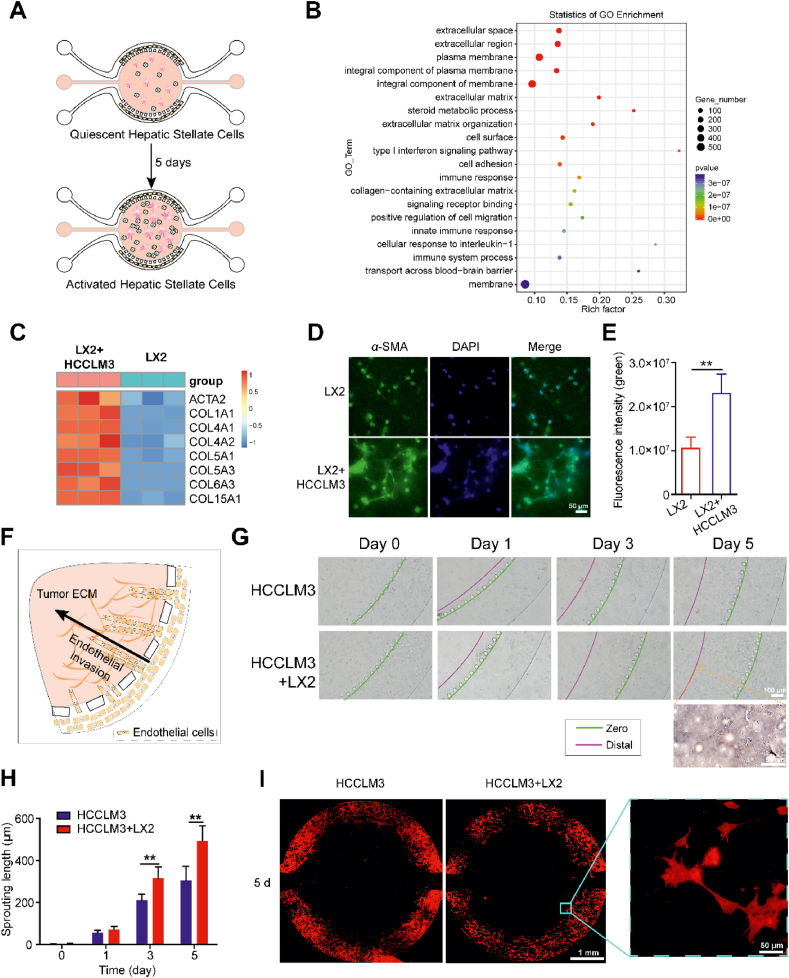
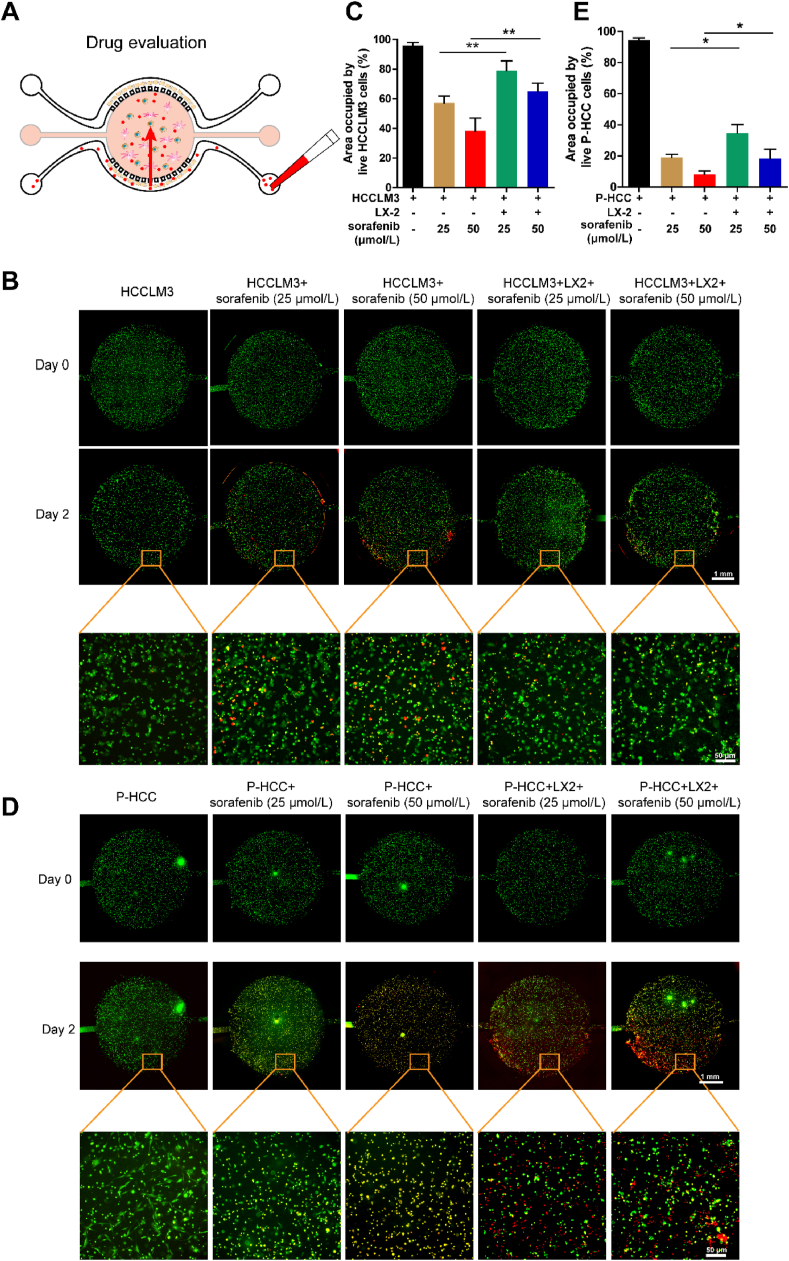
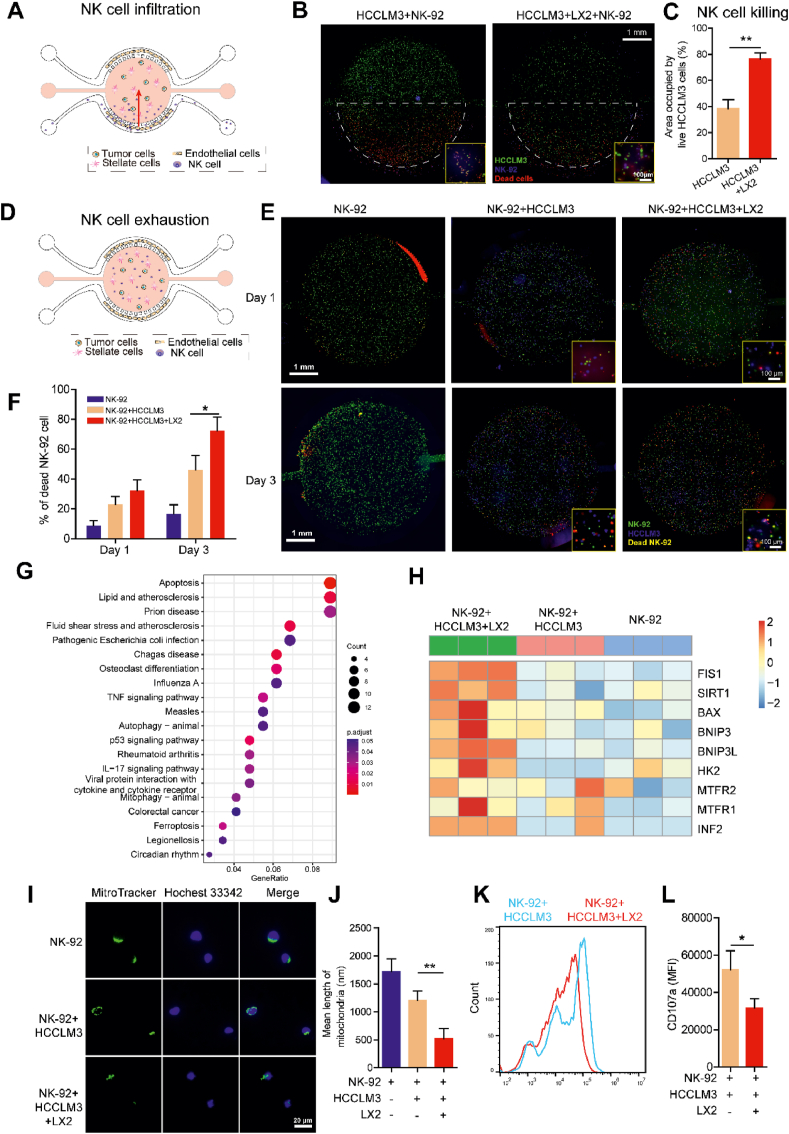
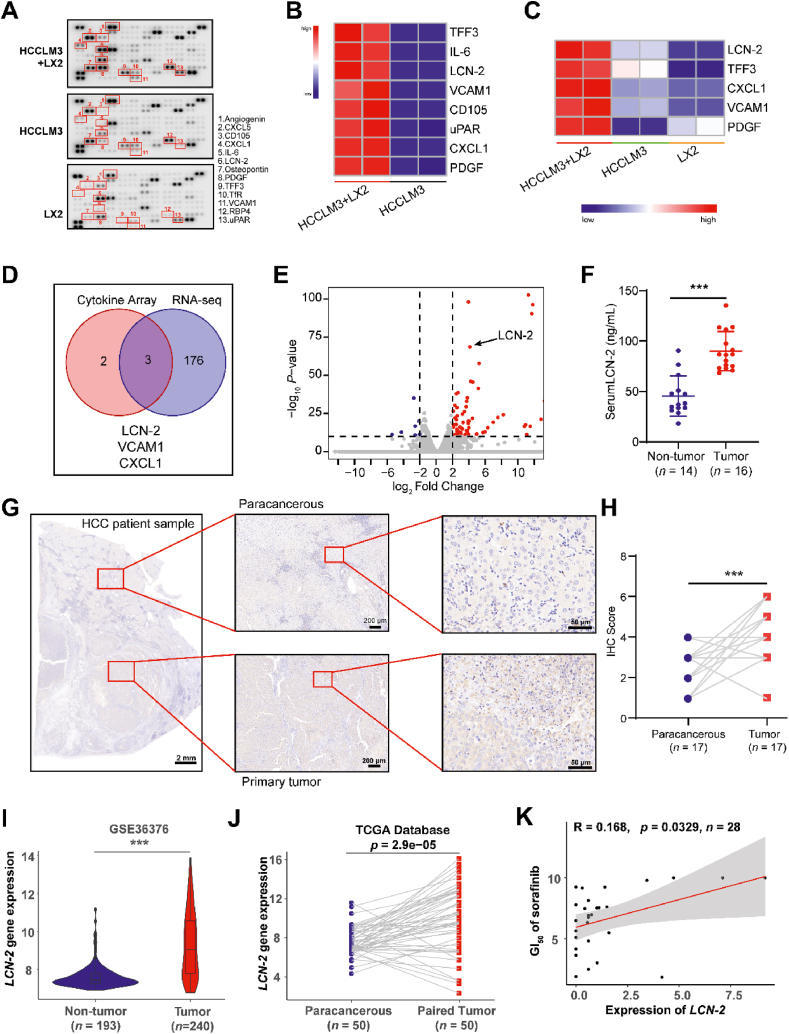
Hepatic stellate cells (HSCs) represent a significant component of hepatocellular carcinoma (HCC) microenvironments which play a critical role in tumor progression and drug resistance. Tumor-on-a-chip technology has provided a powerful platform to investigate the crosstalk between activated HSCs and HCC cells by mimicking physiological architecture with precise spatiotemporal control. Here we developed a tri-cell culture microfluidic chip to evaluate the impact of HSCs on HCC progression. On-chip analysis revealed activated HSCs contributed to endothelial invasion, HCC drug resistance and natural killer (NK) cell exhaustion. Cytokine array and RNA sequencing analysis were combined to indicate the iron-binding protein LIPOCALIN-2 (LCN-2) as a key factor in remodeling tumor microenvironments in the HCC-on-a-chip. LCN-2 targeted therapy demonstrated robust anti-tumor effects both 3D biomimetic chip and mouse model, including angiogenesis inhibition, sorafenib sensitivity promotion and NK-cell cytotoxicity enhancement. Taken together, the microfluidic platform exhibited obvious advantages in mimicking functional characteristics of tumor microenvironments and developing targeted therapies.
肝星状细胞(HSCs)是肝细胞癌(HCC)微环境的重要组成部分,在肿瘤进展和耐药性中起关键作用。芯片上肿瘤技术提供了一个强大的平台,通过精确的时空控制模拟生理结构,来研究活化的肝星状细胞与肝癌细胞之间的相互作用。在此,我们开发了一种三细胞培养微流控芯片,以评估肝星状细胞对肝癌进展的影响。芯片上的分析显示,活化的肝星状细胞促进内皮细胞侵袭、肝癌耐药性和自然杀伤(NK)细胞耗竭。细胞因子阵列和RNA测序分析相结合,表明铁结合蛋白脂质运载蛋白2(LCN-2)是芯片上肝癌模型中重塑肿瘤微环境的关键因素。LCN-2靶向治疗在三维仿生芯片和小鼠模型中均显示出强大的抗肿瘤作用,包括抑制血管生成、提高索拉非尼敏感性和增强NK细胞细胞毒性。综上所述,微流控平台在模拟肿瘤微环境的功能特征和开发靶向治疗方面具有明显优势。