
在……中不可水解磷酸丝氨酸的生物合成及其对重组蛋白的基因编码
Biosynthesis and Genetic Encoding of Non-hydrolyzable Phosphoserine into Recombinant Proteins in .
作者信息
Zhu Phillip, Mehl Ryan A, Cooley Richard B
机构信息
Department of Biochemistry and Biophysics, Oregon State University, 2011 Agricultural and Life Sciences, Corvallis, OR, USA.
GCE4All Research Center, Oregon State University, 2011 Agricultural and Life Sciences, Corvallis, OR, USA.
出版信息
Bio Protoc. 2023 Nov 5;13(21):e4861. doi: 10.21769/BioProtoc.4861.
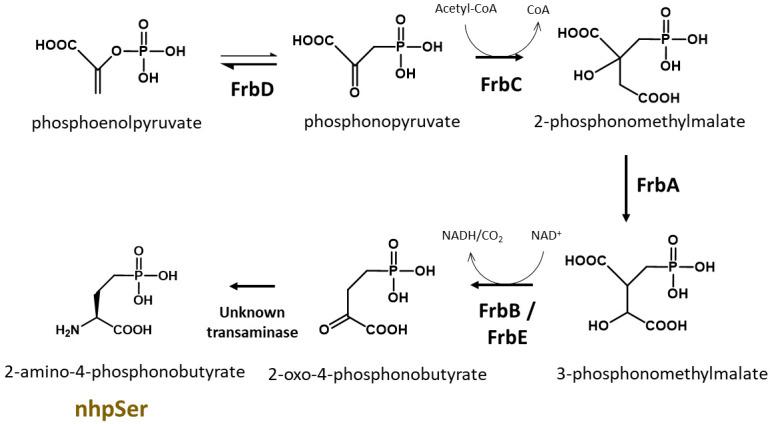
While site-specific translational encoding of phosphoserine (pSer) into proteins in via genetic code expansion (GCE) technologies has transformed our ability to study phospho-protein structure and function, recombinant phospho-proteins can be dephosphorylated during expression/purification, and their exposure to cellular-like environments such as cell lysates results in rapid reversion back to the non-phosphorylated form. To help overcome these challenges, we developed an efficient and scalable GCE expression system enabling site-specific incorporation of a non-hydrolyzable phosphoserine (nhpSer) mimic into proteins of interest. This nhpSer mimic, with the γ-oxygen of phosphoserine replaced by a methylene (CH) group, is impervious to hydrolysis and recapitulates phosphoserine function even when phosphomimetics aspartate and glutamate do not. Key to this expression system is the co-expression of a biosynthetic pathway that converts the central metabolite phosphoenolpyruvate into non-hydrolyzable phosphoserine (nhpSer) amino acid, which provides a > 40-fold improvement in expression yields compared to media supplementation by increasing bioavailability of nhpSer and enables scalability of expressions. This "PermaPhos" expression system uses the E. coli BL21(DE3) Δ strain and three plasmids that express (i) the protein of interest, (ii) the GCE machinery for translational installation of nhpSer at UAG amber stop codons, and (iii) the nhpSer biosynthetic pathway. Successful expression requires efficient transformation of all three plasmids simultaneously into the expression host, and IPTG is used to induce expression of all components. Permanently phosphorylated proteins made in are particularly useful for discovering phosphorylation-dependent protein-protein interaction networks from cell lysates or transfected cells. Key features • Protocol builds on the nhpSer GCE system by Rogerson et al. (2015), but with a > 40-fold improvement in yields enabled by the nhpSer biosynthetic pathway. • Protein expression uses standard Terrific Broth (TB) media and requires three days to complete. • C-terminal purification tags on target protein are recommended to avoid co-purification of prematurely truncated protein with full-length nhpSer-containing protein. • Phos-tag gel electrophoresis provides a convenient method to confirm accurate nhpSer encoding, as it can distinguish between non-phosphorylated, pSer- and nhpSer-containing variants.
虽然通过遗传密码扩展(GCE)技术将磷酸丝氨酸(pSer)位点特异性翻译编码到蛋白质中,已经改变了我们研究磷酸化蛋白质结构和功能的能力,但重组磷酸化蛋白质在表达/纯化过程中可能会发生去磷酸化,并且它们暴露于类似细胞的环境(如细胞裂解液)中会迅速恢复为非磷酸化形式。为了帮助克服这些挑战,我们开发了一种高效且可扩展的GCE表达系统,能够将不可水解的磷酸丝氨酸(nhpSer)类似物位点特异性地掺入到感兴趣的蛋白质中。这种nhpSer类似物,其磷酸丝氨酸的γ-氧被亚甲基(CH)基团取代,不会被水解,即使磷酸模拟物天冬氨酸和谷氨酸不起作用时,它也能重现磷酸丝氨酸的功能。该表达系统的关键是共表达一条生物合成途径,该途径将中心代谢物磷酸烯醇丙酮酸转化为不可水解的磷酸丝氨酸(nhpSer)氨基酸,通过提高nhpSer的生物利用度,与培养基补充相比,表达产量提高了40倍以上,并实现了表达的可扩展性。这种“永久磷酸化(PermaPhos)”表达系统使用大肠杆菌BL21(DE3) Δ菌株和三个质粒,分别表达(i)感兴趣的蛋白质,(ii)用于在UAG琥珀色终止密码子处翻译安装nhpSer的GCE机制,以及(iii)nhpSer生物合成途径。成功表达需要将所有三个质粒同时高效转化到表达宿主中,并用异丙基-β-D-硫代半乳糖苷(IPTG)诱导所有组分的表达。在大肠杆菌中制备的永久磷酸化蛋白质对于从细胞裂解液或转染细胞中发现磷酸化依赖性蛋白质-蛋白质相互作用网络特别有用。关键特性 • 该方案基于Rogerson等人(2015年)的nhpSer GCE系统构建,但由于nhpSer生物合成途径,产量提高了40倍以上。 • 蛋白质表达使用标准的 terrific 肉汤(TB)培养基,需要三天完成。 • 建议在目标蛋白质上使用C端纯化标签,以避免过早截断的蛋白质与含全长nhpSer的蛋白质共纯化。 • Phos-tag凝胶电泳提供了一种方便的方法来确认准确的nhpSer编码,因为它可以区分非磷酸化、含pSer和含nhpSer的变体。



 Zotero 插件