Department of Biochemistry and Molecular Biophysics, Columbia University, New York, NY 10032, USA.
Present address: Department of Molecular Physiology and Biophysics, Vanderbilt University, Nashville, TN 37212, USA.
Science. 2023 Nov 17;382(6672):eadj8543. doi: 10.1126/science.adj8543.
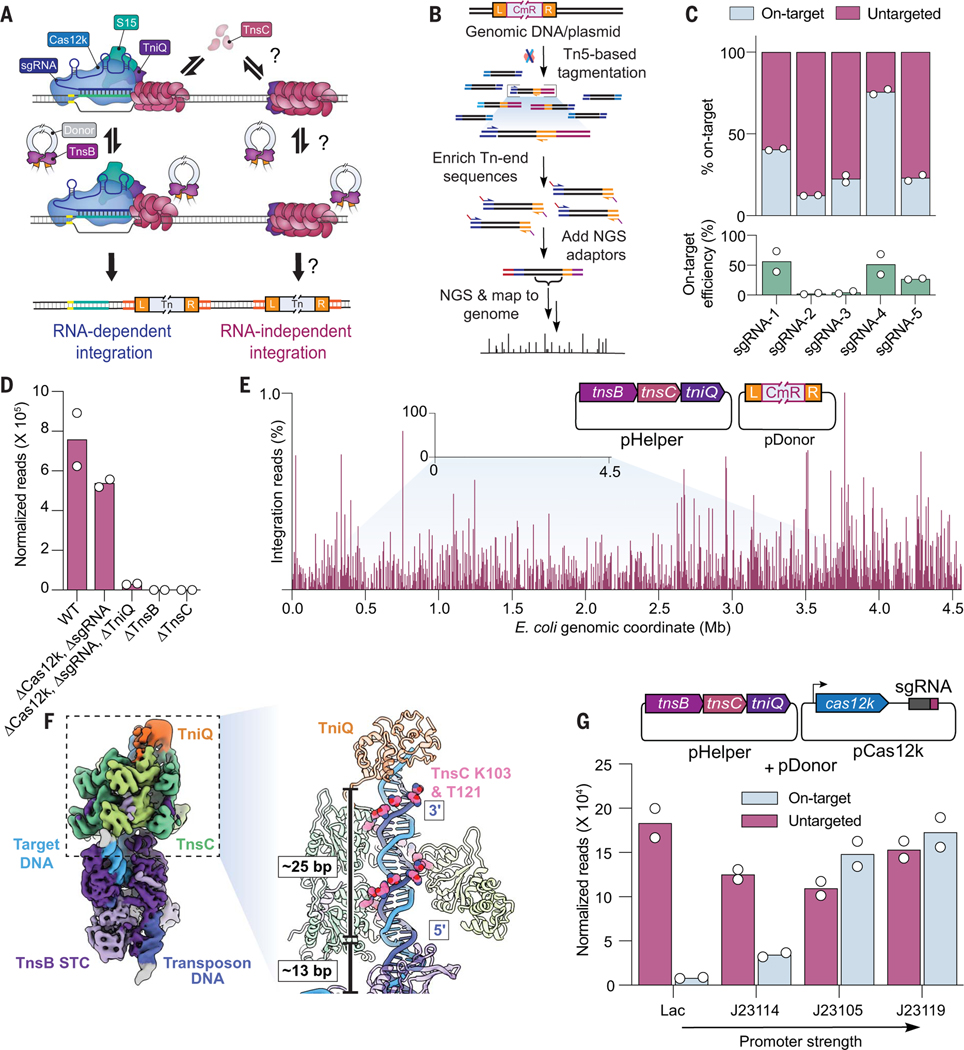
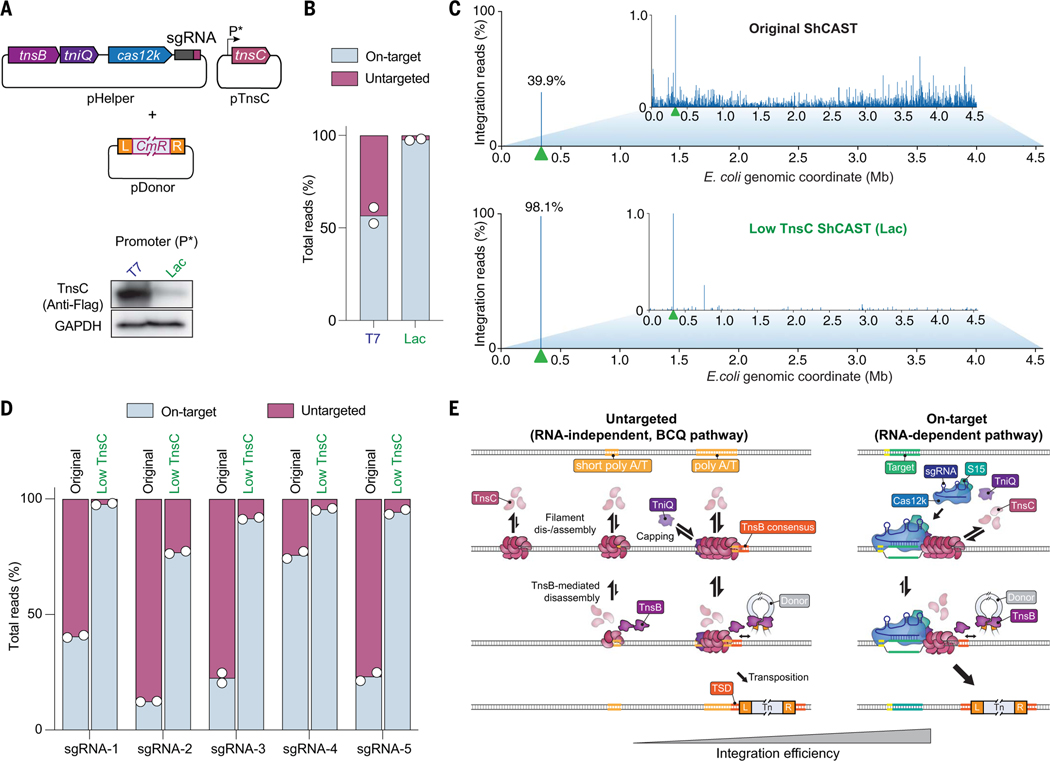
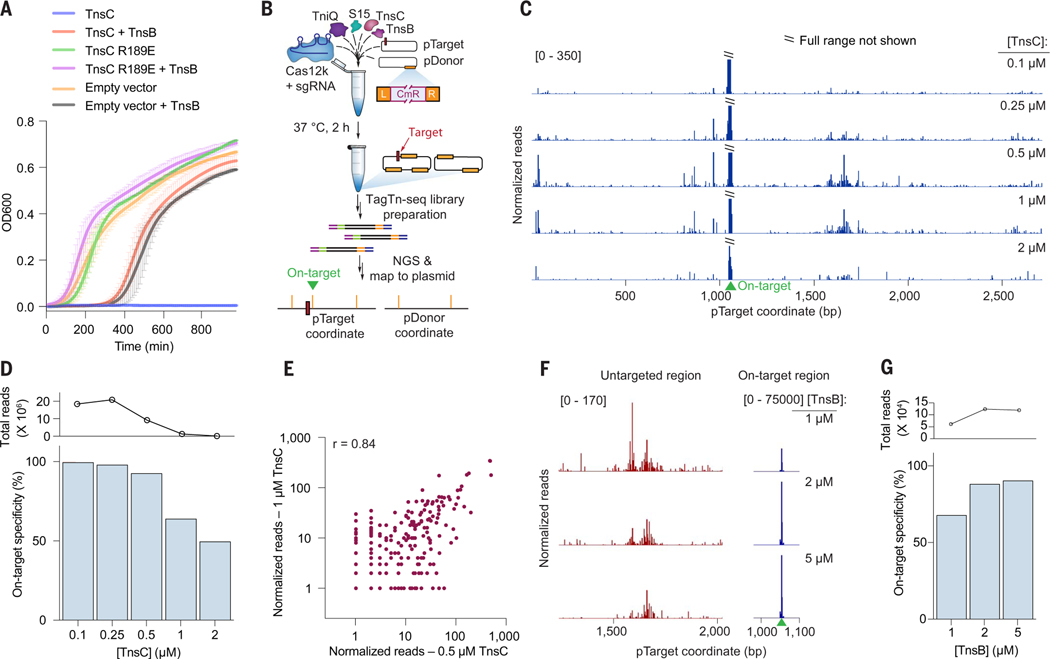
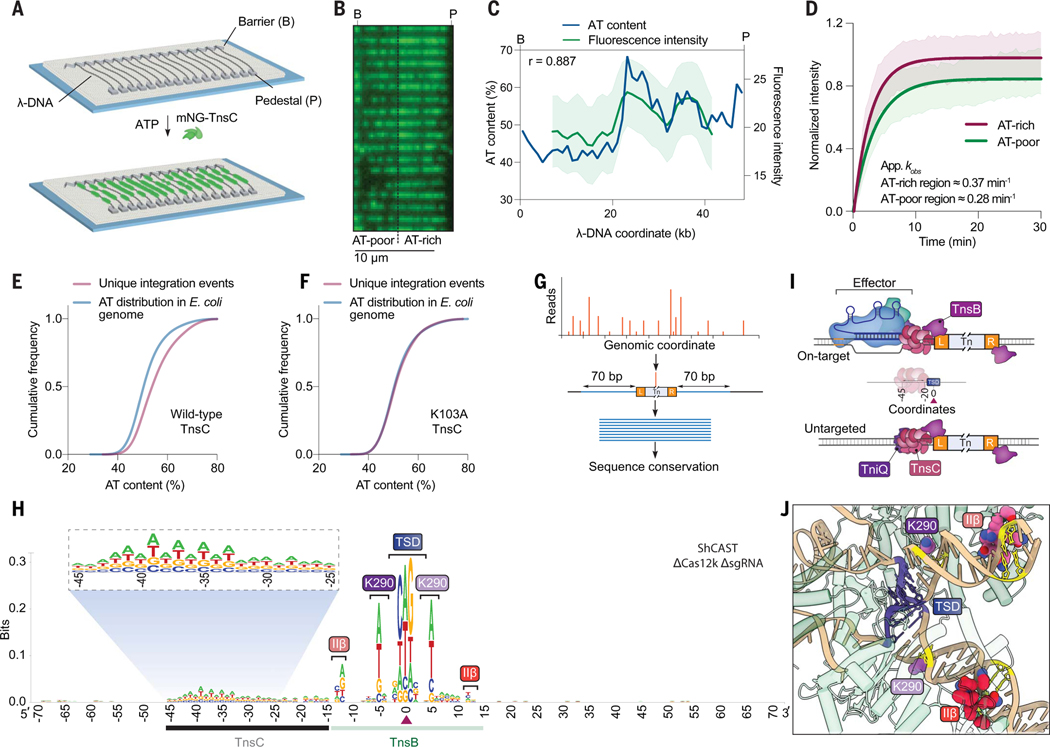
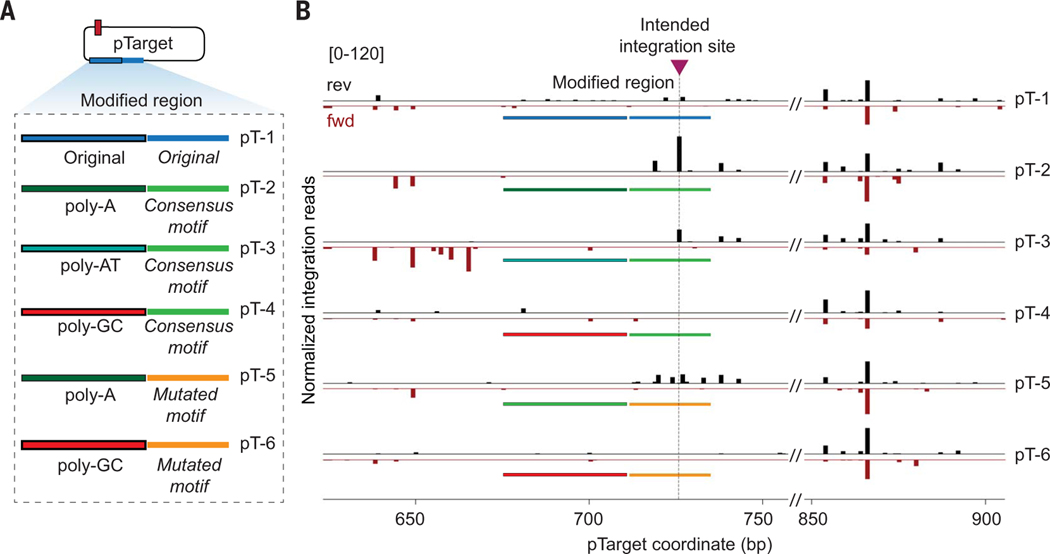
CRISPR-associated transposases (CASTs) repurpose nuclease-deficient CRISPR effectors to catalyze RNA-guided transposition of large genetic payloads. Type V-K CASTs offer potential technology advantages but lack accuracy, and the molecular basis for this drawback has remained elusive. Here, we reveal that type V-K CASTs maintain an RNA-independent, "untargeted" transposition pathway alongside RNA-dependent integration, driven by the local availability of TnsC filaments. Using cryo-electron microscopy, single-molecule experiments, and high-throughput sequencing, we found that a minimal, CRISPR-less transpososome preferentially directs untargeted integration at AT-rich sites, with additional local specificity imparted by TnsB. By exploiting this knowledge, we suppressed untargeted transposition and increased type V-K CAST specificity up to 98.1% in cells without compromising on-target integration efficiency. These findings will inform further engineering of CAST systems for accurate, kilobase-scale genome engineering applications.
CRISPR 相关转座酶(CASTs)重新利用缺乏核酸酶的 CRISPR 效应物来催化 RNA 引导的大遗传有效载荷的转位。V-K 型 CAST 提供了潜在的技术优势,但缺乏准确性,而这种缺点的分子基础仍然难以捉摸。在这里,我们揭示了 V-K 型 CAST 除了 RNA 依赖性整合之外,还保持了一种 RNA 非依赖性的“非靶向”转位途径,这是由 TnsC 丝的局部可用性驱动的。通过使用冷冻电子显微镜、单分子实验和高通量测序,我们发现一个最小的、无 CRISPR 的转座体优先在富含 AT 的位点上进行非靶向整合,TnsB 赋予了额外的局部特异性。通过利用这一知识,我们在不影响靶整合效率的情况下,抑制了非靶向转位,并将 V-K 型 CAST 的特异性提高到 98.1%,而无需进行额外的工程设计。这些发现将为 CAST 系统的进一步工程化提供信息,以实现精确的、千碱基规模的基因组工程应用。