Department of Medical Oncology, Liverpool Hospital, Liverpool; Ingham Institute for Applied Medical Research, Liverpool; School of Medicine, Western Sydney University, Sydney.
Department of Medical Oncology, Liverpool Hospital, Liverpool.
ESMO Open. 2023 Dec;8(6):102046. doi: 10.1016/j.esmoop.2023.102046. Epub 2023 Nov 16.
Early phase cancer clinical trials (EPCTs) involve experimental drugs being used for the first time in humans. These studies are designed for dose determination and safety, and represent the most time intensive of all clinical trials for both clinicians and patients. We sought to quantify the amount of patient time consumed through EPCT participation.
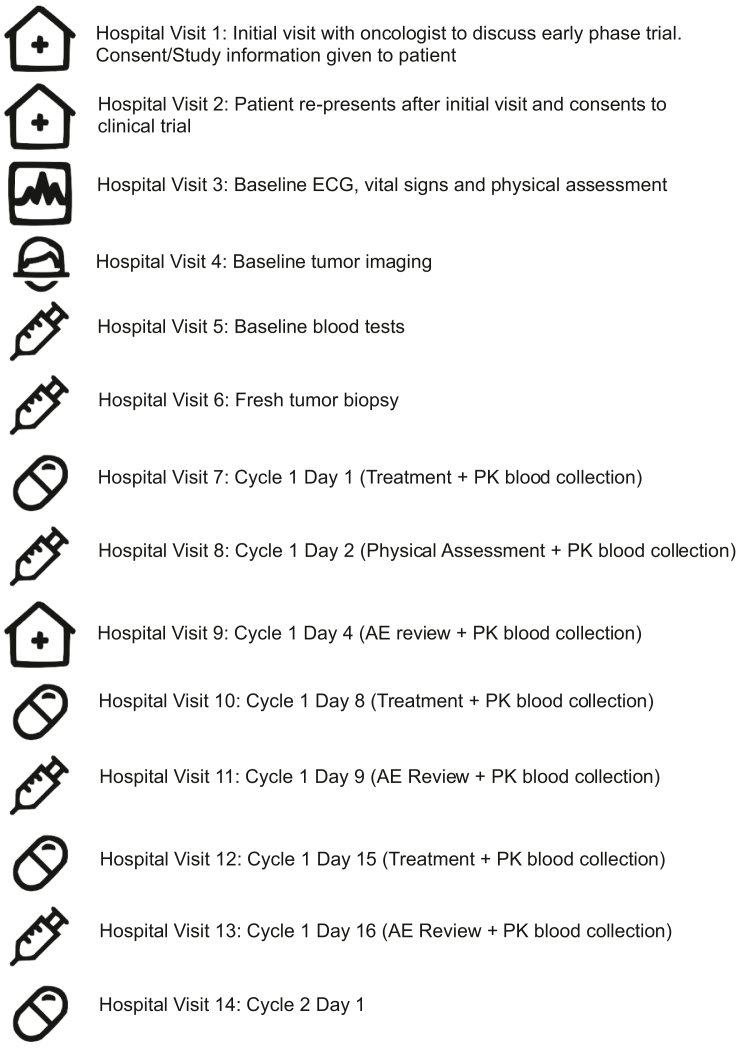
A retrospective audit of patients treated in the EPCT unit at Liverpool Hospital, Sydney was carried out from 2013 to 2023. We defined 'time toxicity' (TT) as a composite measure where time-toxic days were considered days with any health care system contact, including clinic visits, infusions, procedures or blood work.
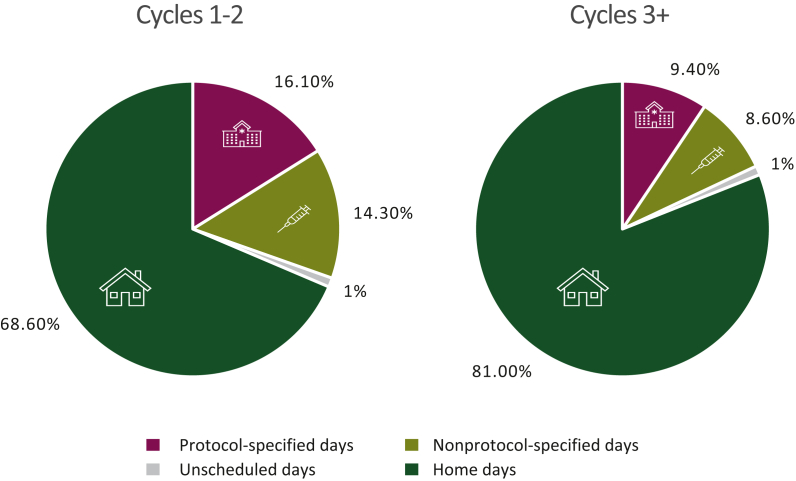
A total of 219 patients across 36 EPCTs were included. The median age was 65 years (range 31-81 years). Patients spent a median of 29% (range 4%-100%) of their days in direct contact with the health care system during their study. Protocol-specified visits accounted for the greatest contribution to total TT in 101 (46%) patients. In 7% (n = 16) of patients, unscheduled visits due to either adverse events or cancer-related symptoms accounted for the greatest TT. TT reduced as patients completed additional cycles of treatment. Patients who completed >10 cycles spent 14% of their days interacting with health care systems compared with 35% for those who completed ≤2 cycles. No statistically significant difference in TT was noted between dose-expansion and dose-escalation studies or trials focusing on immune-oncology versus targeted therapy.
Our study is the first to report TT in EPCTs with an extended follow-up. Clinicians should be aware of TT when discussing risks and benefits. TT also may not be the appropriate term when describing the time patients invest during EPCTs. Toxicity implies a negative impact, but for many patients, trial participation would be seen as positive. There should be efforts to streamline health care visits to limit TT in EPCTs.
早期癌症临床试验(EPCT)涉及首次在人体中使用实验性药物。这些研究旨在确定剂量和安全性,对于临床医生和患者来说,它们是所有临床试验中耗时最长的。我们旨在量化患者通过 EPCT 参与所消耗的时间。
对 2013 年至 2023 年在悉尼利物浦医院 EPCT 病房接受治疗的患者进行了回顾性审计。我们将“时间毒性”(TT)定义为一种复合指标,其中毒性天数被认为是与任何医疗保健系统接触的天数,包括诊所就诊、输液、程序或血液检查。
共纳入 36 项 EPCT 中的 219 名患者。中位年龄为 65 岁(范围 31-81 岁)。患者在研究期间有中位 29%(范围 4%-100%)的时间直接与医疗保健系统接触。在 101 名(46%)患者中,协议规定的就诊对总 TT 的贡献最大。在 7%(n=16)的患者中,由于不良事件或癌症相关症状而进行的非计划就诊占 TT 的最大比例。随着患者完成额外的治疗周期,TT 减少。完成 >10 个周期的患者与完成 ≤2 个周期的患者相比,与医疗保健系统互动的天数占 14%,而完成 ≤2 个周期的患者占 35%。在剂量扩展和剂量递增研究或专注于免疫肿瘤学与靶向治疗的试验中,TT 没有统计学上的显著差异。
我们的研究首次报告了 EPCT 中的 TT,并进行了扩展随访。临床医生在讨论风险和益处时应注意 TT。当描述患者在 EPCT 中投入的时间时,TT 也可能不是一个合适的术语。毒性暗示着负面影响,但对许多患者来说,参与试验被视为积极的。应该努力简化医疗保健就诊,以限制 EPCT 中的 TT。