Rath Meera, Figueroa Ariana M, Zhang Ping, Stevens Stanley M, Liu Bin
Department of Pharmacodynamics, University of Florida, Gainesville, FL 32610.
Department of Cell Biology, Microbiology and Molecular Biology, University of South Florida, Tampa, FL 33620.
Neuroglia. 2022 Jun;3(2):61-72. doi: 10.3390/neuroglia3020004. Epub 2022 Apr 6.
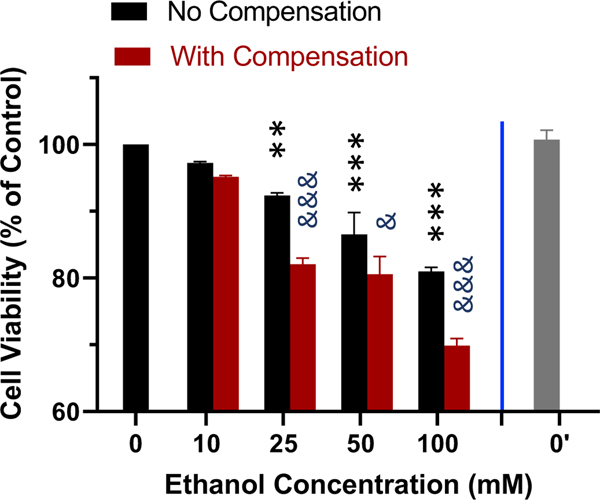
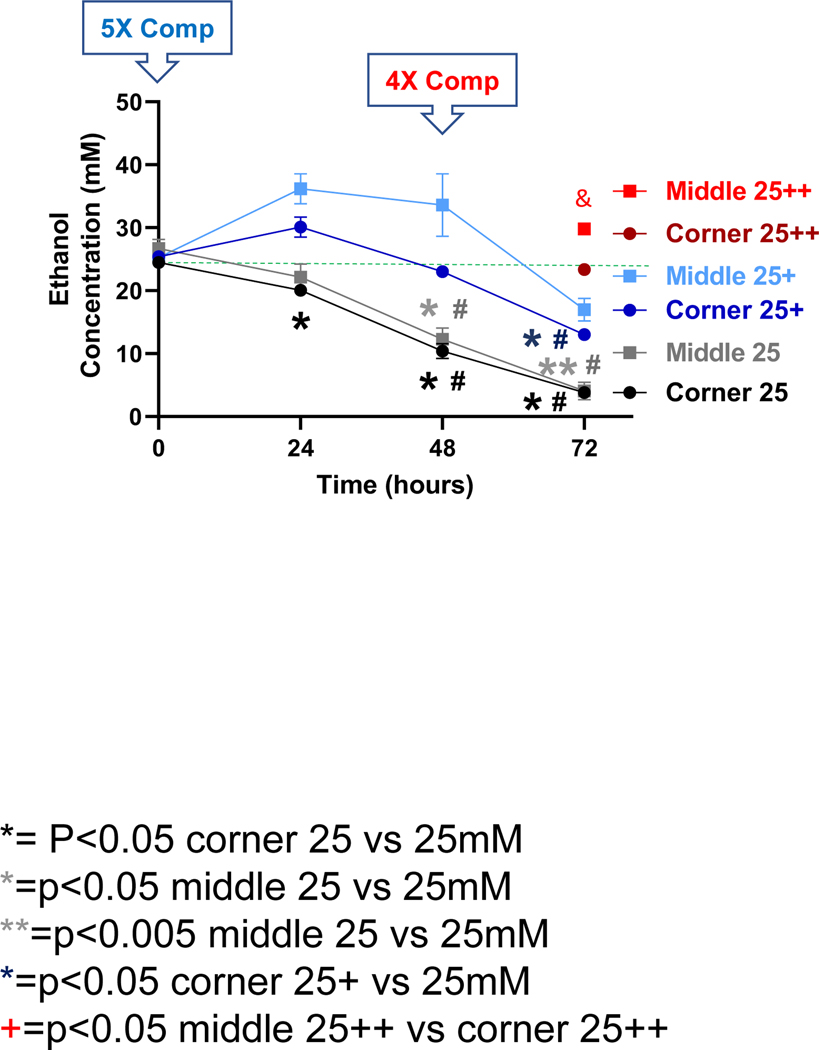
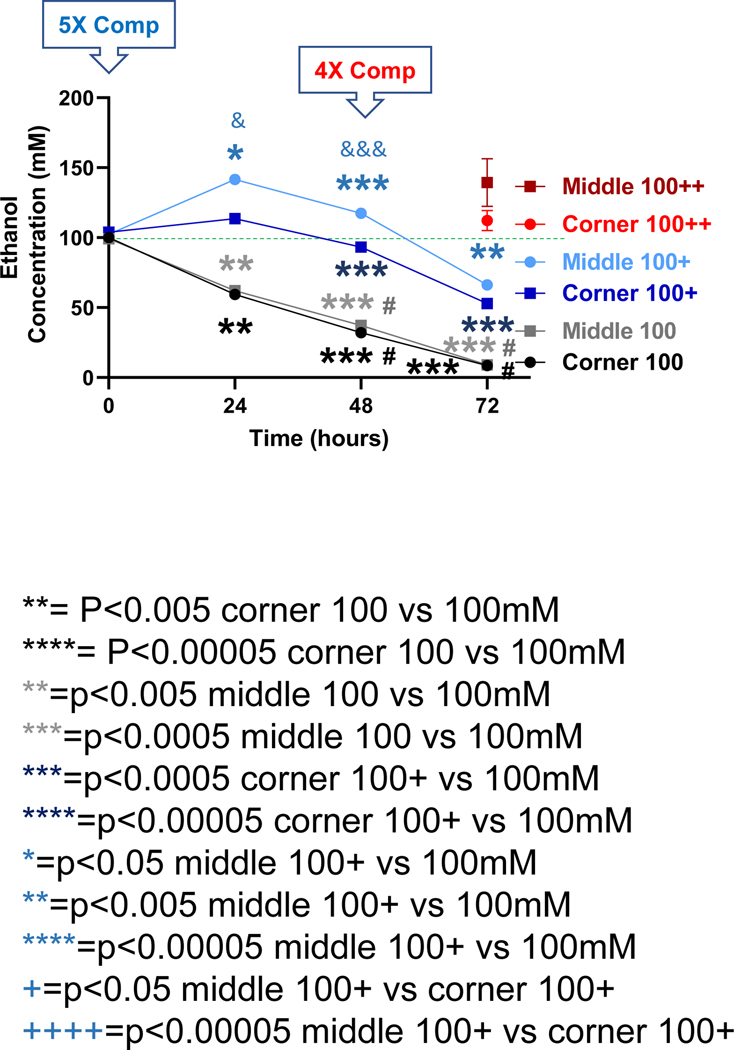
Alcohol overconsumption is a major cause of preventable mental disorders and death in the United States and around the world. The pathogenesis of alcohol dependence, abuse, and toxicity to the central nervous system remains incompletely understood. In vitro and cell culture-based models have been highly valuable in studying the molecular and cellular mechanisms underlying the contribution of individual CNS cell types to ethanol's effects on the brain. However, conventional cell culture model systems carry the inherent disadvantage of rapid loss of ethanol due to evaporation following a bolus addition at the start of the treatment. We have established a multi-well cell culture plate-based ethanol evaporation compensation model that utilizes the inter-well space as a reservoir to compensate for the evaporative loss of ethanol in the cell treatment wells. Following a single bolus addition at the start of the treatment, ethanol concentration rapidly decreased over time. Through compensation using the multi-well plate platform, maintenance of ethanol concentrations ranging from 10-100 mM was achieved for up to 72 hours in a cell-free system. Greater effects in ethanol-induced decrease in neuronal cell viability were observed with than without compensation. Our method effectively compensates for the evaporative loss of ethanol typically observed in the traditional method. This method provides an economic, simple and effective in vitro model system for ethanol treatment over an extended timeframe where maintenance of a relatively constant concentration of ethanol is desired.
在美国及全球范围内,酒精过度消费是可预防的精神障碍和死亡的主要原因。酒精依赖、滥用及其对中枢神经系统毒性的发病机制仍未完全明了。基于体外和细胞培养的模型在研究个体中枢神经系统细胞类型对乙醇对大脑影响的分子和细胞机制方面具有极高价值。然而,传统的细胞培养模型系统存在一个固有缺点,即在处理开始时一次性添加乙醇后,由于蒸发,乙醇会迅速损失。我们建立了一种基于多孔细胞培养板的乙醇蒸发补偿模型,该模型利用孔间空间作为储存器来补偿细胞处理孔中乙醇的蒸发损失。在处理开始时一次性添加乙醇后,乙醇浓度会随时间迅速下降。通过使用多孔板平台进行补偿,在无细胞系统中可将乙醇浓度维持在10 - 100 mM范围内长达72小时。与未进行补偿相比,观察到乙醇诱导的神经元细胞活力下降的影响更大。我们的方法有效补偿了传统方法中常见的乙醇蒸发损失。该方法提供了一种经济、简单且有效的体外模型系统,用于在较长时间内进行乙醇处理,在此期间需要维持相对恒定的乙醇浓度。