Tare Dajana, Coenen Samuel, De Sutter An, Heytens Stefan, Devroey Dirk, Buret Laetitia, Schoenmakers Birgitte, Delvaux Nicolas, Verbakel Jan Y, Bogaerts Kris, van den Bruel Ann
Academic Centre for General Practice, KU Leuven, Belgium.
Centre for General Practice, Department of Family Medicine and Population Health (FAMPOP), University of Antwerp, Antwerpen, Belgium.
BJGP Open. 2024 Jul 29;8(2). doi: 10.3399/BJGPO.2023.0109. Print 2024 Jul.
The DAWN antivirals trial was a multicentric, randomised placebo-controlled trial evaluating antiviral medication for COVID-19 in general practice. The trial was prematurely terminated because of insufficient recruitment.
To explore which factors contributed to the premature termination.
DESIGN & SETTING: General practice in Belgium.
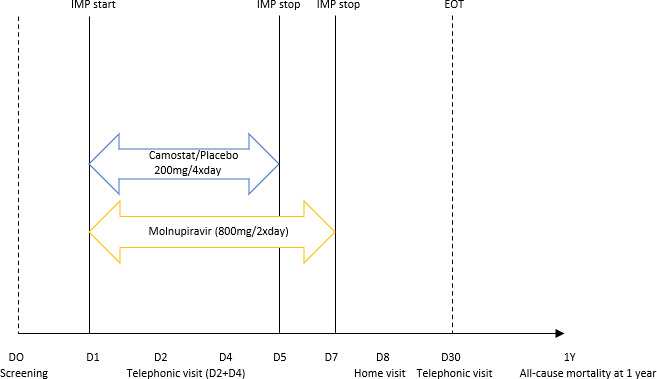
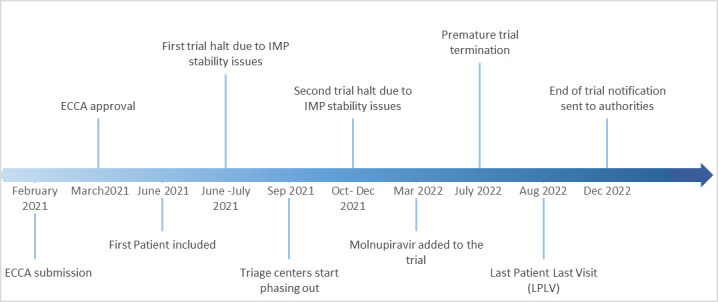
Patients were randomised to camostat or placebo (patients and physicians blinded) between June 2021 and July 2022; a third arm evaluating molnupiravir (open label) was opened in March 2022. The outcome assessor was blinded for all comparisons except for the patient reported outcomes in case of molnupiravir. The authors analysed available trial data and evaluated trial context, implementation, and mechanisms of impact based on semi-structured interviews with trial stakeholders.
The trial recruited 44 participants; 19 were allocated to camostat (median age 55 years), 8 to molnupiravir (median age 60 years), and 17 to placebo (median age 56 years). There were no serious adverse events in either group. Most difficulties were related to the pandemic context: disruption to routine clinical services; multiple changes to the service model for COVID-19 patients; overwhelmed clinical staff; delays of trial medication; and staff shortages in the sponsor and clinical team. In addition, regulatory approval processes were lengthy and led to additional study procedures. It was felt that the trial started too late, when vaccinations had already begun.
The DAWN antivirals trial was stopped prematurely. Although many barriers were related to the pandemic itself, hurdles such as a small and inexperienced sponsor and clinical teams, delays in regulatory processes, and research capacity in routine settings could be overcome by established research infrastructure and standardisation of processes.
DAWN抗病毒药物试验是一项多中心、随机、安慰剂对照试验,旨在评估在全科医疗中使用抗病毒药物治疗新冠肺炎的效果。该试验因招募不足而提前终止。
探讨导致试验提前终止的因素。
比利时的全科医疗。
2021年6月至2022年7月期间,患者被随机分配至抑肽酶组或安慰剂组(患者和医生均不知情);2022年3月开设了第三组,评估莫努匹拉韦(开放标签)。除了莫努匹拉韦组中患者报告的结局外,所有比较的结局评估者均不知情。作者分析了可用的试验数据,并基于对试验利益相关者的半结构化访谈,评估了试验背景、实施情况及影响机制。
该试验招募了44名参与者;19人被分配至抑肽酶组(中位年龄55岁),8人被分配至莫努匹拉韦组(中位年龄60岁),17人被分配至安慰剂组(中位年龄56岁)。两组均未出现严重不良事件。大多数困难与疫情背景有关:常规临床服务中断;新冠肺炎患者的服务模式多次变更;临床工作人员不堪重负;试验药物延迟;以及申办方和临床团队人员短缺。此外,监管审批流程冗长,导致了额外的研究程序。人们认为,该试验启动得太晚,当时疫苗接种已经开始。
DAWN抗病毒药物试验提前终止。尽管许多障碍与疫情本身有关,但通过已建立的研究基础设施和流程标准化,可以克服诸如申办方和临床团队规模小且缺乏经验、监管流程延迟以及常规环境下的研究能力等障碍。