Department of Dental Hygiene, Tsurumi Junior College, Kanagawa, Japan.
Department of Periodontology, School of Dental Medicine, Tsurumi University, Yokohama, Japan.
Int Dent J. 2024 Apr;74(2):321-327. doi: 10.1016/j.identj.2023.10.002. Epub 2023 Nov 19.
Tongue coating consists of oral bacteria, desquamated epithelium, blood cells, and food residues and is involved in periodontal disease, halitosis, and aspiration pneumonia. Recently, a tongue brush with sonic vibration was developed to clean the tongue. This comparative study examined the extent of tongue coating, its effects on the tongue, bacterial count particularly on the posterior dorsum of the tongue, and the degree of pain using a manual tongue brush and the newly developed sonic tongue brush.
Patients' extent of tongue coating and the quantity of bacteria were analysed before and after brushing with a sonic or manual nylon tongue brush. Moreover, the impressions of the dorsum linguae were obtained before and after brushing to establish models that were observed under a stereo microscope to evaluate tongue trauma. Pain caused during the use of these brushes was evaluated based on the numerical rating scale (NRS).
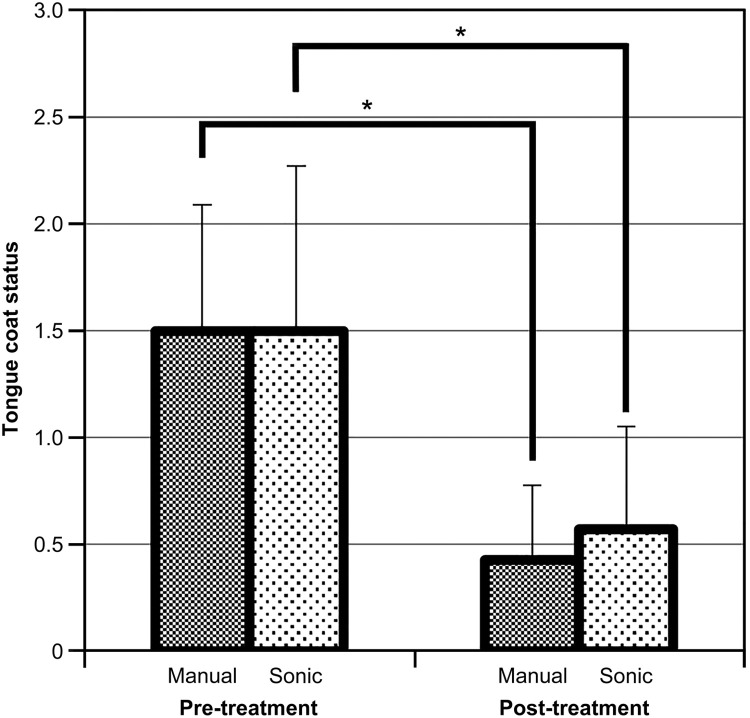
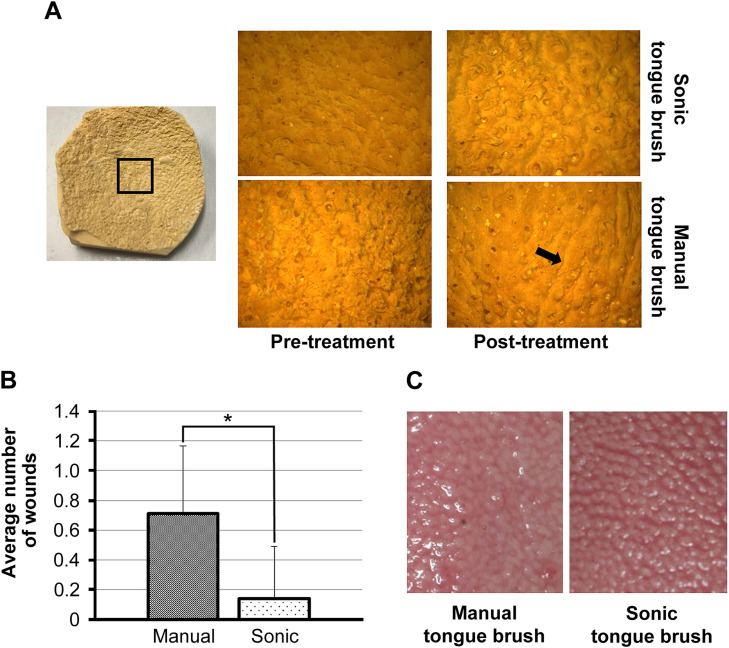
The extent of tongue coating and number of bacteria decreased in both the sonic and manual nylon brush groups after tongue cleaning; however, no significant differences were noted. Tongue trauma evaluation revealed that the tongue surface was significantly scratched in the manual brush group compared with the sonic brush group. NRS-based pain evaluation revealed no significant differences.
The sonic brush was equally effective in removing tongue coating and bacteria compared with the manual brush. As the sonic brush does not cause tongue trauma, it may be considered a safe and effective cleaning tool of the tongue.
舌苔由口腔细菌、脱落上皮细胞、血细胞和食物残渣组成,与牙周病、口臭和吸入性肺炎有关。最近,开发了一种带有声波振动的舌刷来清洁舌头。本比较研究检查了舌刷清洁的程度、对舌头的影响、细菌计数(特别是舌背后部)以及使用手动舌刷和新开发的声波舌刷时的疼痛程度。
使用声波或手动尼龙舌刷清洁前后,分析患者的舌苔程度和细菌数量。此外,在清洁前后对舌背进行压痕,建立模型,在立体显微镜下观察,以评估舌创伤。根据数字评分量表(NRS)评估使用这些刷子时引起的疼痛。
清洁后,声波和手动尼龙刷组的舌苔程度和细菌数量均减少,但无显著差异。舌创伤评估显示,与声波刷组相比,手动刷组的舌面明显划伤。基于 NRS 的疼痛评估无显著差异。
与手动刷相比,声波刷在去除舌苔和细菌方面同样有效。由于声波刷不会引起舌创伤,因此可以认为它是一种安全有效的清洁舌头的工具。