Qin Yinghong, Wang Tianyu, Yuan Weixin
School of Civil Engineering and Architecture, Guangxi Minzu University, 188 University Road, 530006, Nanning, China.
College of Civil Engineering and Architecture, Guangxi University, 100 University Road, 530004, Nanning, China.
Nat Commun. 2023 Nov 20;14(1):7558. doi: 10.1038/s41467-023-43375-z.
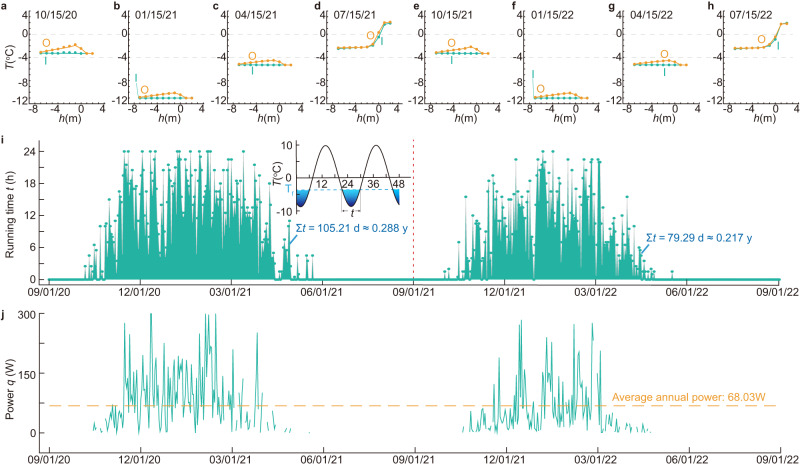
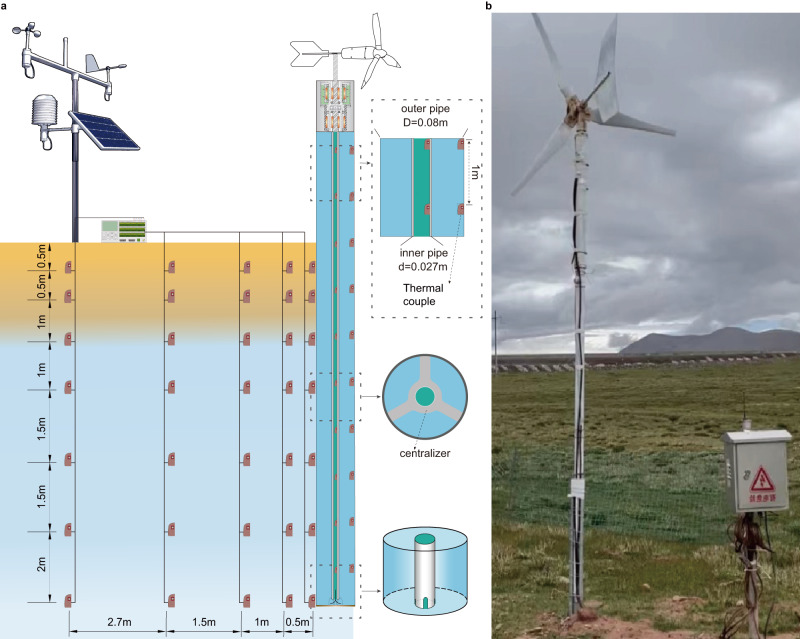
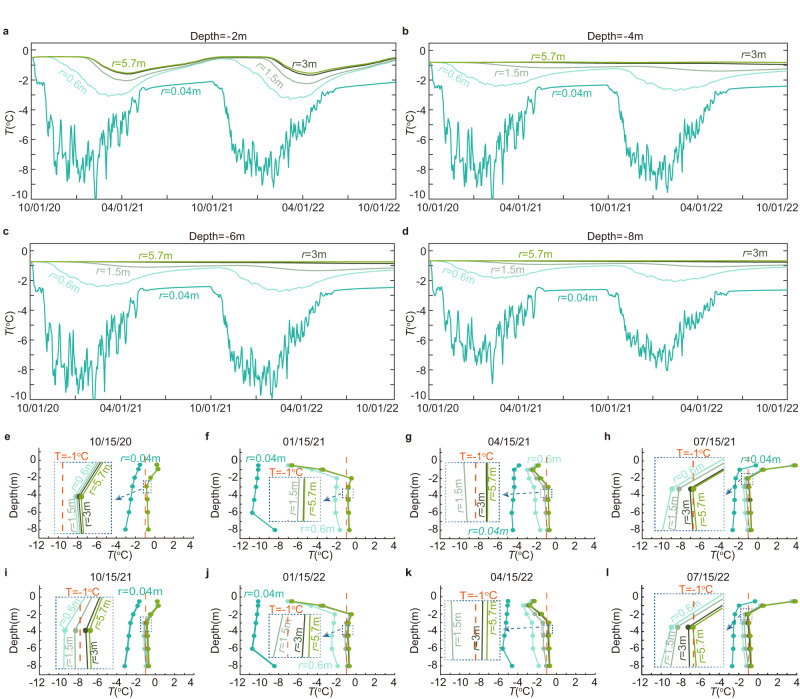
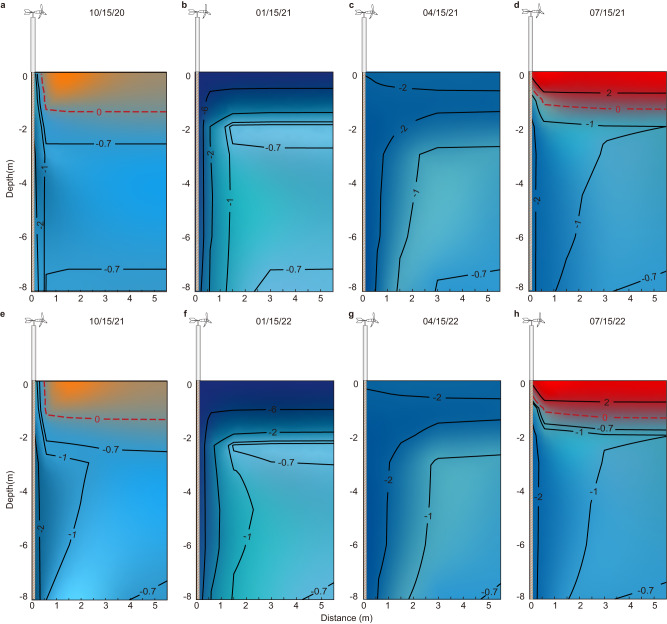
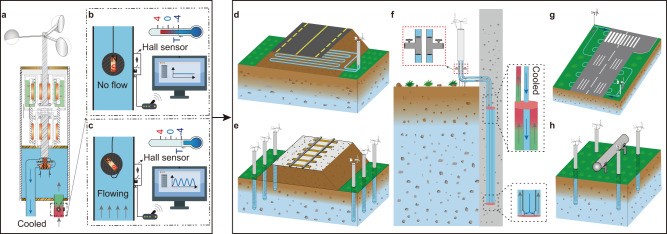
Preserving permafrost subgrade is a challenge due to global warming, but passive cooling techniques have limited success. Here, we present a novel wind-driven device that can cool permafrost subgrade by circulating coolant between the ambient air and the subgrade. It consists of a wind mill, a mechanical clutch with phase change material, and a fluid-circulation heat exchanger. The clutch engages and disengages through freezing and melting phase change material, while the device turns off when the outside air temperature exceeds a certain threshold, preventing heat from penetrating the subgrade. Two-year observations demonstrate that the device effectively cooled permafrost measuring 8.0 m in height and 1.5 m in radius by 0.6-1.0 °C, with an average power of 68.03 W. The device can be adapted for cooling embankments, airstrip bases, pipe foundations, and other structures. Further experimentation is required to evaluate its cooling capacity and long-term durability under various conditions.
由于全球变暖,保护多年冻土路基是一项挑战,但被动冷却技术的成效有限。在此,我们展示了一种新型风力驱动装置,该装置可通过在周围空气和路基之间循环冷却液来冷却多年冻土路基。它由一个风车、一个带有相变材料的机械离合器和一个流体循环热交换器组成。离合器通过冻结和融化相变材料来接合和分离,而当外界气温超过一定阈值时,该装置会关闭,防止热量渗透到路基中。两年的观测表明,该装置有效地将高度为8.0米、半径为1.5米的多年冻土冷却了0.6 - 1.0摄氏度,平均功率为68.03瓦。该装置可适用于冷却路堤、机场跑道基地、管道基础及其他结构。需要进一步试验以评估其在各种条件下的冷却能力和长期耐久性。