Nieves Gabriela Manzano, Rahn Rachel M, Baskoylu Saba N, Liston Conor M
Department of Psychiatry and Feil Family Brain and Mind Research Institute, Weill Cornell Medicine, New York, NY, USA.
Picower Institute for Learning & Memory, Massachusetts Institute of Technology, Cambridge, MA, USA.
bioRxiv. 2024 Sep 17:2023.11.07.565069. doi: 10.1101/2023.11.07.565069.
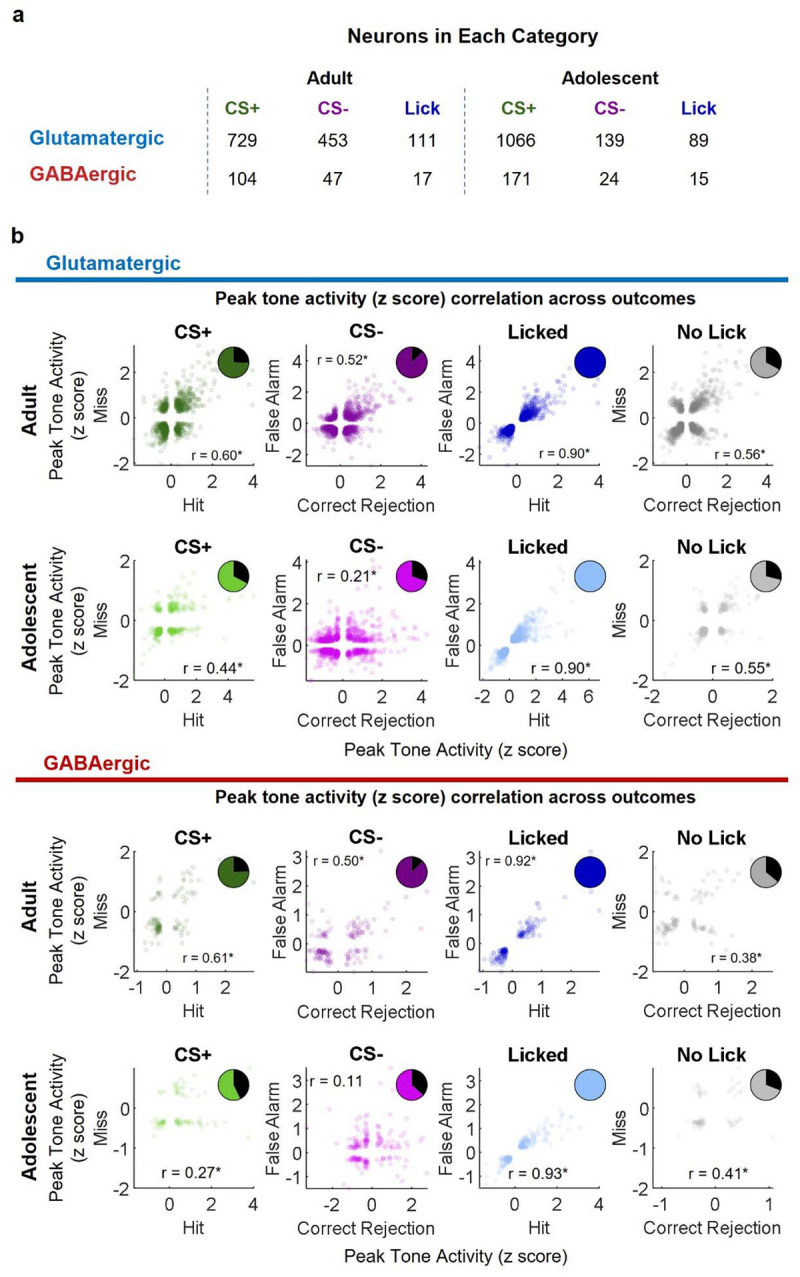
A prevailing view on postnatal brain development is that brain regions gradually acquire adult functions as they mature. The medial prefrontal cortex (mPFC) regulates reward learning, motivation, and behavioral inhibition, and undergoes a protracted postnatal maturation. During adolescence, reward-seeking behavior is heightened compared to adulthood - a developmental difference that may be driven by a hypoactive mPFC, with decreased top-down control of impulsive reward-seeking. However, this hypothesis has been difficult to test directly, due in part to technical challenges of recording neuronal activity across this developmental period. Here, using a novel 2-photon imaging-compatible platform for recording mPFC activity during an operant reward conditioning task beginning early in life, we show that the adolescent mPFC is hyper-responsive to reward cues. Distinct populations of mPFC neurons encode reward-predictive cues across development, but representations of no-reward cues and unrewarded outcomes are relatively muted in adolescence. Chemogenetic inhibition of GABAergic neurons decreased motivation in adolescence but not in adulthood. Together, our findings indicate that reward-related activity in the adolescent mPFC does not gradually increase across development. On the contrary, adolescent mPFC neurons are hyper-responsive to reward-related stimuli and encode reward-predictive cues and outcomes through qualitatively different mechanisms relative to the adult mPFC, opening avenues to developing distinct, developmentally informed strategies for modulating reward-seeking behavior in adolescence and adulthood.
关于出生后脑发育的一种普遍观点是,脑区在成熟过程中逐渐获得成人功能。内侧前额叶皮层(mPFC)调节奖赏学习、动机和行为抑制,并在出生后经历漫长的成熟过程。在青春期,与成年期相比,寻求奖赏行为更为强烈——这种发育差异可能是由mPFC活性低下驱动的,自上而下对冲动性寻求奖赏的控制减弱。然而,这一假设很难直接进行测试,部分原因在于记录这一发育时期神经元活动存在技术挑战。在此,我们使用一种新型的与双光子成像兼容的平台,在生命早期开始的操作性奖赏条件任务中记录mPFC活动,结果表明青春期的mPFC对奖赏线索反应过度。在整个发育过程中,mPFC神经元的不同群体编码奖赏预测线索,但在青春期,无奖赏线索和未获奖赏结果的表征相对较弱。对GABA能神经元进行化学遗传学抑制会降低青春期的动机,但不会降低成年期的动机。总之,我们的研究结果表明,青春期mPFC中与奖赏相关的活动在发育过程中并非逐渐增加。相反,青春期mPFC神经元对与奖赏相关的刺激反应过度,并通过与成年mPFC在性质上不同的机制编码奖赏预测线索和结果,为制定不同的、基于发育情况的策略来调节青春期和成年期的寻求奖赏行为开辟了道路。